
Ecommerce Monitoring Case Study Australia: 10,000+ Digital Products a Day
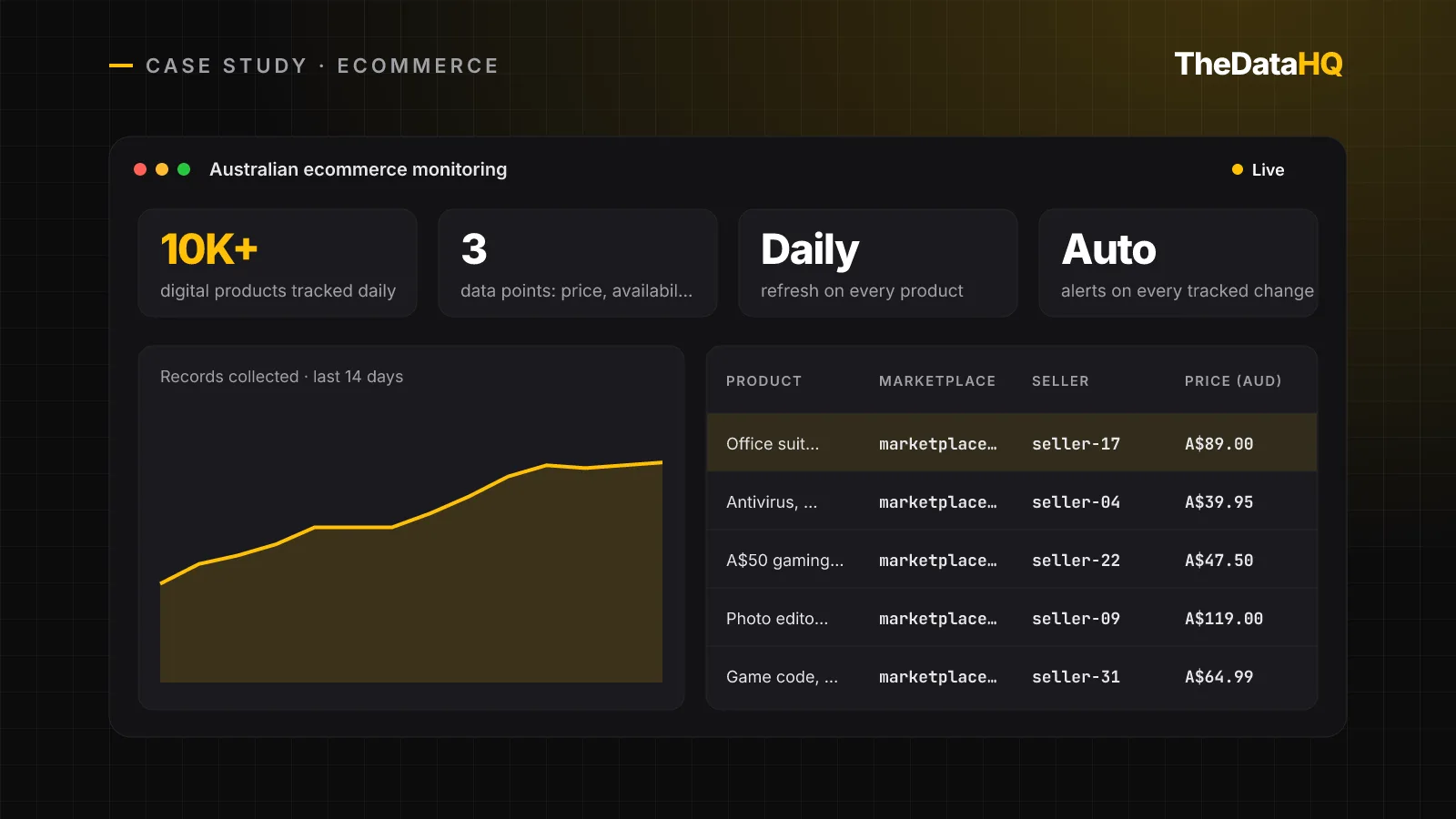
This ecommerce monitoring case study from Australia covers a daily system that tracks prices, availability and seller details for more than 10,000 digital products across Australian marketplaces, and sends an alert whenever something changes.
The Challenge: Fast-Moving Prices on Australian Marketplaces
The client sells digital products, such as software licences, gift cards and game codes, into the Australian market. In this category, the same item is usually offered by many sellers on several marketplaces, and prices shift often as sellers undercut each other.
Stock is just as changeable. A popular product can sell out with one seller and reappear with another at a different price in the same afternoon. With more than 10,000 products to follow, the client's team had no practical way to keep track by hand.
They also needed to know who they were competing with. Seller names, ratings and offers mattered as much as the headline price, because a cheap listing from an unknown seller does not compete in the same way as a slightly dearer one from a trusted store.
What the Client Needed From Ecommerce Monitoring in Australia
- Prices in Australian dollars for 10,000+ digital products, checked every day
- Availability for each product and seller
- Seller details alongside every offer
- Automatic alerts when a price, stock status or seller changes
- Data that is easy to filter by product, marketplace and seller, with a daily history kept for trend analysis
Our Solution: Daily Marketplace Scraping With Change Alerts
We built Python scrapers for each Australian marketplace the client sells on, using Scrapy for listing pages that load as plain HTML and Puppeteer for pages that need a browser to show prices and seller panels. Every day the scrapers visit each tracked product and record the price, availability and every seller offering it.
Results are stored in two places. MySQL holds the clean product and seller tables the client reports from, and MongoDB keeps the raw daily snapshots, which makes it easy to look back at exactly what a page showed on a given day.
A Node.js service compares each day's results with the previous run. When a price moves, a product goes in or out of stock, or a new seller appears, it creates an alert with the old and new values and a link to the listing. Our engineers monitor each marketplace scraper and update it promptly when a site changes.
| Product | Marketplace | Seller | Price (AUD) | Availability | Change |
|---|---|---|---|---|---|
| Office suite, 1-year licence | marketplace-au-1 | seller-17 | A$89.00 | In stock | -A$10.00 |
| Antivirus, 3 devices | marketplace-au-2 | seller-04 | A$39.95 | In stock | None |
| A$50 gaming gift card | marketplace-au-1 | seller-22 | A$47.50 | Out of stock | Stock change |
| Photo editor, lifetime | marketplace-au-3 | seller-09 | A$119.00 | In stock | New seller |
| Game code, standard edition | marketplace-au-2 | seller-31 | A$64.99 | Limited | +A$5.00 |
The Result: Daily Visibility Across 10,000+ Products in Australia
The client now sees the price, availability and sellers of more than 10,000 digital products every day across Australian marketplaces. Instead of checking listings one by one, the team works from alerts that point straight to what has changed.
That lets them react on the same day: lower a price where a rival has undercut them, raise it when a competitor sells out, and spot new sellers entering their category. The daily history also shows which products are most price-sensitive, which sellers move first, and how long a typical discount lasts before prices settle again.
We run similar monitoring for retailers and brands worldwide, and the method stays the same in every market: choose the products and marketplaces, build and run the scrapers, and deliver clean data and alerts on the schedule you need.
Can you monitor prices on Australian marketplaces?
Yes. This project tracks prices, availability and sellers for more than 10,000 digital products a day across Australian marketplaces.
Can you track digital products like software licences and gift cards?
Yes. Digital products are listed much like physical goods, so we capture the price, seller and availability for each offer.
How often is ecommerce monitoring data refreshed?
In this project every product is checked daily. Busier products can be checked more often if needed.
What triggers an ecommerce monitoring alert?
A price change, a product going in or out of stock, or a new seller appearing. The thresholds are set with you.
Do you serve ecommerce businesses outside Australia?
Yes. We work with clients in 10+ countries and monitor marketplaces worldwide.
How long does it take to start ecommerce monitoring?
A free sample is ready within 48 hours, and a first set of marketplaces usually goes live in about a week.
More Web Scraping Case Studies
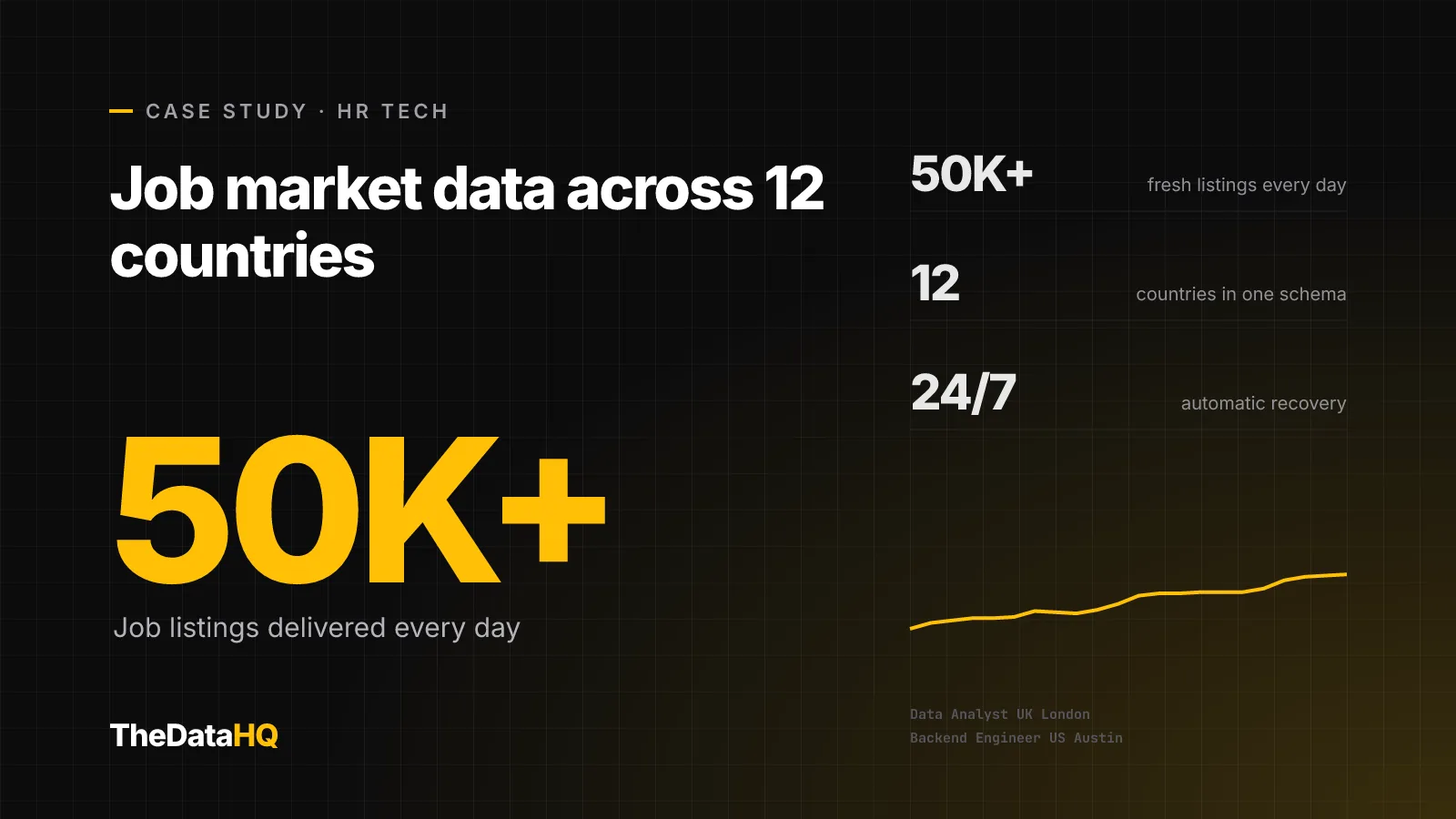 HR tech50K+
Job listings delivered every day
50,000 fresh job listings a day from 15,000+ sources for HiCounselor
Read the case study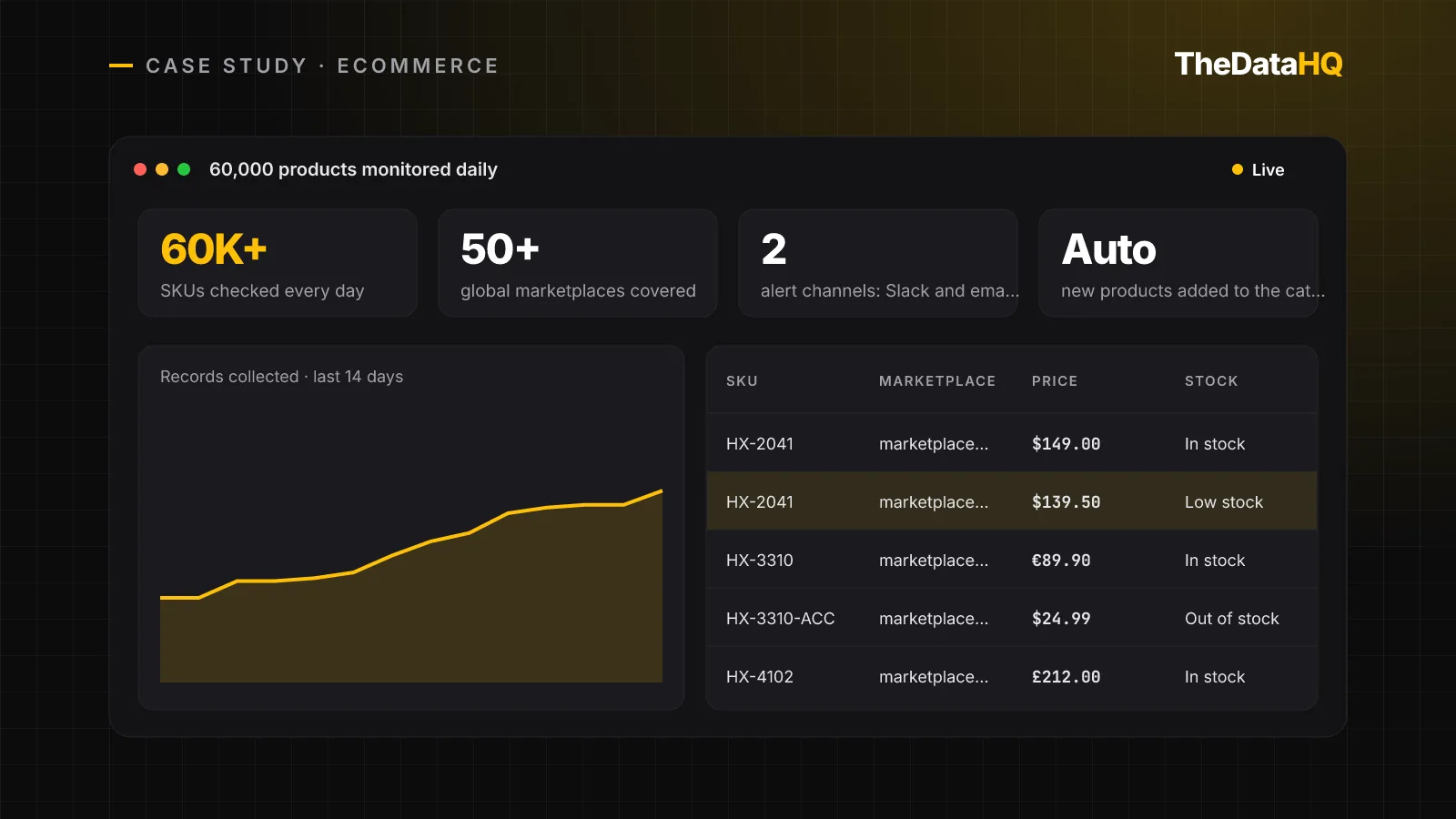 Ecommerce60K+
SKUs monitored every day
60,000+ SKUs tracked daily across 50+ marketplaces, with live alerts
Read the case study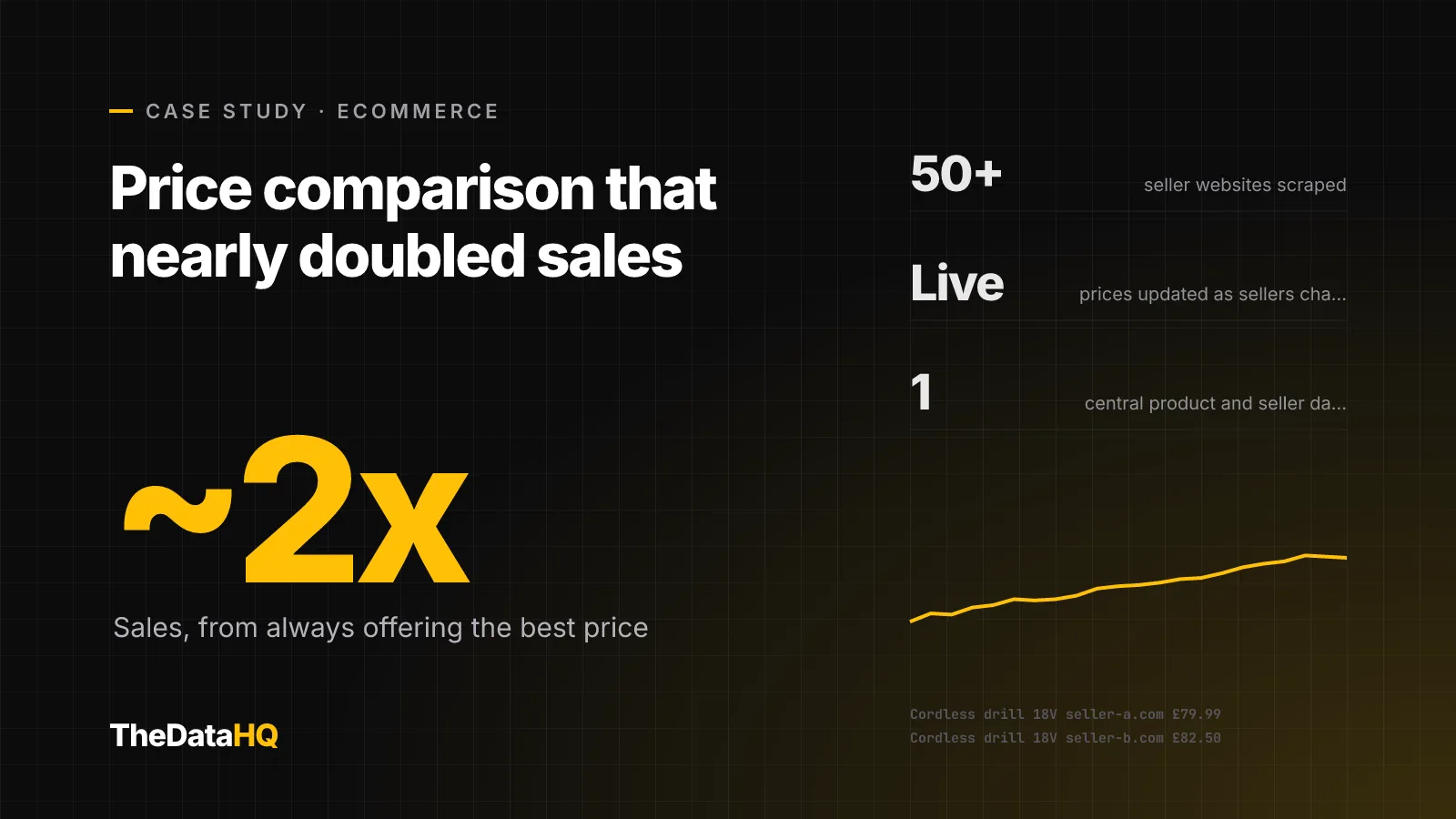 Ecommerce~2x
Sales, from always offering the best price
Live prices from 50+ seller sites helped an online seller nearly double sales
Read the case study