
Dark Web Monitoring Data Feeds for Security & Threat Intelligence Teams
Dark web monitoring tells your security team when your company's domains, brands, code or staff email addresses appear in leak sites, paste sites and openly reachable threat forums. We collect those public sources around the clock, match them against the assets you own and send masked, structured alerts to your SIEM, ticketing tool or analysts, so you can act before an exposure becomes an incident.
Why Do Security Teams Need Dark Web Monitoring?
Many breaches are visible outside your network before they are visible inside it. Stolen employee passwords are posted to paste sites, access to a company is advertised in criminal forums, and lookalike domains are registered for phishing days before the first email goes out. If nobody is watching those places, the first sign is often a fraud loss or a ransom note.
The sources are awkward to watch. Paste sites delete content within hours, forums move between addresses, posts are written in many languages and slang, and most mentions are noise. Analysts who check by hand spend their time searching rather than responding, and they inevitably miss things posted overnight.
Off-the-shelf monitoring products help, but they decide the sources, the matching rules and the alert format for you. Teams with their own threat intelligence platform often prefer a raw, well-structured data feed about their own assets that plugs into the tools and workflows they already run.
What Does a Dark Web Monitoring Feed Include?
Leak and credential mentions
- Matched domain or email address
- Password shown masked, never stored in clear
- Source type, first-seen time and post URL
- Count of affected accounts per post
- Repeat or new exposure flag
Brand and infrastructure abuse
- Lookalike and typosquat domains
- Phishing page copies of your login screens
- Fake apps and impersonation pages
- Exposed API keys and secrets in public pastes
- Your IP ranges or hostnames named in posts
Threat chatter
- Forum or channel name and post time
- Original text plus an English translation
- Named company, sector or product
- Threat category, such as access sale or data leak
- Severity score and analyst notes
Dark Web Monitoring Sample Alerts
A day of alerts for a mid-size insurer. Credentials are masked, every item links to its archived source record, and severity is set by rules agreed with the client's security team.
| Seen (UTC) | Source type | Asset matched | Finding | Evidence | Language | Severity | Action |
|---|---|---|---|---|---|---|---|
| 21 Nov, 02:41 | paste site | @insureco.com | 14 email and password pairs | p****rd, W*****24 | English | High | Reset passwords |
| 21 Nov, 04:10 | domain feed | insureco brand | insureco-claims.com registered | Login page copy found | n/a | High | Takedown request |
| 21 Nov, 07:55 | threat forum | Insurance sector | Post asking for access to an insurer's VPN | Sector match, no name | Russian | Medium | Analyst review |
| 21 Nov, 11:22 | code paste | api.insureco.com | Key pattern for a payment service | sk_live_****9f | n/a | High | Rotate key |
| 21 Nov, 16:03 | public channel | InsureCo | Old 2019 leak reposted | Known dataset | English | Low | No action |
Dark Web Monitoring Use Cases
These are defensive jobs security, fraud and brand protection teams use the data for.
Credential leak detection
Find staff or customer logins for your domains in fresh leaks, and force resets the same day.
Phishing and lookalike domains
Spot new domains and copied login pages that imitate your brand before campaigns start.
Learn moreExposed secrets
Catch API keys, tokens and configuration files pasted in public places.
Fraud intelligence
Mentions of your card ranges, products or processes in fraud discussions, for banks and fintechs.
Learn moreThird-party risk
Watch for leaks naming your key suppliers, so you can ask the right questions early.
Threat landscape research
Structured history of threats against your sector for reports and risk models.
Learn moreIs Dark Web Monitoring Legal and Safe?
Monitoring for defensive purposes is a normal part of security work, but it must be done carefully. These are the rules every project follows, written into the agreement.
- Defensive use only: you must own, or be authorised to protect, every asset we monitor
- We observe sources that are reachable without registration, payment or deception
- We record that your asset appeared, with masked evidence, not the stolen data itself
- Credentials are masked at collection and are never tested, used or resold
- Collection runs in isolated infrastructure, with access logs kept for audit
- Data is retained only as long as your security team needs it
What we never do
- Buy, trade or download stolen data or access
- Create fake identities to join closed or invite-only forums
- Talk to, pay or engage with threat actors
- Monitor people or organisations on behalf of anyone other than their owner
How Is Dark Web Data Collected and Matched?
We run crawlers that reach public paste sites, openly reachable forums, leak-announcement pages and public channels, including sites on anonymity networks, through isolated infrastructure. Pages are captured with a timestamp and a hash, so each alert can be traced to evidence even if the original post is deleted an hour later.
Matching is where most of the value sits. You give us your domains, brand names, product names, IP ranges and key code identifiers. We search new content for those terms, including common misspellings, encoded forms and translated mentions, then score each hit. Old leaks that resurface are recognised and marked, so your team does not chase the same 2019 dataset every month.
Every alert is structured: what was found, where, when, how severe and what to do next. That makes it simple to route high-severity items straight to your incident queue and send the rest to a weekly review.
How Does a Dark Web Monitoring Project Start?
- 01
Verify and scope
We confirm you own the domains and brands, then agree the asset list, sources and alert rules.
- 02
Historic sweep
Within days you receive a report of existing mentions found in the sources we cover.
- 03
Live monitoring
Collection runs around the clock, with alerts to a webhook, SIEM, ticket queue or email digest.
- 04
Tune and review
We cut false positives with your analysts and add new assets or sources as your company changes.
Who Can Build a Custom Dark Web Monitoring Feed?
TheDataHQ is a managed data collection agency that has been building scrapers since 2015: more than 10,000 websites, 15,000+ scrapers and 200+ projects for clients in 10+ countries, with 98% data accuracy checked on every run. We bring that crawling, matching and alerting experience to defensive monitoring for your security team. We have no public threat intelligence case study to share, so we start with a scoped historic sweep for your own domains, which shows the quality of matching before you commit.
How Much Does Dark Web Monitoring Cost?
No minimum project size. Small fixes and big builds are both welcome.
What is dark web monitoring?
Dark web monitoring is the ongoing search of leak sites, paste sites and openly reachable criminal forums for mentions of your company's domains, brands, credentials and systems, with alerts when something new appears.
Is it legal to monitor the dark web?
Observing publicly reachable content to protect your own organisation is a normal security practice. We do not buy data, join closed forums under false identities or engage with threat actors, and we only monitor assets you own or are authorised to protect.
Can you tell me if my company's passwords have been leaked?
Yes. We search new leaks and pastes for your email domains and report matching accounts with the password masked, so your team can force resets without the full credential being stored.
Do you store the stolen data you find?
No. We keep a masked record that your asset appeared, the source and the time, plus a hash of the page as evidence. We do not keep full leaked datasets.
Can dark web alerts go into our SIEM?
Yes. Alerts are delivered as structured JSON to a webhook, your SIEM or ticketing tool, with a daily or weekly CSV summary if you want one.
How quickly are new leaks detected?
Fast-moving sources such as paste sites are checked many times a day, so most mentions are alerted within hours of being posted. Slower forums are checked on a schedule agreed in scoping.
How much does a dark web monitoring service cost?
The number of domains and brands, the sources watched and alert speed decide the cost. Monitoring runs on engineer time from $15 an hour or a dedicated engineer from $2,400 a month, and a fixed monthly fee is agreed after the historic sweep.
Dark web monitoring guides
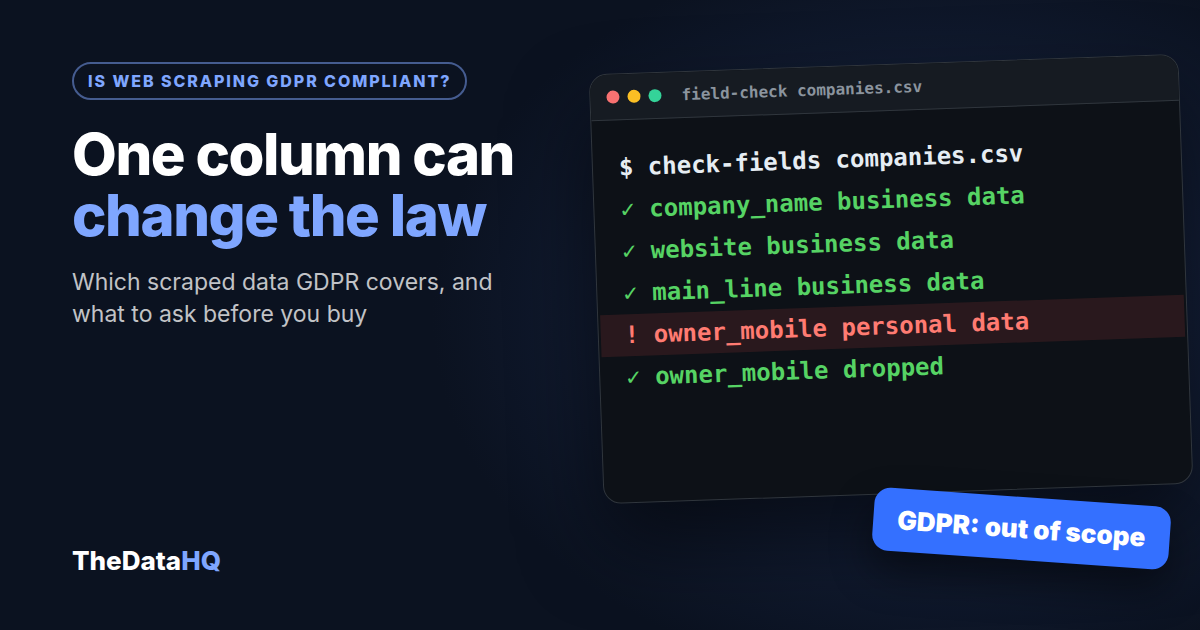
Is Web Scraping GDPR Compliant When You Buy the Data?
GDPR only applies when scraped data identifies a person. Which data is in scope, who is responsible when you buy it, what the EDPB draft…
Read the guide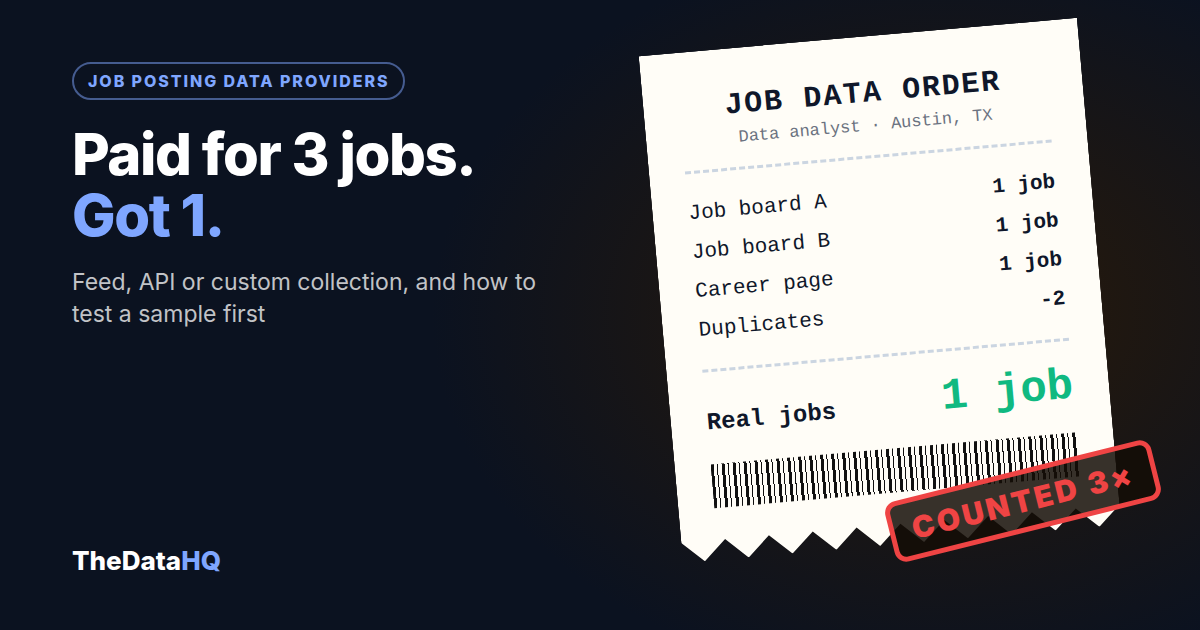
Job Posting Data Providers Compared: Feed, API or Scrape
Job posting data comes as a ready dataset, a pay-per-record API or a custom collection of named sites. Named providers with their…
Read the guide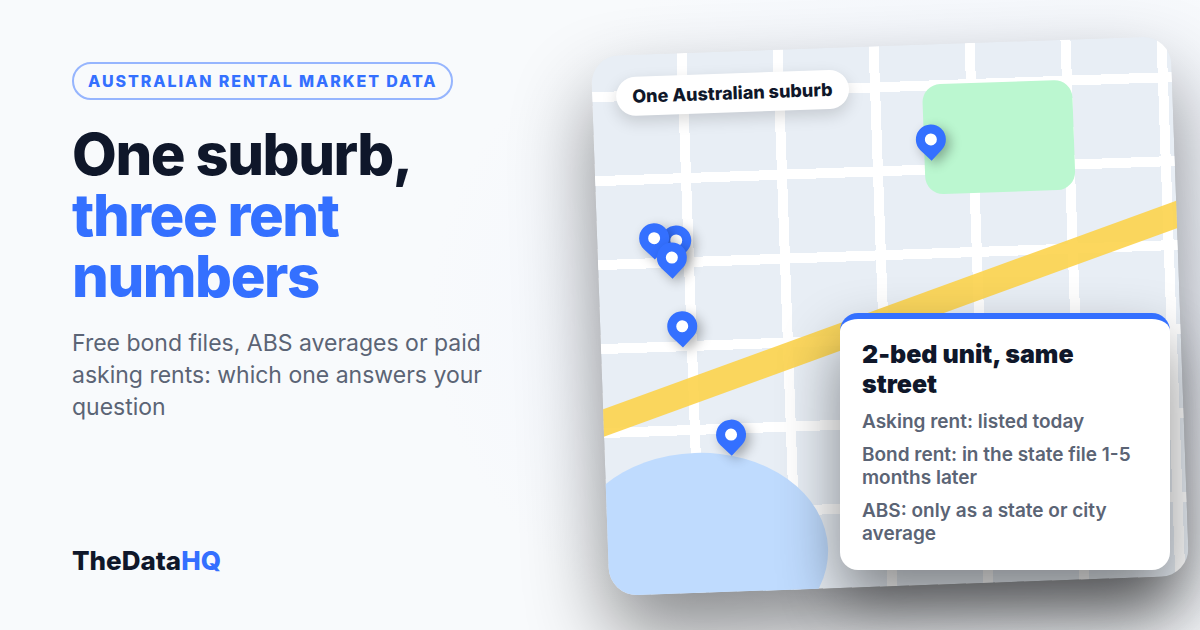
Rental Market Dataset Australia: Free vs Paid Sources
Australian rent data comes from free state bond files (suburb medians, months late), ABS averages, and paid asking-rent data from…
Read the guide