
AI Web Scraping That Adapts When Websites Change
Our AI web scraping service uses language models where fixed rules struggle: reading hundreds of different page layouts, steering through dynamic sites and noticing when a page has changed. We pair that with ordinary, fast scrapers wherever they do the job, so you get flexible extraction without paying model costs on every single page.
What AI Web Scraping Output Looks Like
Sample data. These are product specification records from manufacturer sites that all lay out their data differently. The method column shows whether a fixed rule or a model produced the row, and the check column shows the rule it was tested against.
| Source | Layout | Product | Voltage | Weight (kg) | Warranty | Method | Check |
|---|---|---|---|---|---|---|---|
| maker-a.com | Spec table | Cordless drill 18V | 18 | 1.6 | 3 years | Fixed rule | Passed |
| maker-b.com | Prose paragraph | Compact impact driver | 12 | 0.9 | 2 years | LLM | Passed |
| maker-c.com | Downloadable PDF | Angle grinder 125mm | 230 | 2.2 | 1 year | LLM | Passed |
| maker-d.com | Tabbed widget | Rotary hammer SDS | 18 | 3.1 | Not stated | LLM | Sent for review |
| maker-e.com | Spec table | Jigsaw 650W | 230 | 2.0 | 2 years | Fixed rule | Passed |
How Does AI Web Scraping Work?
A traditional scraper is told exactly where each value lives on a page. That is fast and cheap, but it breaks when the page moves things around, and it cannot cope with hundreds of sites that each present data in their own way. A language model can instead read the page much as a person would and return the fields you asked for in a fixed format.
We use models in three places. Extraction: the model reads text, tables or PDFs and fills in your schema. Navigation: a browser driven by the model works through menus, filters and pop-ups on dynamic sites to reach the right page. Repair: when a scheduled scraper starts returning empty or odd values, the model compares old and new layouts and proposes new selectors, which are tested before they go live.
Models are not trusted blindly. Every answer is checked against field rules, such as allowed units, number ranges and required values, and nothing is invented when the page is silent. A missing warranty stays missing. Rows that fail checks go to an engineer, which is how we hold 98% data accuracy.
What Is Included in Our AI-Powered Web Scraping Service
You get the result, not a model to babysit. We choose where AI is worth its cost and run everything around it.
- A per-source decision on rules, models or a mix, explained in plain terms
- LLM extraction into your fixed schema, with no free-text guessing
- Model-driven browser navigation for dynamic and multi-step pages
- Self-healing: change detection plus tested, automatic selector updates
- Classification and labelling of pages and documents
- Deduplication and freshness tracking for training data sets
- Validation rules on every field, with a human review queue
What AI scraping will not do here
- Solve CAPTCHAs or get past logins and paywalls
- Collect personal data to train models
- Fill gaps with values the source does not show
When Should You Use AI for Web Scraping?
AI pays off when variety or change is the main problem. For a single stable site, a plain scraper is cheaper, and we will tell you so.
Hundreds of different layouts
Supplier, manufacturer or school sites where no two pages look alike.
Learn moreSites that change often
Sources that redesign or test new layouts, where self-healing saves repair time.
Learn moreAI training and RAG data
Large, clean, classified text sets with the source and date kept on every item.
Learn moreMulti-step navigation
Pages reached only through filters, menus and search forms on public sites.
Learn moreUnstructured text
Facts buried in paragraphs, notices or PDFs, pulled into clean columns.
Learn moreLabelling and matching
Categorising pages or matching the same product across stores.
AI Web Scraping Case Study: Self-Healing Collection at 99% Accuracy
We built an AI data collection pipeline with Playwright and GPT-4o that moved through dynamic websites on its own, classified each document and re-learned its extraction when sources changed. It collected over 2.7 million documents for AI use, with classification accuracy of 99%.
Read the case studyRule-Based Scrapers vs DIY LLM Scrapers vs Managed AI Web Scraping
| Option | Rule-based scraper | DIY LLM scraper | TheDataHQ |
|---|---|---|---|
| Many different layouts | One scraper per layout | Handles them, at model cost per page | Models only where rules fall short |
| When a site changes | Breaks until fixed | Often keeps going, sometimes wrongly | Detected, re-learned, tested |
| Made-up values | Not an issue | A real risk | Blocked by field rules and review |
| Running cost at scale | Low | High | Kept low by mixing methods |
| Who maintains it | Your developers | Your developers | Our engineers |
How We Set Up an AI Scraping Pipeline
- 01
Source review (day 0)
We sort your sources into ones that suit plain rules and ones that need a model, and check their terms.
- 02
Sample and accuracy check (day 2)
You get free sample rows with the method and check result shown, so you can judge quality yourself.
- 03
Go live (about day 7)
The mixed pipeline runs on our servers, with model calls only where they add value.
- 04
Self-healing in production (ongoing)
Changes are caught and repaired automatically where safe, and by an engineer where not.
How Much Does AI Web Scraping Cost?
No minimum project size. Small fixes and big builds are both welcome.
Why Choose TheDataHQ for AI-Powered Scraping
We added AI to a scraping practice that already existed, not the other way round. Since 2015 we have built over 15,000 scrapers across more than 10,000 websites, so we know which problems a model actually solves and which ones a well-written selector solves for a fraction of the price.
Your bill reflects that balance. Model usage is kept small by design and shown separately in your quote. Hourly work starts at $15, a dedicated engineer at $2,400 a month, and fixed-price projects get a quote up front. TheDataHQ is part of BinaryBits, so if the data is meant to feed an AI product, the same group can build that product too.
Can AI be used for web scraping?
Yes. Language models can read pages and return structured fields, steer a browser through dynamic sites and help repair scrapers after layout changes. They work best combined with rule-based scrapers, not as a full replacement.
What is a self-healing web scraper?
It is a scraper that notices when a site has changed, works out where the data has moved and updates itself. Our self-healing changes are tested against known good values before they go live.
Is AI web scraping more accurate than traditional scraping?
On many varied layouts, yes, because one model can handle what would need hundreds of rule sets. On a single stable site, rules are just as accurate and much cheaper. We check every field either way.
Do LLMs make up data when scraping?
They can, which is why we never accept a model answer without checks. Values must appear on the page and pass field rules, and anything uncertain goes to human review.
Can you collect web data for training AI models?
Yes. We collect public text and documents, remove duplicates and boilerplate, classify them and keep the source and date on every item. We do not collect personal data for training.
Which AI models do you use for scraping?
We have used GPT-4o with Playwright in production and choose the model per task based on accuracy and cost. If you have a preferred provider or need a model you host yourself, we can work with that.
How much does AI web scraping cost compared with normal scraping?
Model calls add a per-page cost, so we use them only where they save engineering time. Most projects end up close to normal scraping costs, and your free sample shows the method used for each row.
AI web scraping guides
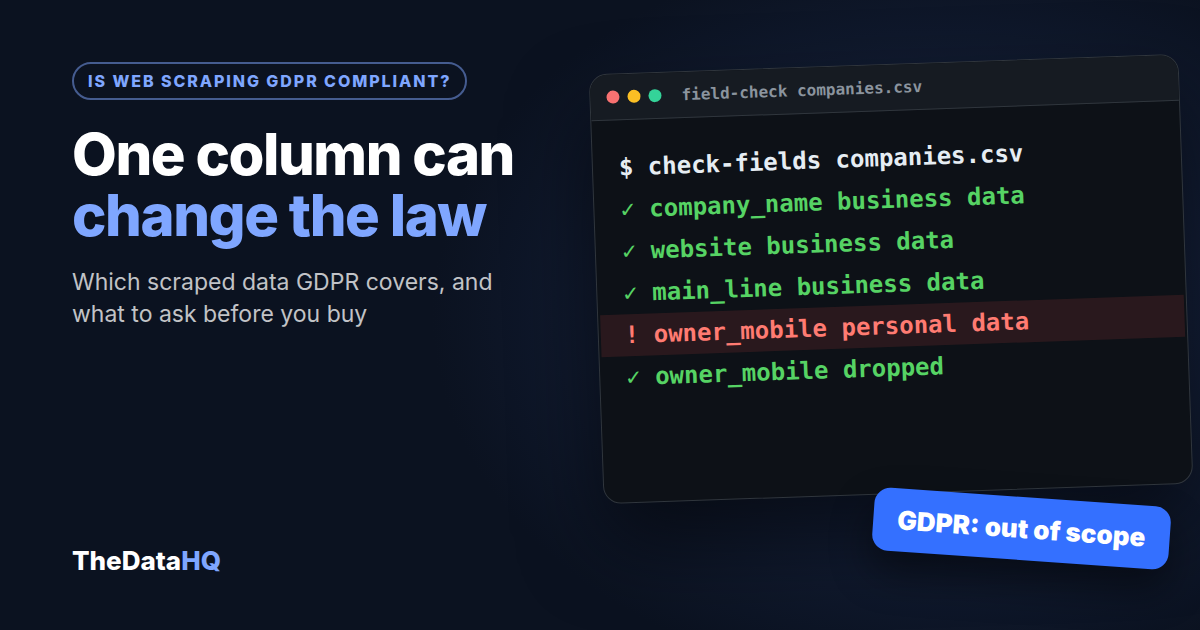
Is Web Scraping GDPR Compliant When You Buy the Data?
GDPR only applies when scraped data identifies a person. Which data is in scope, who is responsible when you buy it, what the EDPB draft…
Read the guide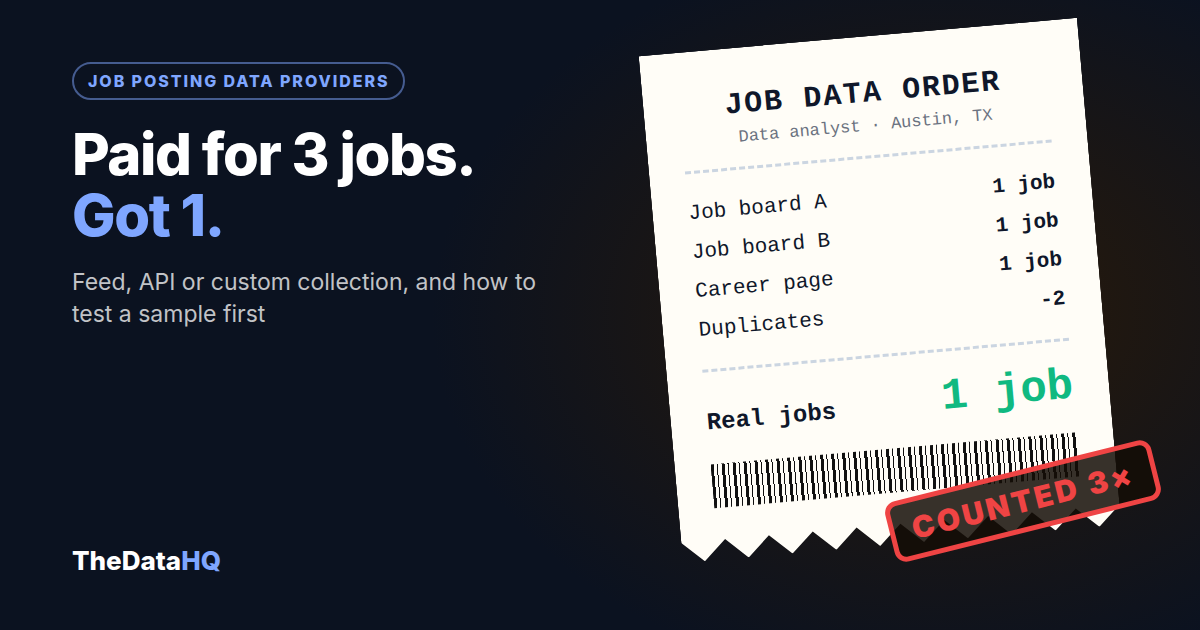
Job Posting Data Providers Compared: Feed, API or Scrape
Job posting data comes as a ready dataset, a pay-per-record API or a custom collection of named sites. Named providers with their…
Read the guide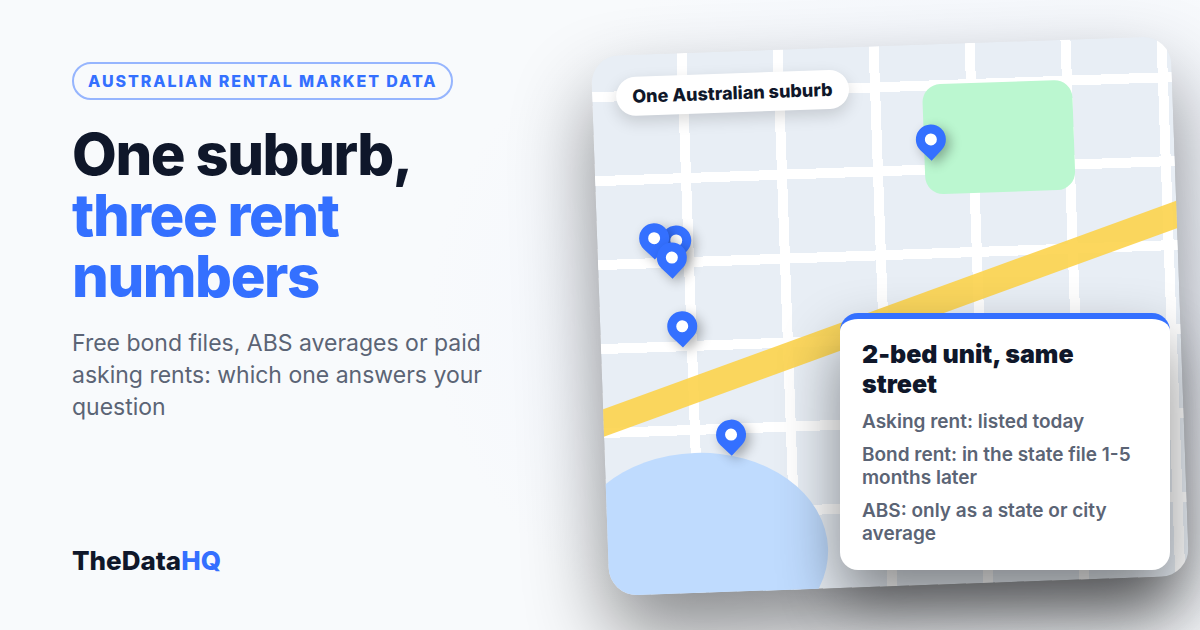
Rental Market Dataset Australia: Free vs Paid Sources
Australian rent data comes from free state bond files (suburb medians, months late), ABS averages, and paid asking-rent data from…
Read the guide