
Job Data Scraping for HR Tech, Recruiters & Labour Analysts
Job data scraping collects public job postings from job boards, aggregators and company career pages, then turns them into one clean, deduplicated dataset. Job platforms use it to fill their listings, recruiters to find hiring companies, and analysts to measure demand for skills, salaries and roles across markets.
Why Is Job Posting Data So Hard to Collect?
Most jobs are not posted in one place. A large share appear only on the employer's own careers page, which may run on any of dozens of applicant tracking systems, each with its own layout, pagination and search widget. The rest are spread across national job boards, niche boards and aggregators that repost each other's listings.
That creates three problems for anyone who needs job data at scale. Coverage: thousands of separate sources must be found and kept running. Duplication: the same vacancy can appear five times with slightly different titles. Comparability: one posting says "£45k–£55k", another says "$28/hr", a third says nothing, and locations range from a postcode to "Remote, EMEA".
Postings also expire quickly. A dataset that is a week old misses roles that opened and closed in between, which is fatal for a job-matching product and misleading for anyone measuring how fast companies hire.
What Job Data Can Be Scraped?
The posting
- Job title, plus a normalised title
- Full description and requirements
- Employment type and seniority
- Date posted and date removed
- Apply link and source URL
Pay and location
- Salary range as posted
- Salary converted to annual and one currency
- City, region and country
- Remote, hybrid or on-site flag
- Benefits mentioned in the text
Employer and skills
- Company name and industry
- Company size where shown
- Skills and tools extracted from the text
- Education and experience asked for
- Number of open roles per company
Job Postings Data Sample
Five postings after cleaning. Salaries are kept as posted and also converted to an annual figure in one currency, and duplicates are merged into a single record with a source count.
| Normalised title | Company | Location | Work mode | Salary as posted | Annual (USD) | Posted | Sources |
|---|---|---|---|---|---|---|---|
| Data Engineer | Logistics firm | Manchester, UK | Hybrid | £55,000–£65,000 | 76,300 | 18 Nov | 3 |
| Backend Developer | Fintech startup | Austin, US | Remote | $62/hour | 128,960 | 19 Nov | 1 |
| Registered Nurse | Hospital group | Brisbane, AU | On-site | AUD 92,000 | 60,100 | 19 Nov | 2 |
| Product Manager | Software company | Berlin, DE | Hybrid | Not stated | 20 Nov | 4 | |
| Warehouse Supervisor | Retail chain | Toronto, CA | On-site | CAD 58,000 | 41,800 | 20 Nov | 2 |
Who Uses Job Data Scraping, and for What?
The same feed serves very different teams. These are the uses we see most.
Job boards and aggregators
Fill a job search product with fresh, deduplicated listings from thousands of employers.
Learn moreRecruitment sales
Find companies hiring for the roles you place, the day the vacancy appears.
Learn moreLabour market research
Measure demand for skills, roles and salaries by region and over time.
Learn moreSalary benchmarking
Advertised pay by title, seniority and city to set competitive offers.
Competitor hiring signals
Track which teams a rival is growing, a public hint at its plans.
Careers and education
Show students and job seekers which skills employers are asking for right now.
Which Job Sites Do You Scrape?
Large job boards, employer review sites, niche boards and company career pages on common applicant tracking systems. These have their own pages.
 Indeed Scraper
 Glassdoor Scraper
Trademarks belong to their owners. TheDataHQ is not affiliated with these companies and collects publicly available data only.
Job Data Scraping Case Study: HiCounselor
From 2022 to 2024 we ran the job data layer behind HiCounselor's job-matching platform. More than 15,000 scrapers covered boards and employer career pages in 12 countries, and every posting was deduplicated in real time before being matched to candidate profiles.
Read the case studyHow Do You Deduplicate and Normalise Job Listings?
We give every posting a fingerprint built from the employer, a cleaned title, the location and the key phrases in the description. When the same vacancy appears on a company page, a board and an aggregator, the fingerprints match and we keep one record, with every source URL attached. This is done as the data arrives, so your counts are never inflated by reposts.
Titles are mapped to a standard list, so "Sr. Software Eng II" and "Senior Software Engineer" can be counted together while the original wording is kept. Salaries are parsed from free text into a minimum, maximum, period and currency, then converted to an annual figure. Locations are resolved to city, region and country, with a separate remote flag.
Freshness is tracked too. We record when each posting first appeared and when it disappeared, which gives you time-to-fill estimates and stops closed roles lingering in your product.
What Is Included in a Managed Job Data Feed?
You receive finished job data, not a crawler to look after. Every feed we run for an HR tech or research client comes with the following.
- Source discovery: we find employer career pages for your target companies or sectors
- A scraper per source, including pages that load jobs with JavaScript or infinite scroll
- Real-time deduplication across boards, aggregators and career pages
- Normalised titles, salaries, locations and remote flags in one schema
- First-seen and removed dates for every posting
- Monitoring with same-day repairs when a career site or board changes its layout
What we do not collect
- Candidate CVs, profiles or contact details
- Anything behind a recruiter or job seeker login
- Personal data about hiring managers beyond what the posting shows
How Does a Job Scraping Project Work?
- 01
Agree the scope
Countries, roles or industries, the boards you need and any list of employer career pages.
- 02
Free sample
Cleaned postings from your chosen sources within 48 hours, in the schema you will receive.
- 03
Scale the crawl
We add sources in waves, first data live in about 7 days, larger crawls on a dated plan.
- 04
Daily delivery
New, changed and closed postings every day by file, database load or private API.
How Much Does Job Data Scraping Cost?
No minimum project size. Small fixes and big builds are both welcome.
Is it legal to scrape job postings?
Job postings are published so the public can see them, and collecting them is generally lawful. We collect only public postings, never candidate profiles or data behind a login, and we review each source's terms first.
Can you scrape company career pages, not just job boards?
Yes. Career pages are usually the most complete and freshest source. We cover employer pages on common applicant tracking systems as well as custom-built pages.
How do you remove duplicate job listings?
Each posting gets a fingerprint from employer, title, location and description. Matching postings from different sources are merged into one record that keeps every source link.
Can you extract salaries from job postings?
Yes. We parse the salary text into minimum, maximum, period and currency, and convert it to an annual figure. Postings without pay are marked as not stated.
How often is job data updated?
Daily is standard, and busy sources can run several times a day. We also record when each posting is removed so closed jobs drop out.
What format do you deliver job data in?
Most clients take a daily JSON or CSV file, a direct load into their database, or a private API. Each record carries the original posting text alongside the cleaned fields, so nothing is lost in normalisation.
Can you collect job data from many countries?
Yes. We collect worldwide, and one platform we ran covered 12 countries in a single schema, with local salary and location formats normalised.
How much does a job scraping service cost?
Job feeds are priced by source count, country coverage and refresh rate. Small crawls run on engineer hours from $15, larger ones on a dedicated engineer from $2,400 a month, and fixed-price builds are quoted before we write any code.
Job data scraping guides
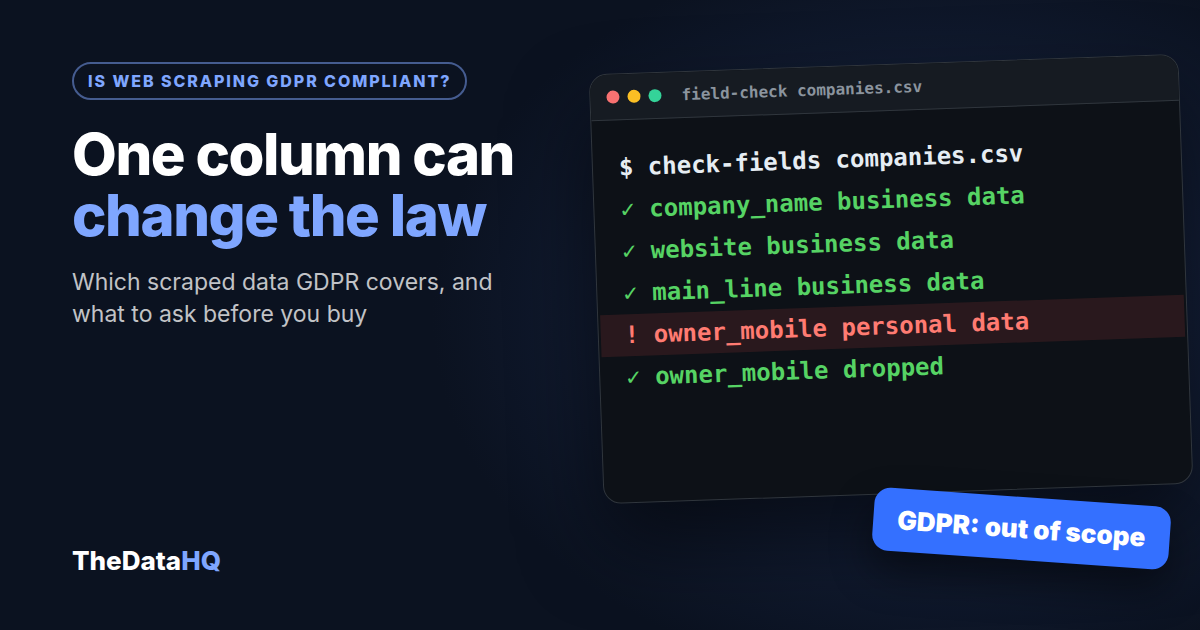
Is Web Scraping GDPR Compliant When You Buy the Data?
GDPR only applies when scraped data identifies a person. Which data is in scope, who is responsible when you buy it, what the EDPB draft…
Read the guide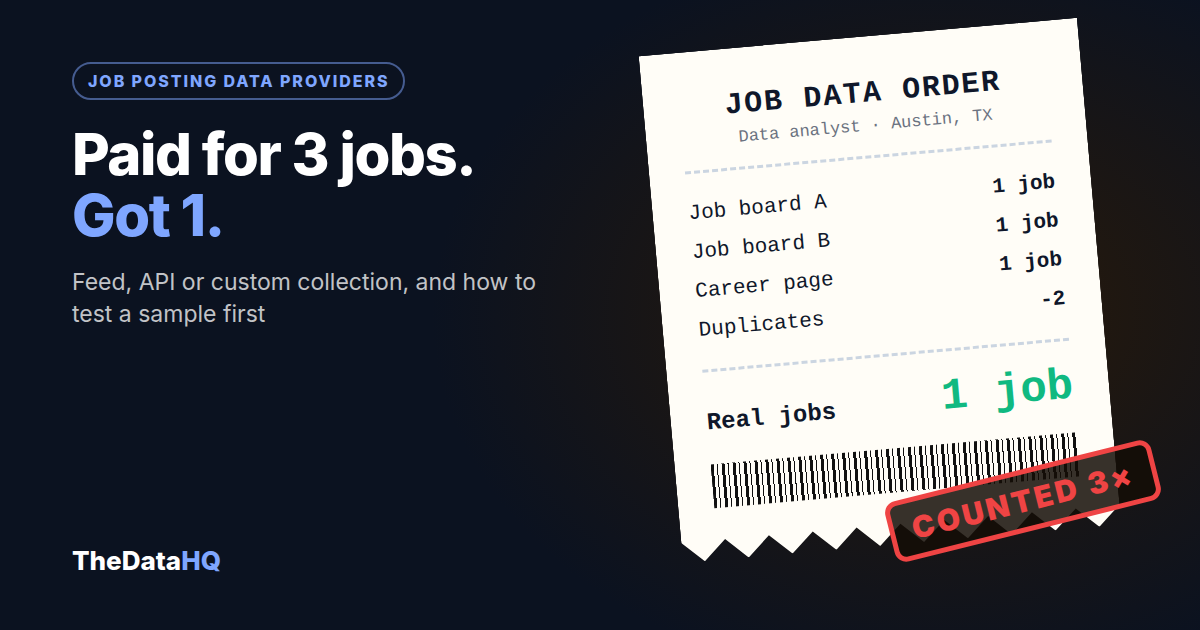
Job Posting Data Providers Compared: Feed, API or Scrape
Job posting data comes as a ready dataset, a pay-per-record API or a custom collection of named sites. Named providers with their…
Read the guide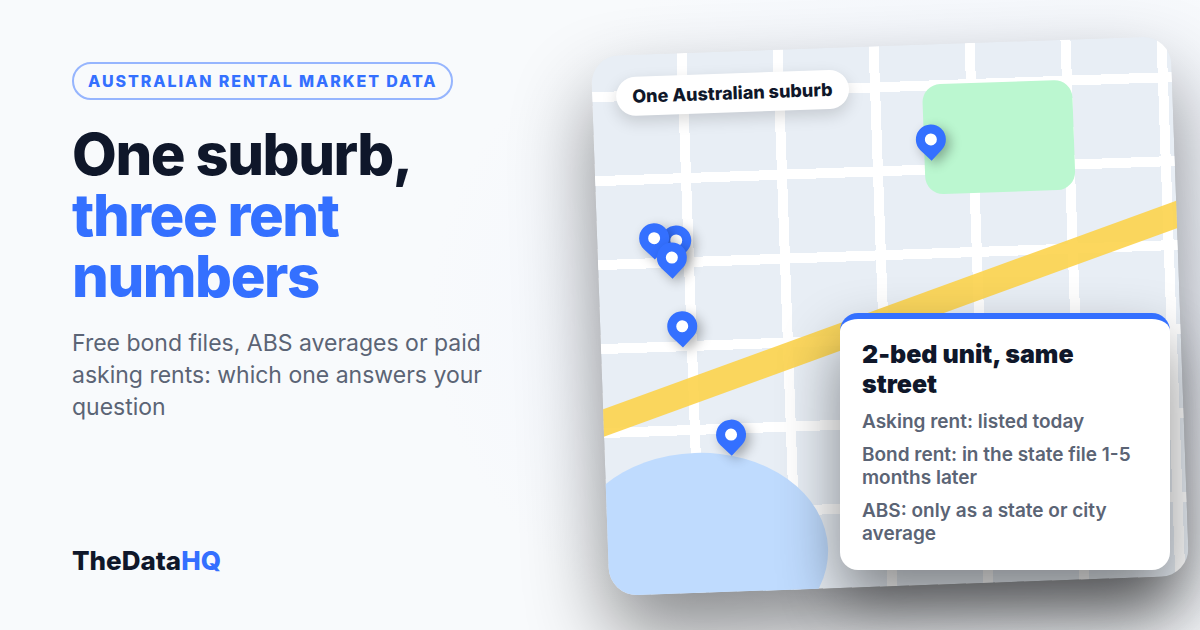
Rental Market Dataset Australia: Free vs Paid Sources
Australian rent data comes from free state bond files (suburb medians, months late), ABS averages, and paid asking-rent data from…
Read the guide