
Data Extraction Services for Web Pages, PDFs & Documents
Our data extraction services pull the exact fields you need out of web pages, PDFs, search results and published documents, and hand them back as tidy rows. You describe the record you want; we find it in the source, however messy, and deliver it in a fixed schema you can load straight into a spreadsheet, database or model.
What Data Extraction Output Looks Like
Sample data. A buyer asked for tender notices published as PDFs and HTML pages on several public procurement portals. Each notice becomes one row, with dates parsed, values converted to numbers and the source file kept for audit.
| Notice ID | Source | Format | Buyer | Category | Est. value | Deadline | Pages |
|---|---|---|---|---|---|---|---|
| TN-88214 | portal-1 | City water board | Pipe maintenance | 1,250,000 | 12 Dec 2026 | 14 | |
| TN-88215 | portal-1 | HTML | Regional health trust | Cleaning services | 340,000 | 05 Dec 2026 | 1 |
| TN-88231 | portal-2 | Scanned PDF | County council | Road resurfacing | 2,800,000 | 19 Dec 2026 | 22 |
| TN-88240 | portal-3 | State university | Lab equipment | 96,500 | 28 Nov 2026 | 6 | |
| TN-88252 | portal-2 | HTML | Port authority | IT support | 410,000 | 09 Jan 2027 | 1 |
What Is Included in Our Data Extraction Services
Extraction is more than copying text. Most of the work sits in finding the right value, in the right place, every time the layout shifts.
- Collection of the source pages and files, or processing of files you send us
- Parsing of HTML, text PDFs, scanned PDFs, spreadsheets and Word files
- Field-by-field rules: dates, currencies, units and codes in one format
- Table extraction from PDFs, including tables that run across pages
- A link or file reference on every record so any value can be traced back
- Validation that flags missing or out-of-range values before delivery
What we do not extract
- Documents behind a login, paywall or client portal
- Personal records such as ID documents or medical files
- Copyrighted text you plan to republish in full
- Sources whose terms rule out your intended use
How Do You Extract Data From PDFs and Unstructured Documents?
The answer depends on how the file was made. A PDF exported from software has a real text layer, so we read words with their exact positions on the page and rebuild tables from those coordinates. A scanned PDF is only a picture, so it first goes through OCR, and the output is checked against rules because character errors are common in poor scans.
Web sources are different again. Product pages and listings usually have stable HTML we can target directly. Search result pages, on the other hand, mix ads, snippets and rich results, so we label each result type and keep its rank. Where a page loads its data from a background request, we read that request instead, which is faster and less fragile.
Whatever the input, the output is the same: one agreed schema. We write that schema with you before building anything, including the format of every date and the meaning of an empty field. Every run is tested against it, and the rows that fail go to a review queue rather than into your file.
What Data Can Be Extracted From Documents and Web Pages?
From web pages
- Titles, descriptions and categories
- Prices, specs and attributes
- Search rank and result type
- Publish and update dates
- Page URL and capture time
From PDFs and documents
- Tables, line items and totals
- Reference numbers and codes
- Parties, buyers and issuers
- Clauses and section headings
- Page number for each value
Added during processing
- Normalised dates and currencies
- Standardised units
- Document type label
- Duplicate flag
- Quality check result
Who Uses Data Extraction Services?
These are the extraction jobs we are asked for most. Each one starts from a source that was never designed to be read by a machine.
Reports and filings
Figures and tables pulled from annual reports, regulatory filings and published statistics.
Learn moreTenders and public notices
Procurement notices, planning decisions and government publications turned into a searchable feed.
Learn moreSearch result data
Ranks, titles, snippets and result types captured for chosen queries and locations.
Research and publications
Papers, patents and articles split into title, authors, abstract, dates and body text.
Learn moreTraining data for AI
Clean, classified document sets with source tracking for models and retrieval systems.
Learn moreScanned files and images
Text and numbers read from scans, receipts and product images with OCR.
Learn moreHow Our Data Extraction Process Works
- 01
Send examples (day 0)
Share a handful of source links or files and the record you want from each. We check the sources and their terms.
- 02
Sample and schema (day 2)
You get extracted rows from your own documents and sign off the field list and formats.
- 03
Full run (about day 7)
The pipeline processes the backlog, then new files as they appear, with every record validated.
- 04
Review and refine (ongoing)
Low-confidence rows are checked by our team, and rules are tightened as new layouts show up.
Data Extraction Case Study: 2.7 Million Documents Classified
For an AI data client we collected and processed more than 2.7 million documents from dynamic websites. Each one was extracted, labelled by type and tracked for freshness and duplicates, reaching 99% classification accuracy on the final set.
Read the case studyManual Data Entry vs Extraction Software vs Managed Data Extraction
| Option | Manual data entry | Extraction software | TheDataHQ |
|---|---|---|---|
| Speed on large backlogs | Slow, grows with headcount | Fast once templates are set | Fast, and we set it up |
| New or changed layouts | Handled by people | Templates break and need rework | We update the rules |
| Scanned and mixed files | Typed by hand | Often a separate product | Handled in one pipeline |
| Quality control | Spot checks | Up to you | Rule checks on every record |
| Collecting the sources | Not included | Not included | Included |
How Much Do Data Extraction Services Cost?
No minimum project size. Small fixes and big builds are both welcome.
Why Choose TheDataHQ for Data Scraping and Extraction
Since 2015 we have extracted data from more than 10,000 websites and delivered over 200 projects for clients in 10+ countries. Our work on publications has covered news, blogs, research papers, patents and PDFs across 40 sectors, so awkward formats do not surprise us.
Cost is driven mainly by how varied your sources are, not by how many files there are. A million invoices from one template is cheaper than ten thousand reports from a hundred publishers. We quote after seeing real examples, and the first sample is free. Rates begin at $15 an hour for an engineer and $2,400 a month for a dedicated one, with fixed-price projects quoted before work starts.
We only work with public or client-supplied material, we keep the original file reference on every row, and you can ask for the source behind any value. You deal directly with the engineers doing the work.
What are data extraction services?
A data extraction service takes information that sits inside web pages, PDFs or documents and returns it as structured records with named fields. We handle the collection, parsing, cleaning and checks, and deliver files or a feed you can use straight away.
What is the difference between data scraping and data extraction?
Scraping usually means collecting pages from websites. Extraction is the step that pulls specific values out of those pages or files. Most projects need both, and we do both.
Can you extract tables from PDF files?
Yes. We rebuild tables from the position of each word on the page, including tables that span several pages or have merged cells. Scanned PDFs go through OCR first.
How accurate is automated data extraction?
Our pipelines run at 98% data accuracy. Every record is checked against the field rules agreed with you, and rows that fail are reviewed rather than delivered as they are.
Can I send you my own documents to extract?
Yes. You can upload files to shared storage and we process them with the same rules, either as a one-off batch or on a schedule as new files arrive.
How long does a data extraction project take?
A free sample usually arrives within 48 hours and most pipelines are live in about 7 days. Very varied document sets take longer, and we give you a dated plan first.
What formats can extracted data be delivered in?
CSV, Excel, JSON and XML files, direct loads into your database, Amazon S3, a REST API or webhooks.
Data extraction services guides
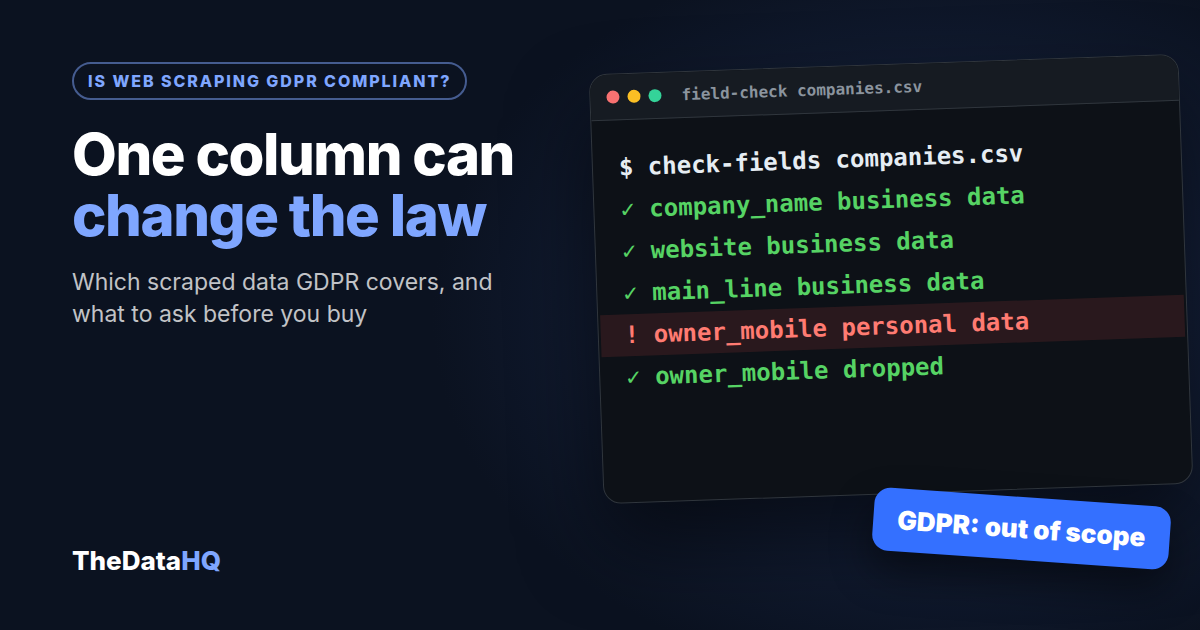
Is Web Scraping GDPR Compliant When You Buy the Data?
GDPR only applies when scraped data identifies a person. Which data is in scope, who is responsible when you buy it, what the EDPB draft…
Read the guide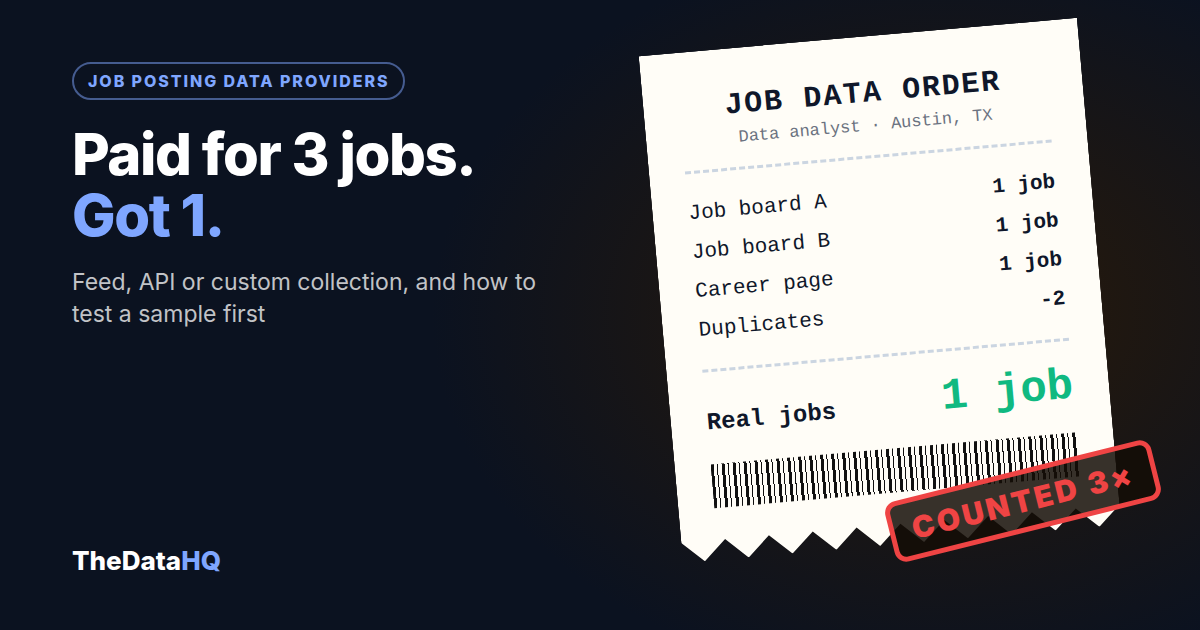
Job Posting Data Providers Compared: Feed, API or Scrape
Job posting data comes as a ready dataset, a pay-per-record API or a custom collection of named sites. Named providers with their…
Read the guide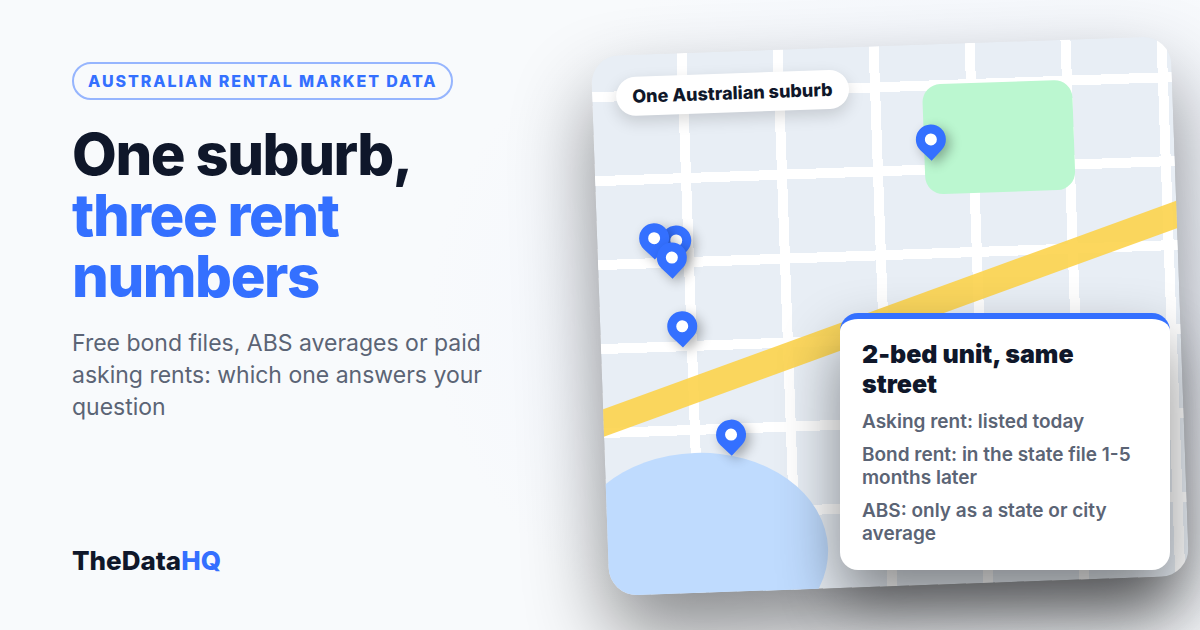
Rental Market Dataset Australia: Free vs Paid Sources
Australian rent data comes from free state bond files (suburb medians, months late), ABS averages, and paid asking-rent data from…
Read the guide