
Social Media Data Scraping for Brands, Agencies & Researchers
Social media data scraping collects public posts, hashtags, comments and engagement counts about the topics and brands you choose, across several social platforms at once. We clean the stream, remove spam, detect language and sentiment, and deliver it as one live feed or a daily dataset your analysts can use straight away.
Why Do Companies Collect Social Media Data?
Customers talk about products in public long before they fill in a survey or call support. A packaging fault, a viral complaint or a surprise fan favourite usually shows up first as a cluster of posts. Marketing and insight teams want to see that conversation as it happens, across every platform their audience uses, rather than logging into five separate dashboards.
Each platform exposes data differently. Some offer limited official access with strict quotas and narrow fields, some change their access rules with little notice, and none of them give you a combined view. Listening tools help, but their coverage, history and export options are fixed by the vendor.
A custom social media data feed solves this by collecting the public conversation you define, in the fields you need, into one schema. You own the data, keep the history as long as you like and can join it to sales, support or campaign data in your own systems.
What Social Media Data Can Be Scraped?
Posts and comments
- Post text and post URL
- Hashtags, mentions and links in the post
- Publish time and language
- Media type: text, image, video or poll
- Public comments and replies on chosen posts
Engagement metrics
- Likes or reactions count
- Shares, reposts and comment counts
- Video views where shown
- Engagement captured at set intervals
- Growth of a hashtag over time
Public accounts and enrichment
- Public brand or creator account name
- Follower count and posting frequency
- Sentiment score: positive, neutral or negative
- Topic and product tags
- Spam, bot and duplicate flags
Social Media Scraping Sample Data
A slice of a live brand-mention feed for a snack brand. Authors are shown as hashed IDs, and each post carries engagement and a sentiment score.
| Platform | Posted | Author ID | Post (excerpt) | Hashtags | Engagement | Sentiment | Topic |
|---|---|---|---|---|---|---|---|
| platform-1 | 21 Nov, 09:12 | a7f3… | new chilli flavour is unreal, bought 3 bags | #snacktime | 1,284 | +0.82 | New product |
| platform-2 | 21 Nov, 09:15 | c19e… | anyone else find the bags half empty lately? | 312 | −0.64 | Packaging | |
| platform-3 | 21 Nov, 09:20 | creator_4410 | taste test video: 5 crisps ranked | #tastetest | 48,900 | +0.31 | Review |
| platform-1 | 21 Nov, 09:31 | e02b… | out of stock at every shop near me | 96 | −0.40 | Availability | |
| platform-4 | 21 Nov, 09:44 | 5bd1… | the old recipe was better tbh | #bringitback | 2,035 | −0.52 | Recipe change |
Social Media Data Use Cases
The same collected posts can answer very different questions. These are the common ones.
Brand mention monitoring
Every public mention of your brand and products, with alerts when volume or tone shifts.
Learn moreSentiment tracking
Positive and negative share over time, by product, market or campaign.
Learn moreHashtag and trend research
Growth and reach of hashtags and topics, to time campaigns and spot rising themes.
Creator discovery
Public creator accounts in your niche, with follower counts and engagement rates.
Customer insight
What buyers like, dislike and ask for, grouped into themes your product team can act on.
Learn moreCompetitor share of voice
How much of the public conversation each competitor earns, and on which platforms.
Learn moreSocial Listening Case Study: Five Platforms, One Live Stream
For a marketing technology company we built a real-time social listening pipeline that collects brand mentions, scores their sentiment and gathers public creator data from five social platforms, then merges everything into one live stream their product serves to customers.
Read the case studyHow Do You Clean Social Media Data for Analysis?
A raw keyword search on social platforms returns a lot of noise: unrelated uses of a brand name, giveaway spam, bot accounts repeating the same text and reposts that inflate counts. We use precise queries with exclusions, then filter out duplicate text, known spam patterns and accounts that behave like bots. What reaches you is the real conversation.
Each post is then enriched. We detect the language, score sentiment with models suited to short, informal text, and tag topics such as price, quality, delivery or a named product line. Engagement is captured more than once, because a post's reach often grows for a day or two after it is published.
Platforms change their public page structures frequently. Our monitoring compares every run with the expected volume and fields, so a sudden drop is investigated by an engineer the same day rather than discovered weeks later as a hole in your charts.
Is Social Media Scraping Legal?
Collecting public posts is generally lawful, but social data involves people, so we set clear limits and review every project's purpose and each platform's terms before we start.
- Public posts and public account metrics only
- No logins, private groups, closed profiles or direct messages
- Usernames of private individuals hashed or removed by default
- Analysis at brand, topic or audience level, not profiling of individuals
- GDPR-aware retention, with data deleted when the project ends if you ask
Projects we decline
- Tracking or profiling specific private individuals
- Building contact lists from personal accounts
- Collecting anything that needs an account to see
How Does a Social Media Data Project Work?
- 01
Define the conversation
Brands, products, hashtags, public accounts, languages and the platforms that matter to you.
- 02
Free sample
Real, cleaned posts from your topics within 48 hours, so you can judge relevance and noise.
- 03
Live feed
In about 7 days, posts arrive as a live stream, webhook or daily file, with alerts on spikes.
- 04
Tuning and upkeep
We refine queries as new slang and products appear, and repair collectors when platforms change.
How Much Does Social Media Scraping Cost?
No minimum project size. Small fixes and big builds are both welcome.
What social media data can be scraped legally?
Public posts, public comments, hashtags, engagement counts and the public metrics of brand or creator accounts. We do not collect private profiles, messages or anything behind a login.
Can you scrape several social platforms into one dataset?
Yes. We collect from each platform separately and map everything into one schema, so posts, engagement and sentiment can be compared side by side.
Can you add sentiment analysis to scraped posts?
Yes. Every post can carry a sentiment score, a language code and topic tags, ready for dashboards or your own models.
Can you monitor hashtags in real time?
Yes. Hashtags and keywords can be collected as a live stream, with alerts when volume or negative sentiment rises above a level you set.
How far back can you collect social media posts?
That depends on what each platform shows publicly. Recent posts are usually reachable, older history less so, which is why most clients start collecting early and keep their own archive.
What format is scraped social media data delivered in?
Live projects usually receive posts through a webhook or a private API within minutes of collection. Research teams more often take daily JSON or CSV files, or rows loaded into their warehouse, with every post keeping its original link.
Why not just use a social listening tool?
Tools are quick to start but fix the coverage, fields and export for you. A custom feed gives you the raw data in your own systems, with the history and fields you choose.
How much does social media data scraping cost?
Platforms covered, posts per day and how close to real time you need them decide the price. Social feeds run on engineer hours from $15 or a dedicated engineer from $2,400 a month, and a fixed monthly fee can be agreed after a free sample.
Social media data scraping guides
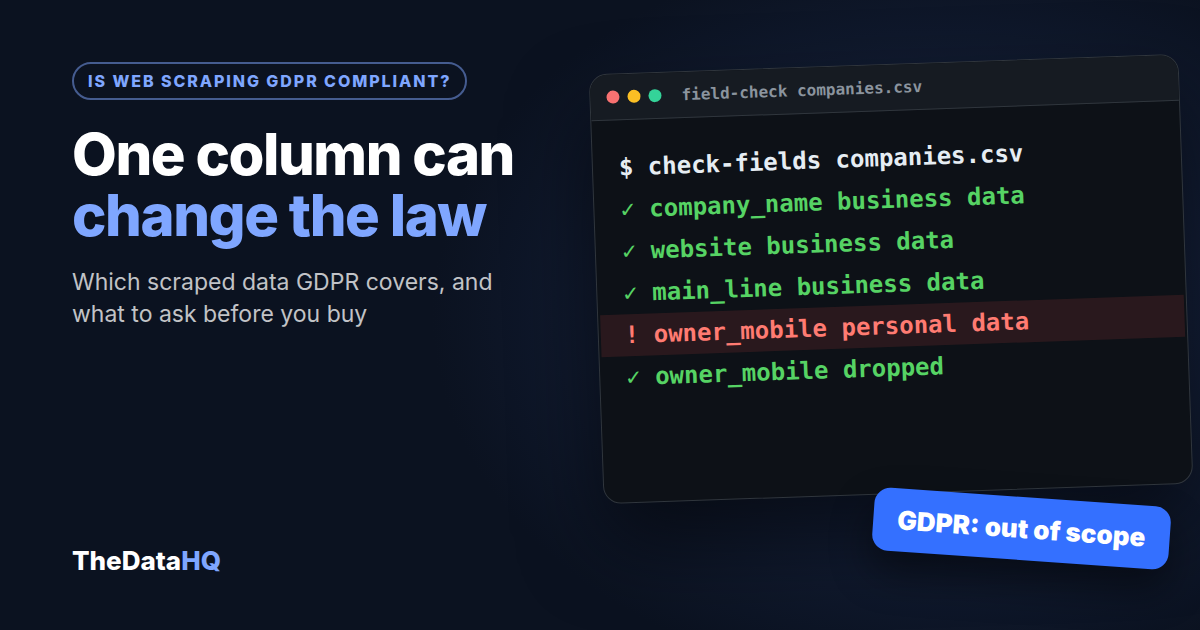
Is Web Scraping GDPR Compliant When You Buy the Data?
GDPR only applies when scraped data identifies a person. Which data is in scope, who is responsible when you buy it, what the EDPB draft…
Read the guide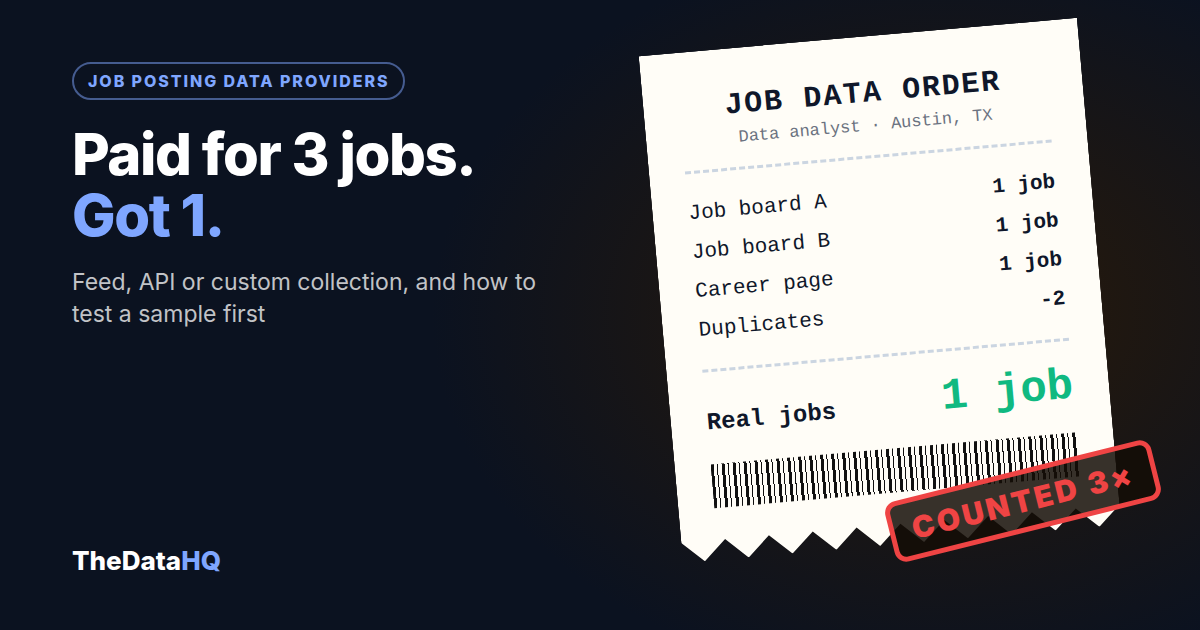
Job Posting Data Providers Compared: Feed, API or Scrape
Job posting data comes as a ready dataset, a pay-per-record API or a custom collection of named sites. Named providers with their…
Read the guide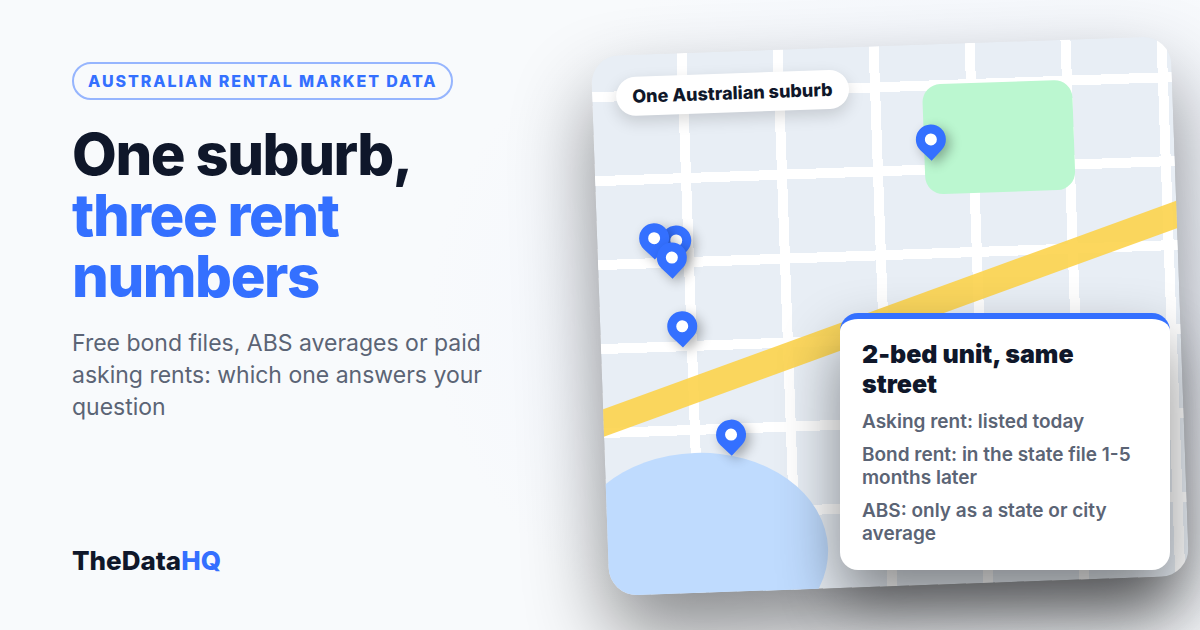
Rental Market Dataset Australia: Free vs Paid Sources
Australian rent data comes from free state bond files (suburb medians, months late), ABS averages, and paid asking-rent data from…
Read the guide