
Web Data for Market Research, Collected Across a Whole Sector
Web data for market research gives analysts the whole market, not a sample of it. We collect company listings, product ranges, prices, job postings, news, papers and patents from the public web, organise them by sector and sub-sector, and deliver datasets you can count, compare and trend, for sizing studies, competitor tracking and investment research.
What Market Research Questions Can Web Data Answer?
Surveys tell you what people say. Web data tells you what companies actually do: what they sell, what they charge, where they hire and what they announce. Because the data is collected the same way for every company, a small specialist firm and a market leader are measured on equal terms.
How many players are in this market?
A count of companies by sector, sub-sector and country, built from directories, registers and company websites.
What does each competitor offer?
Product ranges, plans and features collected from competitor sites and compared line by line.
What does the market charge?
Price points and price bands across a category, for sizing revenue and positioning a launch.
Which segments are growing?
New entrants, hiring volume, funding news and product launches tracked by month.
What is the sector talking about?
News, blogs and trade press grouped by topic and company, so themes show up early.
Where is the technology heading?
Patents and research papers by field and applicant, showing who is investing in what.
Market Research Data Sample: Sector Company Dataset
Part of a company dataset for a study of the plant-based food market. Each row is one company, classified into the client's own sub-sectors, with signals collected from public sources.
| Company | Country | Sub-sector | Products listed | Price band | Open jobs | News (90 days) | Founded |
|---|---|---|---|---|---|---|---|
| Company 0142 | Netherlands | Dairy alternatives | 38 | Mid | 12 | 9 | 2016 |
| Company 0187 | United States | Meat alternatives | 54 | Premium | 41 | 23 | 2013 |
| Company 0233 | Germany | Dairy alternatives | 17 | Value | 3 | 2 | 2019 |
| Company 0261 | Australia | Ready meals | 26 | Mid | 8 | 5 | 2018 |
| Company 0310 | India | Protein ingredients | 9 | B2B | 15 | 7 | 2020 |
Market Intelligence Case Study: 20 Million Publications in 40 Sectors
For a market intelligence platform we built a pipeline that collects news, blogs, research papers, patents and PDFs, classifies them into 40 sectors and more than 2,000 sub-sectors, and links each one to the companies it names using named entity recognition. Analysts search the result by sector, company or topic.
Read the case studyWho Else Uses Web Data for Industry Research?
Corporate strategy teams and venture investors both use it, and we have built for both. For one client we built an industry intelligence and emerging technology platform: scraped data from many sources, analysed with OpenAI models and machine learning, and presented in dashboards that corporate innovation teams and VCs use to spot new technologies and the companies behind them.
For a venture capital client we track more than 2.5 million startups across 120+ sources, delivered through a REST API and a dashboard, with more than 200 GB of data collected. The startup intelligence case study describes how that dataset is kept current.
Both projects taught us the same lesson: research data is only useful when it is consistent over time. Company names change, websites move and sources come and go. We keep stable IDs for every company, record when each fact was collected, and keep old values instead of overwriting them, so a trend you report this quarter can be rebuilt next year.
Market Research Data Fields
Companies
- Name, website and country
- Sector and sub-sector tag
- Founded year and locations
- Products or services listed
- Public registration details
Market signals
- Product counts and price points
- Open job postings by function
- New product and press announcements
- Funding and partnership news
- Review counts and ratings
Content
- News and blog articles by topic
- Research papers and abstracts
- Patents by field and applicant
- Reports and PDFs, with text extracted
- Entities named in each document
How Do You Size a Market With Web Data?
Sizing starts with a clean list of the companies in the market. We build it from several sources at once: business directories, trade association members, marketplace sellers, company registers and search results for the products in scope. Companies found in more than one source are merged, and each is checked against its own website to confirm it is active and in scope.
Next we classify every company into your taxonomy. If you already have sector and sub-sector definitions we use them. If not, we propose one from the data and you approve it. Classification uses the company's own description and product pages, checked by a person where the model is unsure.
Finally we add the measures your model needs: product counts, price points, hiring, locations or review volume. Combined with your own revenue assumptions, these let you build a bottom-up estimate that you can explain line by line, rather than a single number copied from a report.
How Does a Market Research Data Project Run?
- 01
Frame the question
We agree the market definition, countries, taxonomy and the measures your analysis needs.
- 02
Pilot sample in 48 hours
One sub-sector collected and classified, so you can check coverage and definitions early.
- 03
Full dataset
A single-sector study is usually ready in about 7 days. Multi-sector studies take longer, and you get a dated plan up front.
- 04
Track or close
Keep the dataset refreshed monthly or quarterly, or close it as a one-off study.
How Much Does Market Research Data Cost?
No minimum project size. Small fixes and big builds are both welcome.
How is web data used for market research?
Analysts use public web data to count companies, compare products and prices, track hiring and news, and follow patents and research. It covers a whole market rather than a survey sample.
Can you build a list of every company in a sector?
Yes. We combine directories, registers, marketplaces and company websites, merge duplicates and confirm each company is active and in scope.
Can you use our own sector taxonomy?
Yes. We classify companies and documents into your categories. If you do not have one, we propose a taxonomy from the data for you to approve.
Is web data reliable enough for market sizing?
It is reliable for counting and comparing, as long as sources are merged and checked. Every field keeps its source link, so analysts can verify any number.
Can you do a one-off market study rather than ongoing tracking?
Yes. Many research projects are one-off datasets, quoted at a fixed price. You can switch to monthly or quarterly refreshes later.
Which countries can market research data cover?
We work worldwide, with clients in 10+ countries. Coverage depends on what each market publishes, and we confirm it for your sector and countries in the pilot sample.
How much does a market research data project cost?
It depends on the number of sectors, countries and sources. Research datasets are usually fixed-price and quoted up front; ongoing tracking can also run on engineering hours from $15 or a dedicated engineer from $2,400 a month.
Do you collect news, papers and patents as well as company data?
Yes. We collect and extract text from news, blogs, research papers, patents and PDFs, and link each document to the companies it mentions.
Web data for market research guides
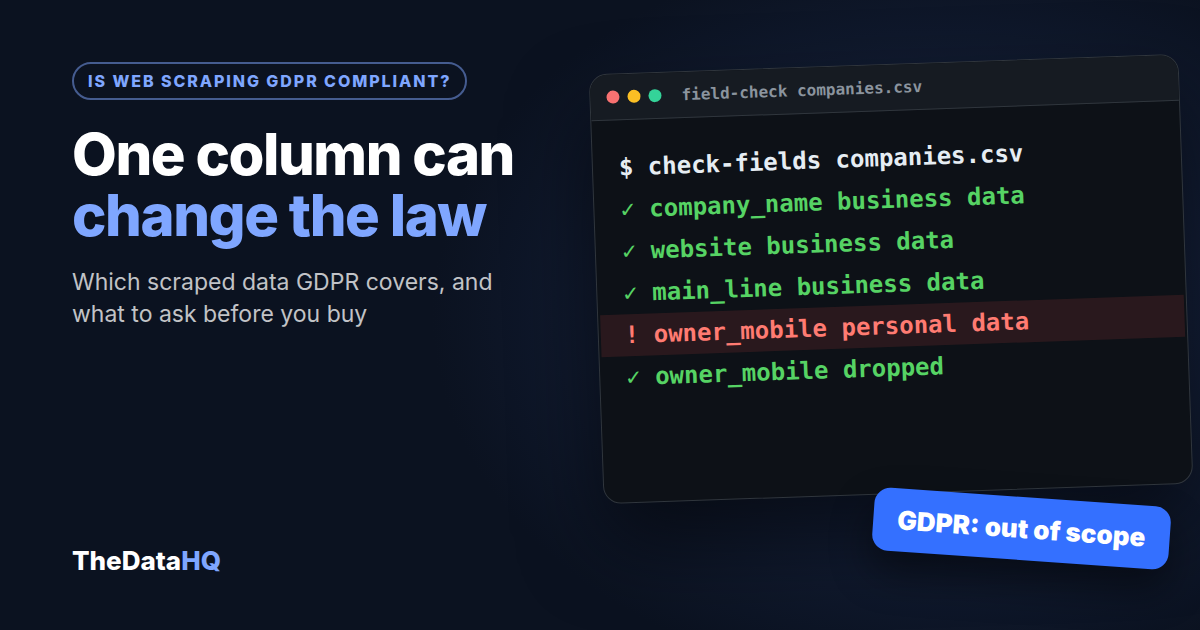
Is Web Scraping GDPR Compliant When You Buy the Data?
GDPR only applies when scraped data identifies a person. Which data is in scope, who is responsible when you buy it, what the EDPB draft…
Read the guide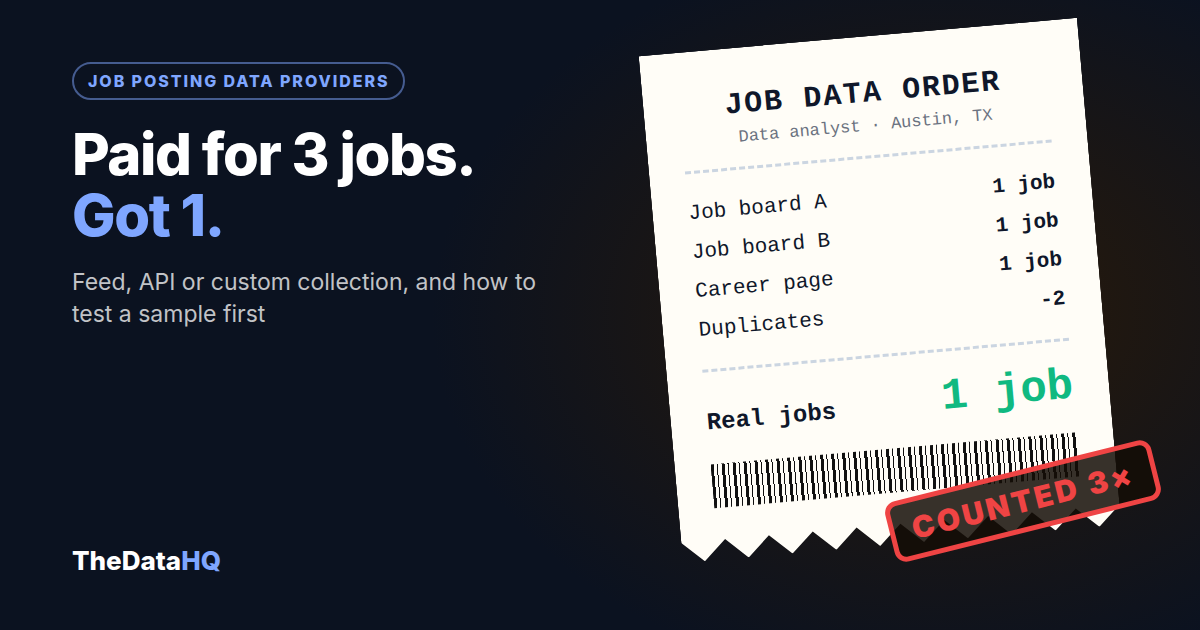
Job Posting Data Providers Compared: Feed, API or Scrape
Job posting data comes as a ready dataset, a pay-per-record API or a custom collection of named sites. Named providers with their…
Read the guide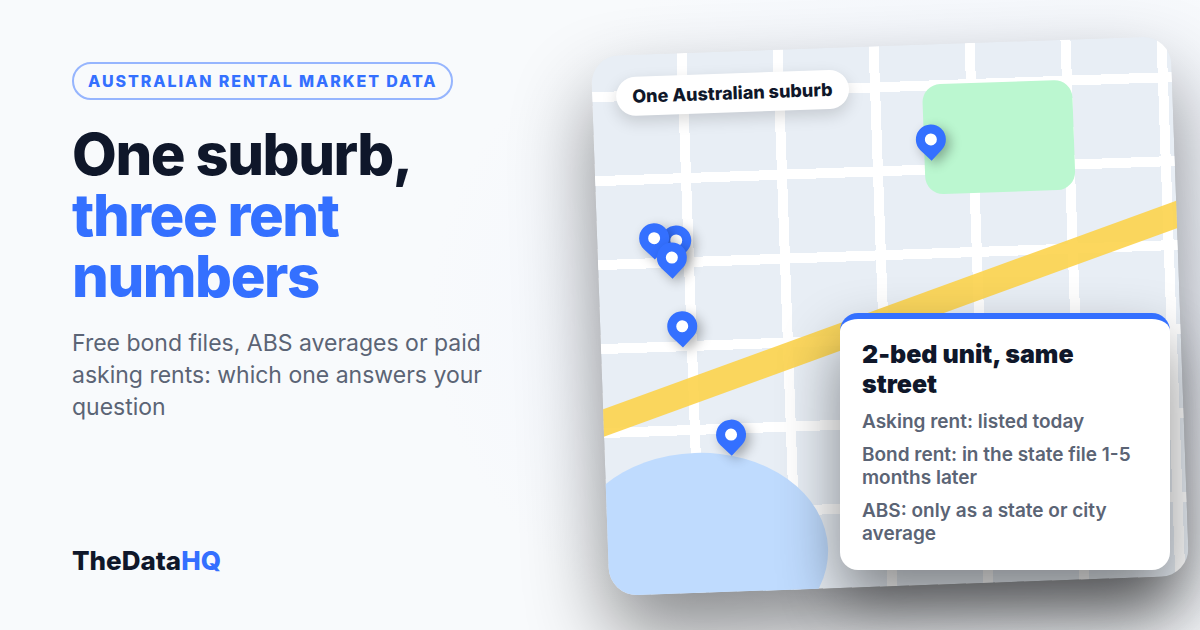
Rental Market Dataset Australia: Free vs Paid Sources
Australian rent data comes from free state bond files (suburb medians, months late), ABS averages, and paid asking-rent data from…
Read the guide