
Review Intelligence, Every Review in One Place
Review intelligence brings every public review of your products, locations or apps into one dataset and tells you what it means. We collect reviews from retailers, marketplaces, travel, app and local business sites, remove duplicates, group the text into themes and track ratings over time, so product, quality and customer teams see problems weeks before they reach the average star rating.
What Questions Can Review Data Answer?
Reviews are the largest source of unprompted customer feedback most companies have. Read one at a time they are anecdotes. Collected and grouped, they answer real questions.
Is there a product defect?
A cluster of reviews about the same fault, such as a broken hinge or a leaking seal, flagged as it forms.
Is our rating slipping?
Rating trends by product, site and month, with the themes behind any fall.
What do buyers mention most?
The top themes in praise and complaints, ranked by how often they appear.
Why do rivals score higher?
The same theme analysis on competitor products, so you can see where they win.
Did the fix work?
Complaints about a specific issue before and after a product change or new batch.
Which reviews look suspicious?
Patterns such as bursts of short five-star reviews on one day, flagged for checking.
Review Intelligence Sample: Reviews Grouped by Theme
Review records for a kitchen appliance brand, collected from three retailers and grouped by theme. The highlighted row belongs to a fault cluster that grew from 2 to 19 reviews in three weeks.
| Product | Site | Rating | Review extract | Theme | Verified | Date | Cluster size |
|---|---|---|---|---|---|---|---|
| Blender B700 | retailer-a.com | 5 | Crushes ice in seconds, easy to clean | Performance | Yes | 11 Nov | |
| Blender B700 | retailer-b.com | 2 | Jug started leaking at the base after a month | Leak at base | Yes | 15 Nov | 19 |
| Kettle K20 | retailer-a.com | 4 | Quiet, but the lid catch feels flimsy | Lid catch | Yes | 16 Nov | 6 |
| Toaster T4 | retailer-c.com | 3 | Browns unevenly on the left side | Uneven browning | No | 18 Nov | 11 |
| Kettle K20 | retailer-b.com | 5 | Boils fast and looks great on the counter | Design | Yes | 20 Nov |
Review Data Fields We Collect
Review record
- Star rating and review title
- Full review text and language
- Review date and site
- Verified purchase flag where shown
- Helpful votes where shown
Product and place
- Product name and variant
- Your SKU or location ID
- Retailer or listing URL
- Overall rating and review count
- Brand response, if any
Analysis
- Theme or issue tag
- Praise or complaint label
- Cluster ID for repeated issues
- Suspicious pattern flag
- Week-on-week change by theme
Where Do You Collect Reviews From?
Wherever your customers leave them in public. For products that usually means retailer and marketplace product pages. For hotels, restaurants and attractions it means travel and booking sites. For apps it means public app store listings, and for local businesses it means map listings and review directories. Most clients need several of these at once, which is why a single site's own export rarely tells the full story.
We collect the full review text, not just the rating, along with the date, variant and any verified purchase flag. Reviews that appear on more than one site, which happens when retailers share a review platform, are matched and counted once. Each review keeps its source link so your team can read the original. Collection runs daily or weekly, and new reviews are added without re-collecting the whole history each time.
How Are Review Themes and Issues Found?
We read a sample of your reviews first and build a theme list with you, such as noise, battery life, sizing or packaging. Every new review is tagged with those themes using language models, and reviews that fit none of them are grouped so new themes surface on their own. This mix of a fixed list and open discovery is what stops a new fault hiding in an "other" bucket.
Issue detection then looks for clusters: reviews from different buyers that describe the same problem in similar words. A cluster that grows faster than normal triggers an alert to your quality or product team with the reviews attached. If you also want a score for how positive or negative each topic is, our sentiment analysis service adds it to the same data.
Can You Collect Reviews at Scale Reliably?
Yes. Since 2015 we have collected data from more than 10,000 websites, built over 15,000 scrapers and delivered 200+ projects for clients in 10+ countries, running more than a million pages a day at 98% accuracy. Review pages are some of the trickiest we handle, with infinite scroll, paged loading and text hidden behind "read more" links, and we deal with them every week.
We have not yet published a dedicated review analytics case study, so we prove it on your own data: a free sample of your reviews, grouped by theme, within 48 hours.
What Is Included in Review Intelligence?
Choose the outputs your teams will read. All of them come from one cleaned review dataset.
- Full review history for your products or locations, then daily or weekly updates
- Theme tags on every review, from a list built with your team
- Fault cluster alerts sent to email or Slack with the reviews attached
- A monthly rating and theme report for each product line
- Competitor review analysis on the same themes
- Raw review data by file, database or API
What is not included
- Reviewer profiles or any personal data about reviewers
- Posting or answering reviews on your behalf
- Reviews that are only visible after logging in
How Does Our Review Analytics Service Work?
- 01
List products and sites
Tell us which products, locations or apps to cover and which competitors to compare with.
- 02
Themed sample in 48 hours
You receive real reviews with draft theme tags to check before the full history is collected.
- 03
History and live feed in about 7 days
Past reviews are loaded, themes are agreed and new reviews arrive on your schedule.
- 04
Alerts and monthly review
Cluster alerts run continuously, and we review the theme list with you each month.
How Much Does Review Intelligence Cost?
No minimum project size. Small fixes and big builds are both welcome.
What is review intelligence?
Review intelligence is the collection and analysis of public reviews across many sites to find themes, rating trends and product or service issues. It turns scattered reviews into reports teams can act on.
Can you collect reviews from multiple retailers for the same product?
Yes. We match the product across retailers and combine its reviews, removing reviews that appear on more than one site.
How far back can you collect reviews?
As far back as the site shows them publicly. Most sites show the full history, which we collect once before switching to daily or weekly updates.
Can review data help detect product defects early?
Yes. When several buyers describe the same fault, we group those reviews into a cluster and alert you as it grows, often before the average rating moves.
Can you spot fake reviews?
We flag suspicious patterns, such as many short five-star reviews in one day or repeated wording. We cannot prove a review is fake, but the flags show where to look.
How much does review analytics cost?
It depends on the number of products, sites and how often you need updates. Review analytics can be bought as engineering hours from $15, as a dedicated engineer from $2,400 a month, or for a fixed fee we set before collection starts.
Is it legal to scrape reviews?
Collecting public review text for analysis is generally lawful. We only collect public pages, do not keep reviewer profiles and review each site's terms before we start.
Review intelligence guides
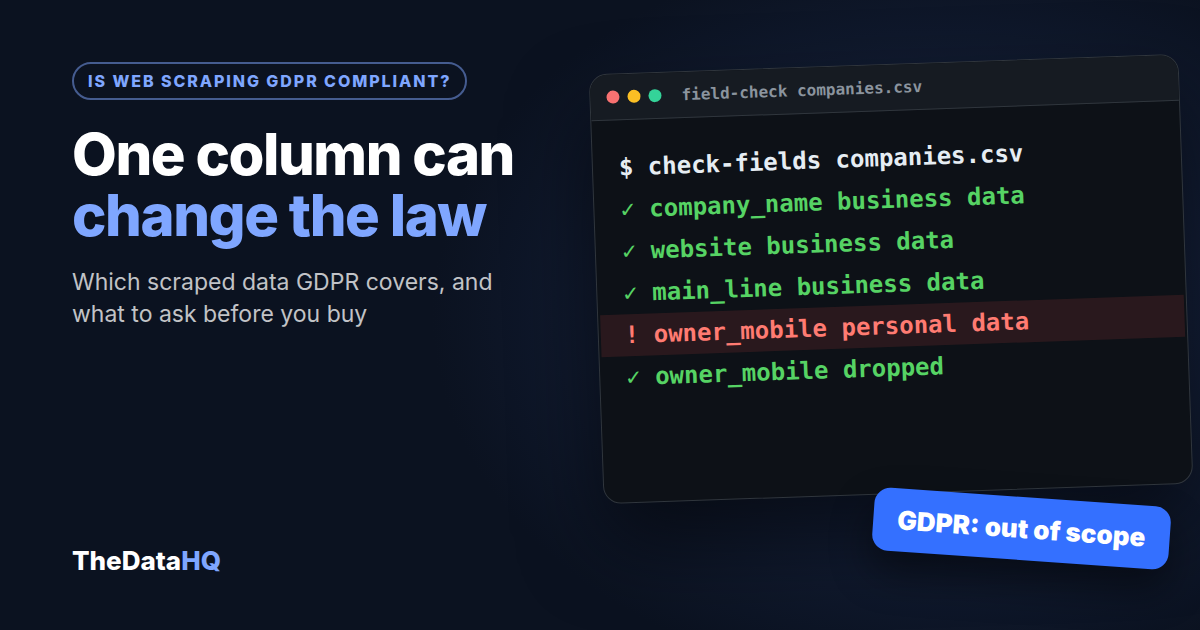
Is Web Scraping GDPR Compliant When You Buy the Data?
GDPR only applies when scraped data identifies a person. Which data is in scope, who is responsible when you buy it, what the EDPB draft…
Read the guide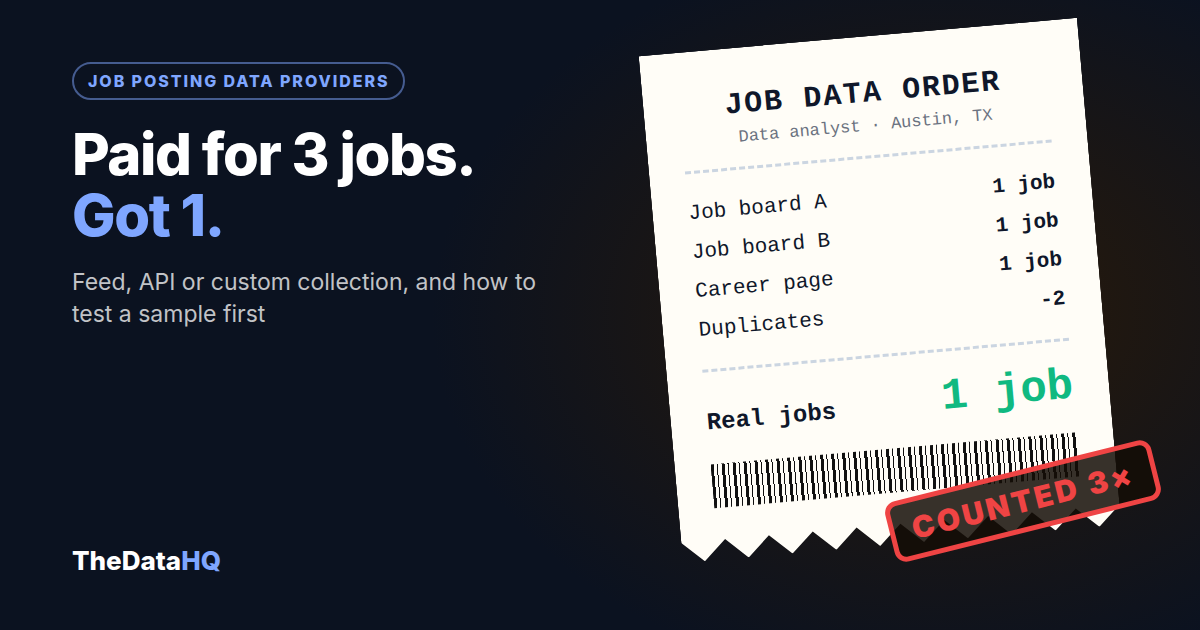
Job Posting Data Providers Compared: Feed, API or Scrape
Job posting data comes as a ready dataset, a pay-per-record API or a custom collection of named sites. Named providers with their…
Read the guide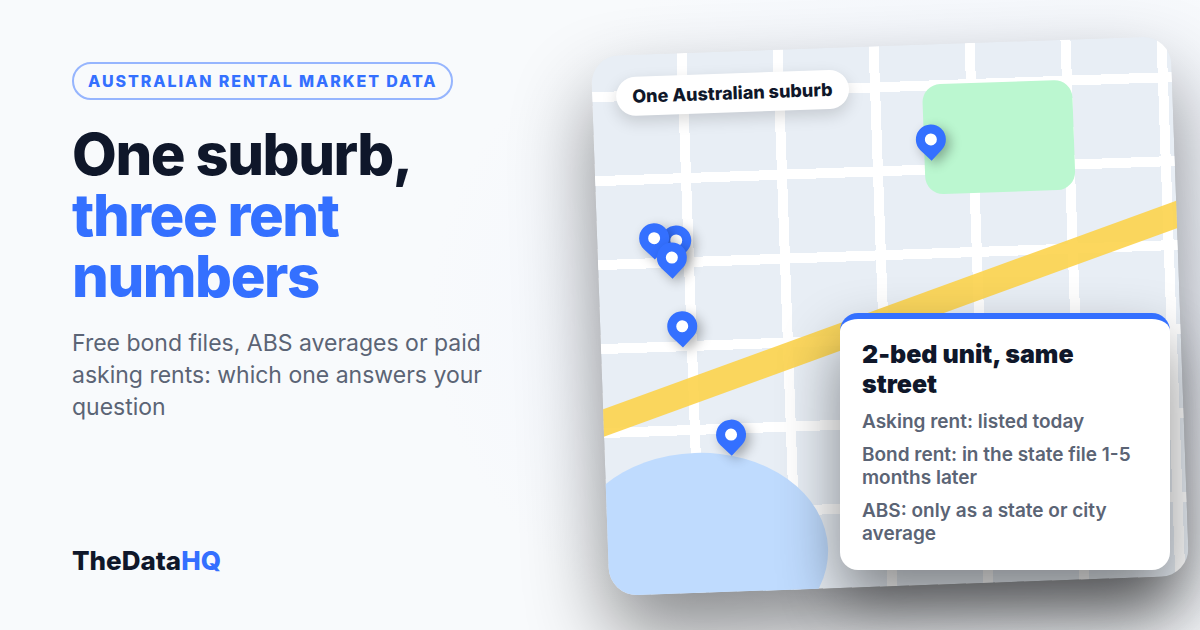
Rental Market Dataset Australia: Free vs Paid Sources
Australian rent data comes from free state bond files (suburb medians, months late), ABS averages, and paid asking-rent data from…
Read the guide