
Location Intelligence Data for Site Selection & Expansion
Location intelligence data shows where businesses operate, where they are opening and where they are pulling out. We collect store and branch locations from public store locators, business directories and property portals, geocode every address and track changes over time, so your expansion, network planning and market analysis rest on a current map, not last year's list.
What Questions Does Location Intelligence Answer?
Location decisions are expensive to get wrong. A lease runs for years, and a new branch in the wrong place drains the rest of the network. These are the questions clients bring to us.
Where are our competitors?
Every public branch of every rival you name, on one map, with type and opening hours.
Who opened or closed this month?
A change log that lists new, closed and moved locations since the last run.
Where is the white space?
Areas with demand signals but few competing sites, ready for your planning team to score.
How far is each site from rivals?
Distance to the nearest competitor and the count within 1, 3 or 5 km of every location.
What space is available nearby?
Commercial listings near your target areas, with size, rent and listing date.
How is a chain's footprint changing?
Branch counts by region over time, showing where a brand grows and where it retreats.
Location Intelligence Data Sample: Competitor Store Changes
A monthly change report for a coffee chain watching three competitors. Each location is geocoded and compared with the previous month, so the status column shows what actually moved.
| Brand | Store | City | Postcode | Lat | Lng | Type | Status |
|---|---|---|---|---|---|---|---|
| Brand A | High Street | Reading | RG1 2AG | 51.4552 | -0.9712 | Drive-thru | Opened 04 Nov |
| Brand A | Station Road | Woking | GU22 7AE | 51.3185 | -0.5583 | Kiosk | Open |
| Brand B | Retail Park | Swindon | SN5 7DL | 51.5627 | -1.8392 | Drive-thru | Closed 12 Nov |
| Brand B | Market Square | Oxford | OX1 3DY | 51.7522 | -1.2577 | Café | Open |
| Brand C | Gateway Centre | Basingstoke | RG21 7LH | 51.2652 | -1.0866 | Café | Relocated 18 Nov |
Location Data Fields We Deliver
Place details
- Brand and location name
- Full address and postcode
- Latitude and longitude
- Store type or format
- Phone line and web page
Operations
- Opening hours by day
- Services offered (parking, drive-thru, pickup)
- Temporary or permanent closure flag
- Rating and review count
- Category tags from the source
Change tracking
- Date first seen
- Date last seen
- Opened, closed or relocated status
- Previous address for moves
- Distance to nearest competitor
How Accurate Is Scraped Store Location Data?
The raw data is rarely clean. A chain's store locator may list a branch that closed months ago, a directory may hold the same shop twice under slightly different names, and addresses arrive in a dozen formats. If you map that data as it comes, you see stores that do not exist and miss ones that do.
We fix this in three steps. First we standardise every address and geocode it, checking that the coordinates fall inside the stated postcode. Then we merge records for the same place across sources, matching on address, coordinates and phone line. Finally we compare each run with the last one, so a location only counts as closed when it is missing from the brand's own locator and the other sources agree.
The result is a location list your analysts can trust without a week of cleaning, and a change history that grows more valuable each month because every opening and closure is dated.
Do You Have Experience With Location Data Projects?
Yes. We run a pipeline that captures newly listed businesses around the clock, by city or region, and deduplicates them as they arrive. The same approach of watching public sources by area and recording what changes is the core of location intelligence.
We also run property data pipelines that cover 50+ portals and capture more than 300 new listings a day as they go live, alongside a database of 2M+ historic records. Every record is tied to a location, which is how we learned to handle messy addresses at scale. Our property records case study covers that work. We do not yet have a published retail site-selection project, so we offer a free sample on your own competitor set before you commit.
Whatever the sector, the method is the same: name the places that matter, collect them from every public source that lists them, merge the duplicates and keep a dated history. Retail chains, restaurant groups, gyms, clinics, car dealers and bank branches all publish enough location data to build a reliable competitor map.
What You Get From a Location Intelligence Service
Pick the outputs your team will use. All of them come from one geocoded, deduplicated dataset.
- A full location list for every brand or category you name
- A monthly or weekly change report: opened, closed and moved
- GeoJSON or shapefile-ready output for your GIS or mapping tool
- Competitor counts and distances around each of your own sites
- Commercial property listings near your target areas
- A refreshed database table or private API your tools can query
How Our Location Data Service Works
- 01
Name the brands and areas
Tell us the competitors, categories and regions you care about, and how often you need updates.
- 02
Sample within 48 hours
We return geocoded locations for one brand or one region, so you can check coverage against what you know.
- 03
Full map in about 7 days
All sources are collected, merged and geocoded, with the first change report set as the baseline.
- 04
Track changes over time
Each run is compared with the last, and openings, closures and moves are reported on your schedule.
How Much Does Location Intelligence Data Cost?
No minimum project size. Small fixes and big builds are both welcome.
What is location intelligence data?
It is data about where businesses and places are, and how that changes. Typical fields are address, coordinates, store type, opening hours and the date a location opened or closed.
Can you get every store location for a retail chain?
Yes, where the chain publishes a store locator or its branches appear in public directories. We collect all of them, geocode each one and merge duplicates.
How do you detect store openings and closures?
We compare each run with the previous one. A new location is flagged as an opening, and a missing one is marked closed only when the brand's own site and other sources agree.
What format is store location data delivered in?
CSV, Excel, GeoJSON, a database table or a private API. GeoJSON loads straight into most mapping and GIS tools.
Can you collect data for site selection in a new country?
Yes. We work worldwide and handle local address formats, postcodes and languages for clients in 10+ countries.
How often should competitor store locations be updated?
Monthly suits most site-selection and network planning work. Fast-growing sectors such as quick-service food or convenience retail often run weekly, so new openings are seen while a decision is still open.
Can you add demographic or footfall data to locations?
We collect public web data only. We can add publicly published area statistics where they exist, and deliver coordinates in a format that joins easily to demographic data you already licence.
How much does store location data cost?
It depends on the number of brands, regions and how often you need updates. A store location project can run on hourly engineering from $15, on a dedicated engineer from $2,400 a month, or on a fixed quote agreed before work begins.
Location intelligence data guides
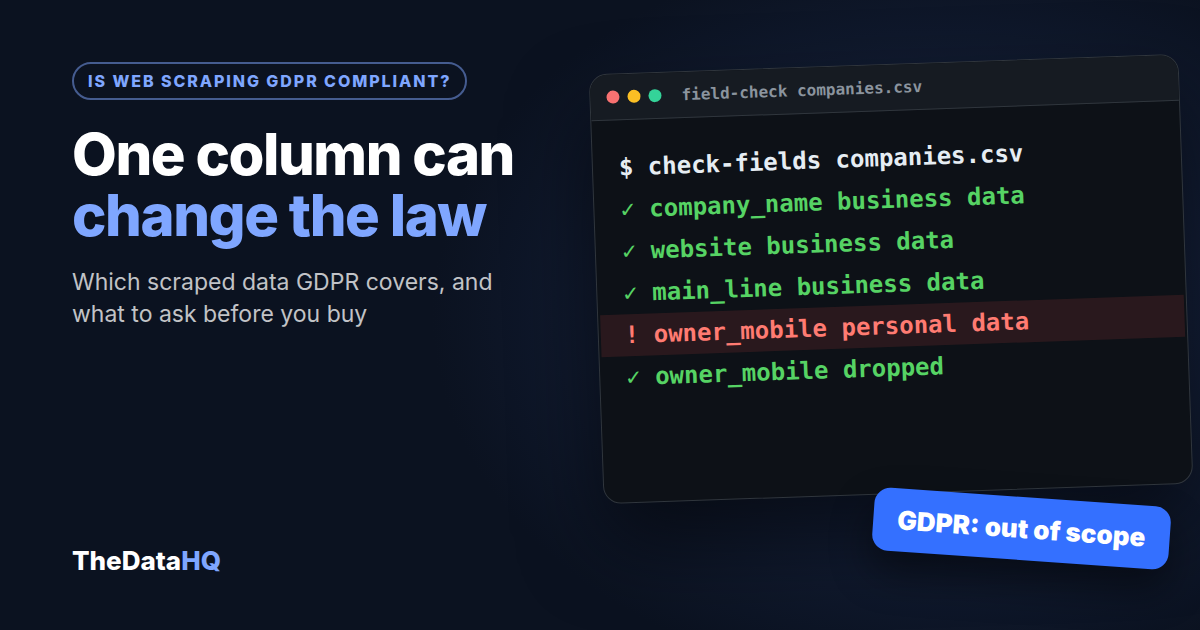
Is Web Scraping GDPR Compliant When You Buy the Data?
GDPR only applies when scraped data identifies a person. Which data is in scope, who is responsible when you buy it, what the EDPB draft…
Read the guide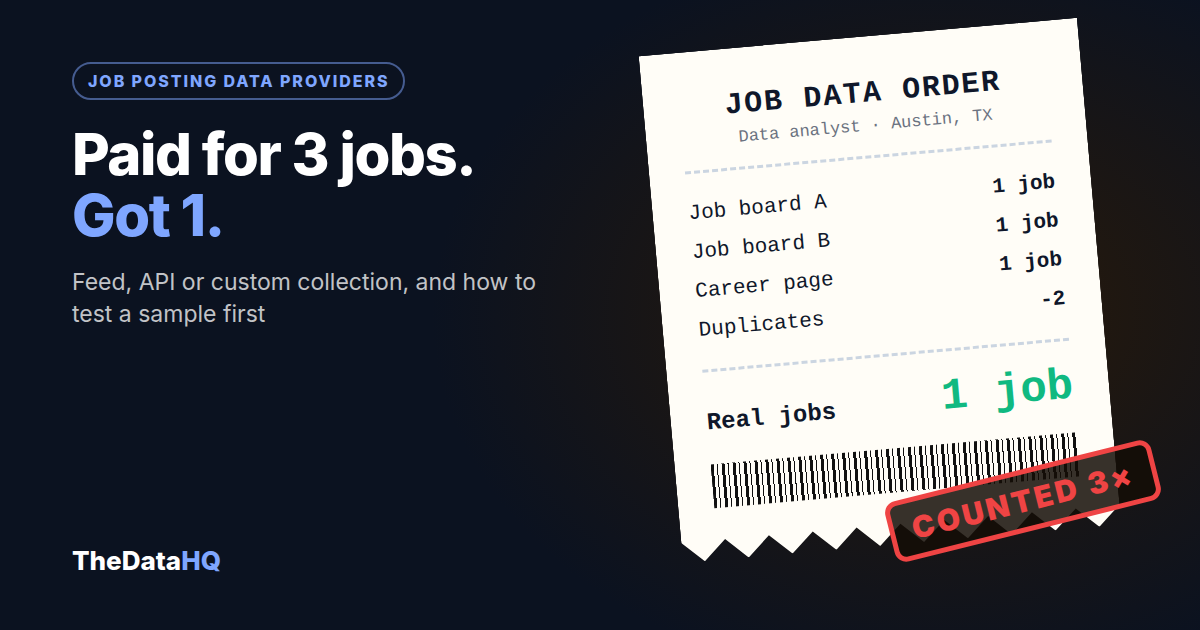
Job Posting Data Providers Compared: Feed, API or Scrape
Job posting data comes as a ready dataset, a pay-per-record API or a custom collection of named sites. Named providers with their…
Read the guide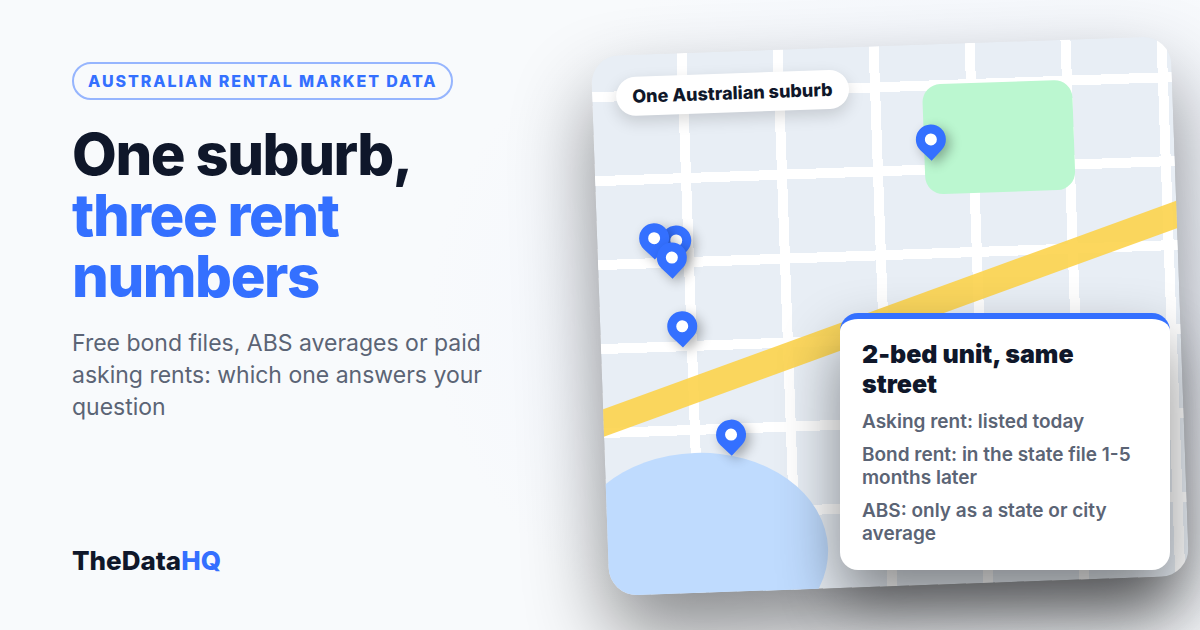
Rental Market Dataset Australia: Free vs Paid Sources
Australian rent data comes from free state bond files (suburb medians, months late), ABS averages, and paid asking-rent data from…
Read the guide