
Data Appending Services for CRM, Property and Product Records
Our data appending services take a file you already have, such as a CRM export, a property list or a product catalogue, and add the columns it is missing using public web data. Each appended value is matched to the right record, tagged with its source and date, and returned in the same order you sent it.
What an Appended Record Looks Like
This is sample data from a B2B lead file. The client sent company name and city only. Every column after City came from public company websites, business directories and registries.
| Company (yours) | City (yours) | Website | Industry | Staff range | Founded | Match | Source |
|---|---|---|---|---|---|---|---|
| Hartley Fabrication | Leeds | hartleyfab.example | Metal fabrication | 51–200 | 1998 | High | Company site, registry |
| Norbridge Dental Group | Bristol | norbridgedental.example | Dental clinics | 11–50 | 2011 | High | Directory, company site |
| Kova Analytics | Austin | kova-analytics.example | Software | 11–50 | 2019 | Medium | Company site |
| Pinewell Logistics | Rotterdam | pinewell.example | Freight forwarding | 201–500 | 2004 | High | Registry, directory |
| Summit Bakery | Denver | No match | Two firms share this name |
What Records Can Be Enriched With Web Data?
Appending works on any list where each row points to something that exists on the public web. These are the four we do most.
Company and lead lists
Website, industry, size band, founding year, locations and technologies, added at company level.
Learn moreProperty records
Energy ratings, planning applications, listing history and asking prices, added to each address.
Learn moreProduct catalogues
Specifications, images, GTINs, category paths and marketplace prices, added to each SKU.
Store and place lists
Opening hours, coordinates, ratings and categories from public map and directory pages.
Learn moreHow Do You Match Web Data to the Right Record?
Matching is where appending succeeds or fails. A company called Summit Bakery may exist in a dozen cities, a property address can be written six ways, and the same blender is sold under three model numbers. We match on several signals at once, such as name plus postcode plus website domain, or GTIN plus brand plus pack size, and score each match.
High-confidence matches are appended automatically. Medium ones are checked by a person or by a rule you approve. Low ones are left blank with a reason, because a wrong value in a CRM costs more than an empty one: a salesperson who sees the wrong industry or size band stops trusting every other field.
Every appended value carries the source page and the date we read it. When your team asks where a number came from, the answer is one click away, and when a value goes stale we know which records to refresh.
Data Appending Case Study: Lead Research From 45 Minutes to 2
A B2B sales team was researching each new lead by hand before outreach. We built an enrichment agent that checks 14 public sources per company, writes a short brief and posts it to the lead record in HubSpot in about 90 seconds. Reps start each call already knowing the company.
Read the case studyCan You Append Public Data to Property Records?
Yes. For a UK real estate data platform we enriched listings gathered from property portals, auction sites and agent websites with energy performance certificate ratings and council planning applications. A single address now shows its asking price history next to its energy rating and any extension or change-of-use application filed nearby.
The same method works for any market where public registers exist. We match each address to the register's own format, keep the certificate or application reference, and refresh the appended fields on a schedule so a newly filed application shows up against the right property.
Why Do CRM and Catalogue Records Need Appending?
Records start incomplete and then decay. A sales rep types a company name from a trade show badge and moves on. A supplier sends a product feed with no dimensions. A property list arrives with addresses but no energy ratings. Within a year, companies have moved offices, rebranded or closed, and products have been replaced by new model numbers. A list that looked complete at import is quietly wrong in a few rows out of every ten.
The cost shows up downstream. Lead scoring cannot score a company with no industry or size band. Territory planning puts accounts in the wrong region. Marketplace listings get rejected for missing attributes. Appending fixes the gaps once, and a scheduled refresh stops them coming back, which is cheaper than asking staff to research rows by hand every quarter.
What Is Included in Our Data Appending Service
You send the file once. We return it with new columns, a match report and a plan to keep it current.
- A free test file of your own rows before any paid work
- Field list and match rules agreed in writing
- Match score and source link for every appended value
- Blank and flagged rows where no safe match exists
- Output in your original row order and format, or written straight to your CRM
- Optional scheduled refresh so appended fields do not go stale
What we do not append
- Personal email addresses or private phone numbers
- Data copied from behind a login or a paid database
- Credit, health or other sensitive personal details
- Values we cannot trace to a public source
How Our Data Appending Process Works
- 01
Send a sample (day 0)
Share 100–500 rows and tell us which fields you want added. We confirm which public sources hold them.
- 02
Test file (day 2)
You get those rows back appended, with match rates, so you can judge quality before committing.
- 03
Full run (days 3–10)
We process the full file, check samples by hand and return it with a match report.
- 04
Keep it fresh
New records are appended as they arrive, and existing ones are refreshed on a schedule you set.
How Much Do Data Appending Services Cost?
No minimum project size. Small fixes and big builds are both welcome.
What is data appending?
Data appending adds missing information to records you already have, for example adding website, industry and size band to a list of company names. We use public web sources and match each value to the correct row.
What is the difference between data appending and data enrichment?
The terms are used almost interchangeably. Appending usually means filling specific missing columns, while enrichment can also mean adding derived fields such as scores or categories. We do both.
How much do data appending services cost?
A one-off file is normally a fixed price quoted up front based on row count and the fields requested. Ongoing enrichment runs on engineer time from $15 an hour or a dedicated engineer from $2,400 a month.
What match rate can I expect?
It depends on how complete your input is. A file with company name and website matches far better than one with name only. The free test file shows your real match rate before you pay.
Can you append data directly into HubSpot or Salesforce?
Yes. We can write appended fields straight to your CRM through its API, either in one batch or each time a new record is created.
Do you append personal contact details?
No. We append business-level public data such as company websites, industries and locations. We do not collect personal email addresses, private phone numbers or other personal data.
How do you keep appended data up to date?
Every value is dated, so we can refresh records on a schedule, such as monthly for company data or weekly for prices, and flag values that have changed.
Can you clean and deduplicate my list before appending?
Yes, and we usually recommend it. Merging duplicate companies and fixing badly formatted addresses first raises the match rate and stops you paying to append the same record twice.
Data appending services guides
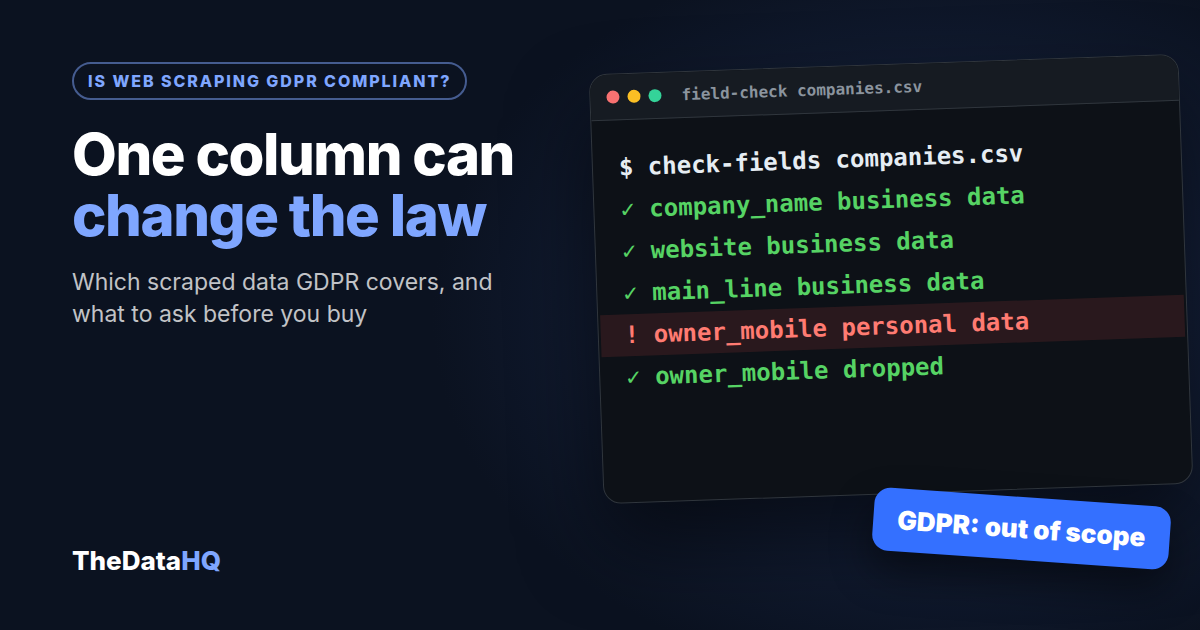
Is Web Scraping GDPR Compliant When You Buy the Data?
GDPR only applies when scraped data identifies a person. Which data is in scope, who is responsible when you buy it, what the EDPB draft…
Read the guide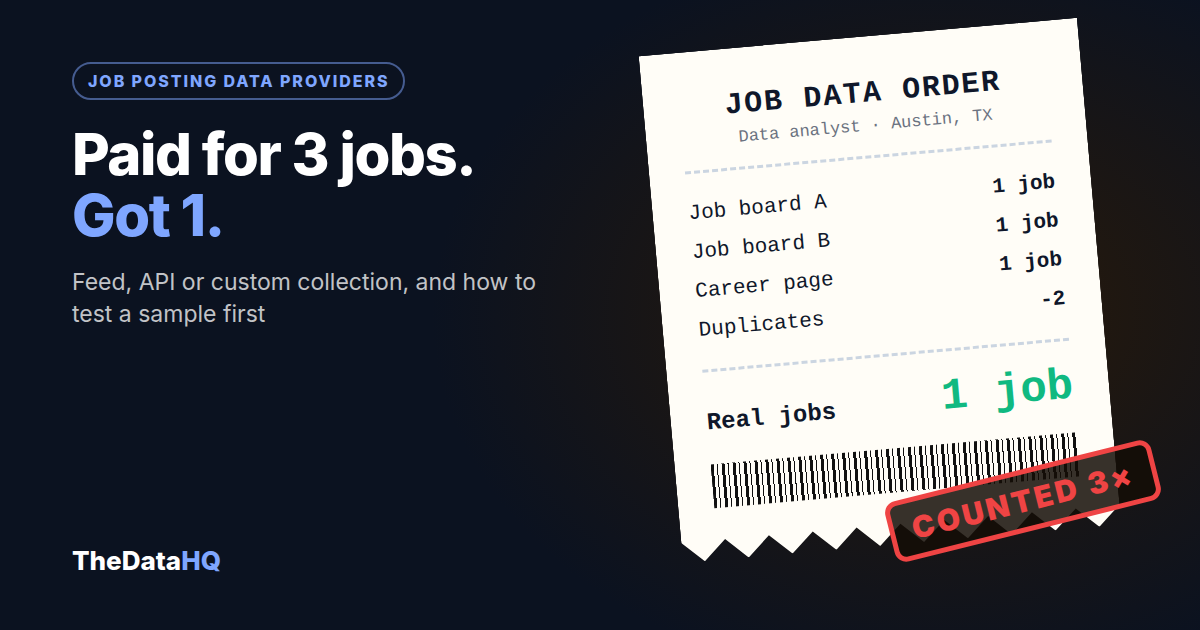
Job Posting Data Providers Compared: Feed, API or Scrape
Job posting data comes as a ready dataset, a pay-per-record API or a custom collection of named sites. Named providers with their…
Read the guide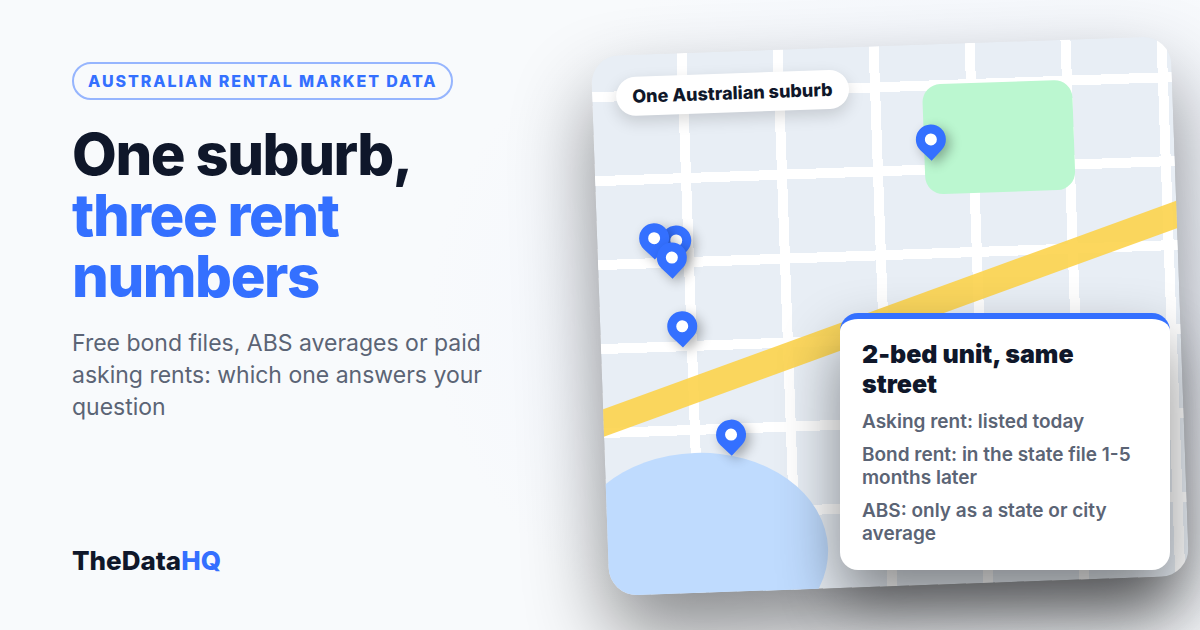
Rental Market Dataset Australia: Free vs Paid Sources
Australian rent data comes from free state bond files (suburb medians, months late), ABS averages, and paid asking-rent data from…
Read the guide