
Enterprise Web Crawling for Thousands of Sources
Enterprise web crawling is what you need when a dataset depends on thousands of sources staying healthy at once. We design the crawl fleet, run it on our infrastructure, report on every source and commit to delivery times in writing, so your product or research team can treat web data like any other dependable supplier.
What Enterprise Web Crawling Reporting Looks Like
At this scale the question is never whether one site worked today. It is how each group of sources performed against the agreed targets. Below is an excerpt from a weekly source health report for a client tracking hiring across regions.
| Source group | Sources | Healthy | Records this week | Failed runs fixed | Median fix time | SLA |
|---|---|---|---|---|---|---|
| Career pages, North America | 4,120 | 99.1% | 118,400 | 37 | 5 h | Met |
| Career pages, Europe | 3,860 | 98.7% | 96,250 | 49 | 6 h | Met |
| Regional job boards | 212 | 100% | 61,900 | 2 | 3 h | Met |
| Career pages, Asia Pacific | 2,940 | 96.4% | 70,300 | 106 | 14 h | At risk |
| Staffing agency sites | 1,075 | 98.9% | 22,800 | 12 | 4 h | Met |
What Does an Enterprise Web Crawling Service Include?
Large buyers need more than data. They need a supplier that passes procurement, survives an audit and keeps working when the person who set it up moves on. These are part of every enterprise engagement.
- A written service level for delivery time, coverage and fix time, with monthly reporting against it
- One shared schema across every source, versioned, with change notices before fields are added or renamed
- Source-level lineage: every record traces back to its URL and the time it was fetched
- Answers to your security and vendor questionnaires, plus an NDA and data processing terms
- A named engineering lead and a backup, not a shared support queue
- Capacity to add hundreds of new sources a month without rebuilding the pipeline
- An exit plan: crawler code and full history handed over if you ever move the work in-house
What we will not do, at any size
- Crawl behind logins or paywalls
- Collect personal data such as private profiles
- Bypass access controls or ignore a site's clear terms
- Promise coverage we have not tested on a sample
How Do You Crawl Thousands of Websites Reliably?
Writing one crawler per site does not scale past a few hundred sources. For large fleets we group sources by the software they run on, such as a common careers platform, news system or shop engine, and write one adaptable crawler per group. A new source on a known platform joins in minutes, and only genuinely custom sites need bespoke code.
Scheduling is handled by a workflow engine with queues, so a slow or failing source never holds up the others. Each domain has its own request budget and pacing. Results flow into staging, pass validation against the shared schema and only then reach the delivery tables your systems read.
Failures are expected at this size. On any given day some sites redesign, move or go offline. Monitoring compares each source's output with its own history, so a sudden drop in records, a spike in empty fields or a change in page structure opens a ticket automatically. Engineers work the queue by business priority, which is what makes a written fix time possible.
Enterprise Web Crawling Case Study: 15,000 Scrapers in 12 Countries
HiCounselor needed every new job posting from job boards and thousands of company career pages, in real time, across 12 countries. We built and ran the full crawling fleet, normalised every posting into one schema and removed duplicates before the data reached their job-matching engine.
Read the case studyWho Uses Enterprise Web Crawling?
Enterprise crawls sit behind products and research that would stop working without a steady stream of outside data.
HR and job platforms
Postings from thousands of employers, refreshed through the day.
Learn moreInvestment research
Company signals, filings and news for funds and analysts.
Learn moreMarket intelligence
Publications and company records organised by sector.
Learn moreAI and search products
Large, deduplicated, source-tracked corpora for training and retrieval.
Learn moreHow Long Does an Enterprise Crawling Project Take?
- 01
Pilot (weeks 1–2)
A representative slice of 50 to 200 sources, delivered in your schema, so coverage and quality are measured rather than promised.
- 02
Service terms (weeks 2–3)
SLA targets set from pilot results, security review completed and reporting format agreed with your team.
- 03
Phased ramp (weeks 3–8)
Sources added in tranches by priority, each tranche checked before the next starts.
- 04
Steady state (ongoing)
Monthly SLA reports, quarterly reviews of coverage and new-source requests handled as a standing workflow.
Build an In-House Crawling Team or Outsource Enterprise Crawling?
| Option | In-house team | Several freelancers | TheDataHQ |
|---|---|---|---|
| Time to full coverage | 6–12 months of hiring and building | Uneven, source by source | Weeks, after a measured pilot |
| Written service level | Internal only | Rarely offered | Agreed and reported monthly |
| Cover when someone leaves | Knowledge walks out | Code nobody else knows | Named lead plus backup, shared runbooks |
| Infrastructure and proxies | Your budget and your ops team | Each freelancer's own setup | Included and monitored |
| Cost shape | Salaries plus cloud bills | Per-job invoices | One monthly fee per scope |
How Much Does Enterprise Web Crawling Cost?
No minimum project size. Small fixes and big builds are both welcome.
Why Enterprises Choose TheDataHQ for Large-Scale Crawling
We have run crawling fleets measured in thousands of scrapers, not dozens, and we have done it for years at a time. Since 2015 we have delivered more than 200 projects for clients in more than 10 countries, and the same engineers who design your fleet stay on to run it.
TheDataHQ is the data division of BinaryBits, so an enterprise engagement is backed by a full engineering team rather than one specialist. That depth is what lets us add capacity quickly, cover holidays and absences, and build an API, dashboard or internal tool on top of the data when you need one.
Compliance is part of the design. We collect public data only, keep personal data out of scope, read every source's terms and keep records of what was collected, from where and when. When your legal or procurement team has questions, they get written answers and a reply within 4 business hours.
What is enterprise web crawling?
It is web crawling run as a dependable supply of data across hundreds or thousands of sources, with a written service level, source-level reporting, security review and a shared schema. The provider builds, hosts and maintains the whole fleet.
How many websites can an enterprise crawler handle?
There is no fixed ceiling. We have run a single client fleet of more than 15,000 scrapers, and our infrastructure handles over a million pages a day. Sources are added in tranches so quality is checked as the fleet grows.
Do you offer SLAs for web crawling?
Yes. We agree targets for delivery time, source coverage and fix time after a pilot, so the numbers are based on measured results. Performance against them is reported monthly.
How do you keep data consistent across thousands of sources?
Every source maps into one versioned schema, and every run is validated against it before delivery. Records carry their source URL and fetch time, so any value can be traced and checked.
Can you complete our vendor security questionnaire?
Yes. We answer security and vendor questionnaires, sign NDAs and data processing terms, and describe exactly what data we hold and for how long.
What happens if we want to bring crawling in-house later?
We hand over the crawler code, the configuration, the runbooks and the full data history. Avoiding lock-in is part of the contract from the start.
How much does enterprise web crawling cost?
Most enterprise work runs on a monthly fee set by source count, page volume and refresh rate. Dedicated engineers start from $2,400 a month, hourly work from $15 an hour, and fixed-price pilots are quoted up front.
Enterprise web crawling guides
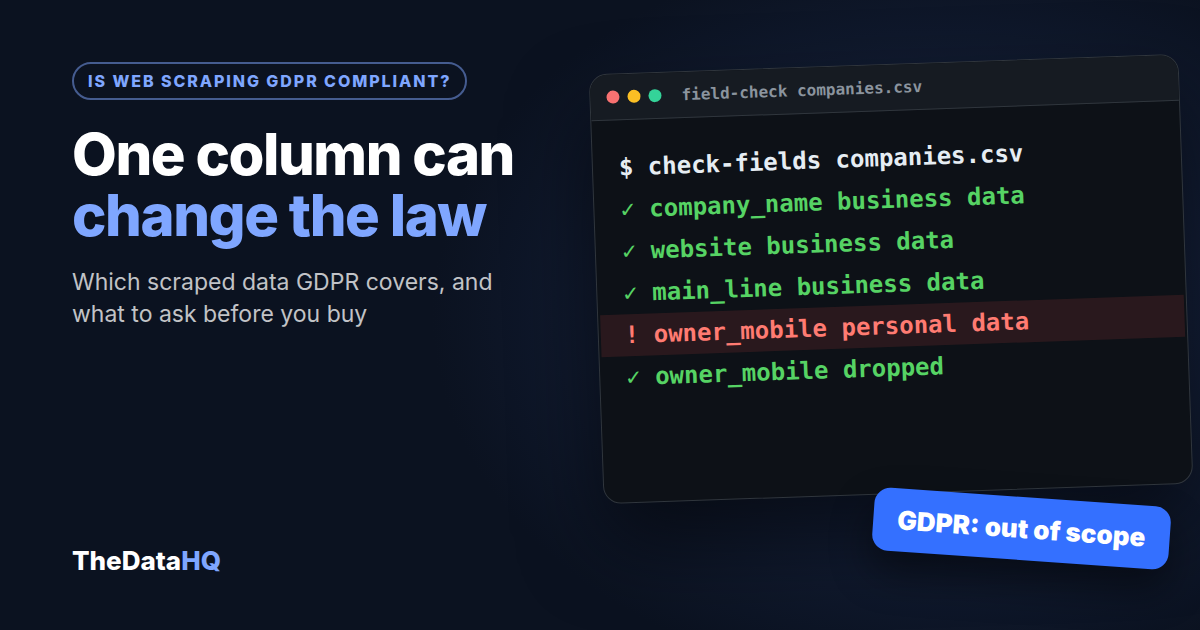
Is Web Scraping GDPR Compliant When You Buy the Data?
GDPR only applies when scraped data identifies a person. Which data is in scope, who is responsible when you buy it, what the EDPB draft…
Read the guide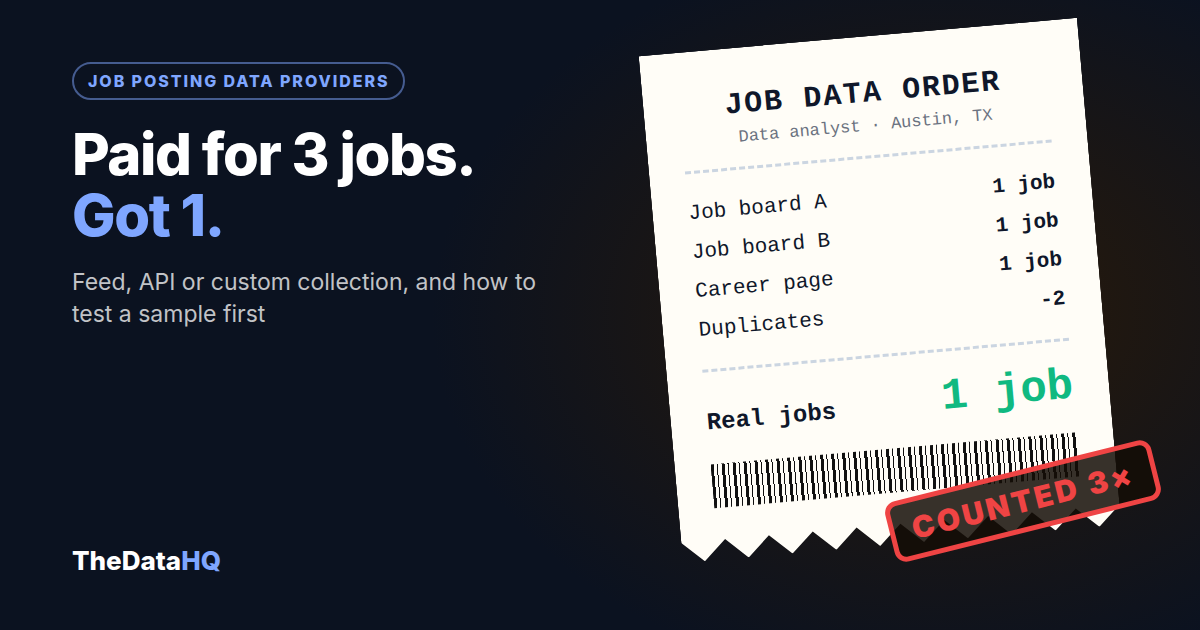
Job Posting Data Providers Compared: Feed, API or Scrape
Job posting data comes as a ready dataset, a pay-per-record API or a custom collection of named sites. Named providers with their…
Read the guide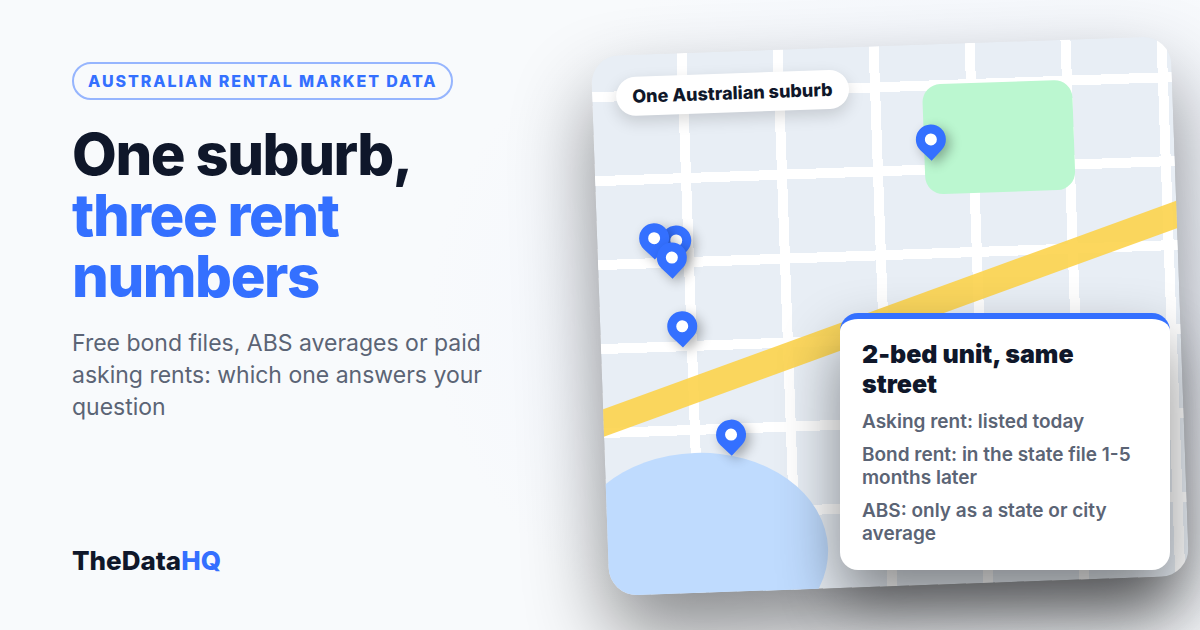
Rental Market Dataset Australia: Free vs Paid Sources
Australian rent data comes from free state bond files (suburb medians, months late), ABS averages, and paid asking-rent data from…
Read the guide