
Hosted Web Crawling for Crawlers You Own or We Build
Hosted web crawling means your crawlers run on our servers and our engineers keep them running. Bring spiders your team has already written, or let us write new ones: either way we handle the servers, schedules, proxies, monitoring and repairs, and you keep ownership of the code and the data.
What Hosted Web Crawling Looks Like Day to Day
Every hosted crawler appears on a run board that both teams can see. This excerpt shows a client fleet where some spiders came from the client's own repository and others were written by us. Status and the action taken are recorded for every run.
| Crawler | Written by | Schedule | Last run | Items | Status | Action taken |
|---|---|---|---|---|---|---|
| supplier_catalogue | Client | Daily 02:00 | 22 Nov, 02:41 | 18,204 | OK | None needed |
| dealer_inventory | Client | Every 4 h | 22 Nov, 08:12 | 3,977 | Fixed | Selector updated after redesign |
| tender_notices | TheDataHQ | Hourly | 22 Nov, 09:00 | 146 | OK | None needed |
| spare_parts_prices | Client | Daily 05:00 | 22 Nov, 05:58 | 41,330 | Slow | Moved to a larger worker |
| distributor_stock | TheDataHQ | Every 30 min | 22 Nov, 09:30 | 912 | OK | None needed |
What Is Included in Hosted Web Crawling?
Crawler as a service covers everything between the code and the data. You stop paying for idle servers and stop being paged at night when a spider fails.
- Servers sized for each crawler, with headless browsers available where pages need them
- Scheduling, queues and retries, including runs triggered by your own events
- Request infrastructure and polite pacing managed per target site
- Logs, run history and item counts for every job, kept for audit
- Monitoring that compares each run with its normal output and flags drops
- Proactive fixes by our engineers, committed back to your repository
- Output to S3, your database, a webhook or files, on your schedule
What we do not host
- Crawlers that log in to accounts or bypass access controls
- Jobs that collect personal data
- Traffic aimed at overloading or disrupting a site
- Code we have not reviewed before it goes live
Should You Host Your Own Crawlers or Use Crawler as a Service?
Clients usually arrive with one of three starting points. Each moves to the same hosted setup, at a different speed.
Migrate your spiders
You already have working crawlers on a laptop, a VM or an old server. We review them, containerise them and move them over, usually in under a week.
We write them for you
You describe the data and we build the crawlers, then host them the same way. You can take the code with you at any time.
A mix of both
Your team keeps writing the spiders it knows best while we build the harder ones, and one run board covers the whole fleet.
Who Owns the Code and Data in Hosted Crawling?
You do. Crawlers you bring stay yours, and crawlers we write for you are handed over with the project. We work from your Git repository or a copy we maintain for you, so every change our engineers make is a normal commit that your developers can read, review and roll back.
Data is stored in your cloud bucket or database where possible, or in storage we run for you and can export at any time in full. There is no proprietary format and no fee to leave. If you decide to run the crawlers yourself later, we hand over the code, the schedules and a short runbook for each one.
This model suits teams who can write crawlers but do not want to be on call for them. Your developers keep control of the logic, while the dull and urgent work, such as restarting a stalled job at midnight, raising memory limits or patching a broken selector before a morning report, moves to us.
How to Move Your Crawlers to a Hosted Service
- 01
Code review (days 1–2)
We read your crawlers, list their dependencies and targets, and check each source's terms and robots.txt.
- 02
Package and test (days 2–4)
Each crawler is containerised, given its own settings and run once on our servers alongside your existing setup.
- 03
Switch over (about day 5)
Outputs are compared with your current results. When they match, schedules move to us and your old servers can be shut down.
- 04
Run and maintain (ongoing)
Monitoring, repairs and a monthly report on runs, failures and fixes for every crawler.
Self-Hosted Crawlers vs Cloud Scraping Platform vs Hosted Web Crawling
| Option | Your own VM | Self-serve cloud platform | TheDataHQ hosting |
|---|---|---|---|
| Who fixes a broken crawler | Your developers | Your developers | Our engineers, proactively |
| Proxies | You buy and manage them | Paid extra, you configure them | Included and managed |
| Monitoring | Whatever you build | Job status only | Output checked against normal levels |
| Knowledge of the target sites | Yours alone | Yours alone | Ours too, from 10,000+ sites |
| Lock-in | None | Platform-specific setup | None, code stays in your repository |
How Much Does Hosted Web Crawling Cost?
No minimum project size. Small fixes and big builds are both welcome.
Why Host Your Crawlers With TheDataHQ
Hosting is the easy part. Keeping crawlers healthy is where the time goes, and that is the work we have been doing since 2015. Our team has built more than 15,000 scrapers and collected data from over 10,000 websites, so a broken selector or a redesign on a familiar site is rarely new to us.
We have no client case study written up for hosting alone yet, because almost every project we run is hosted on our servers by default. To prove the fit, your free sample can be one of your existing crawlers run on our setup, and you see the run log, the output and any fixes we made before you commit.
TheDataHQ is the data division of BinaryBits, so the engineers who host your crawlers can also build the API, database or dashboard that sits on top of them. You talk to them directly and get a reply within 4 business hours.
What is hosted web crawling?
It is a service where your web crawlers run on a provider's servers and the provider handles scheduling, proxies, monitoring and repairs. You get the data without running or babysitting any infrastructure.
What does crawler as a service mean?
Crawler as a service means you pay for crawls to run and keep working, not for servers. We host crawlers you already have or write new ones, and we fix them when target sites change.
Can you host my existing Scrapy spiders?
Yes. We host Scrapy, Playwright, Selenium, Requests and Node based crawlers. We review the code, package it, run it alongside your current setup and switch over once the outputs match.
Do I keep ownership of my crawler code?
Yes. Your code stays yours and lives in your repository. Every fix we make is a normal commit you can review, and you can take everything back at any time with no exit fee.
What happens if a hosted crawler breaks at night?
Monitoring catches failed runs and unusual output, and our engineers fix the crawler, often before your team starts work. Missed runs are re-run so the data has no gaps.
Which languages and frameworks can you host?
Python is the most common, including Scrapy, Playwright and Selenium projects, followed by Node crawlers using Puppeteer or Playwright. If your crawler runs in a container, we can almost certainly host it.
Is it cheaper to host crawlers myself?
Raw servers can look cheaper, but the real cost is developer time spent on proxies, failures and repairs. Hosting with us replaces that time with a fixed monthly fee.
How much does crawler hosting cost?
Pricing depends on the number of crawlers, how often they run and how much upkeep the targets need. Engineers work from $15 an hour, dedicated engineers from $2,400 a month, and fixed monthly fees are quoted up front.
Will you maintain crawlers our own developers wrote?
Yes. We take over crawlers you already have, host them, repair them when target pages change and keep them on your schedule, without asking you to rewrite them in our stack.
Hosted web crawling guides
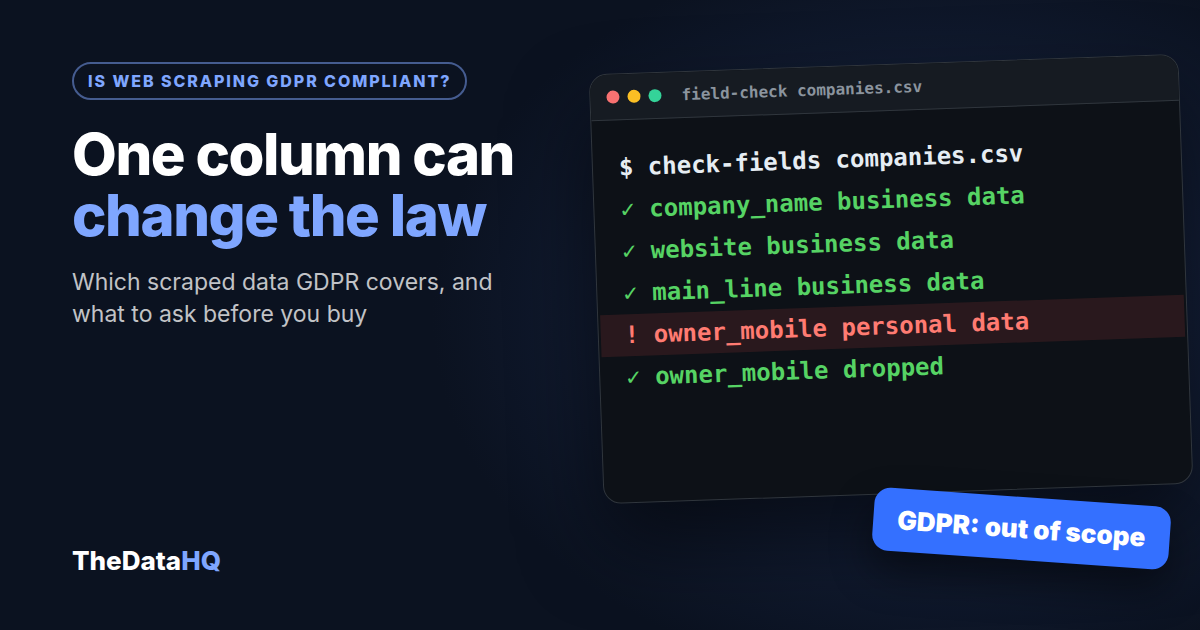
Is Web Scraping GDPR Compliant When You Buy the Data?
GDPR only applies when scraped data identifies a person. Which data is in scope, who is responsible when you buy it, what the EDPB draft…
Read the guide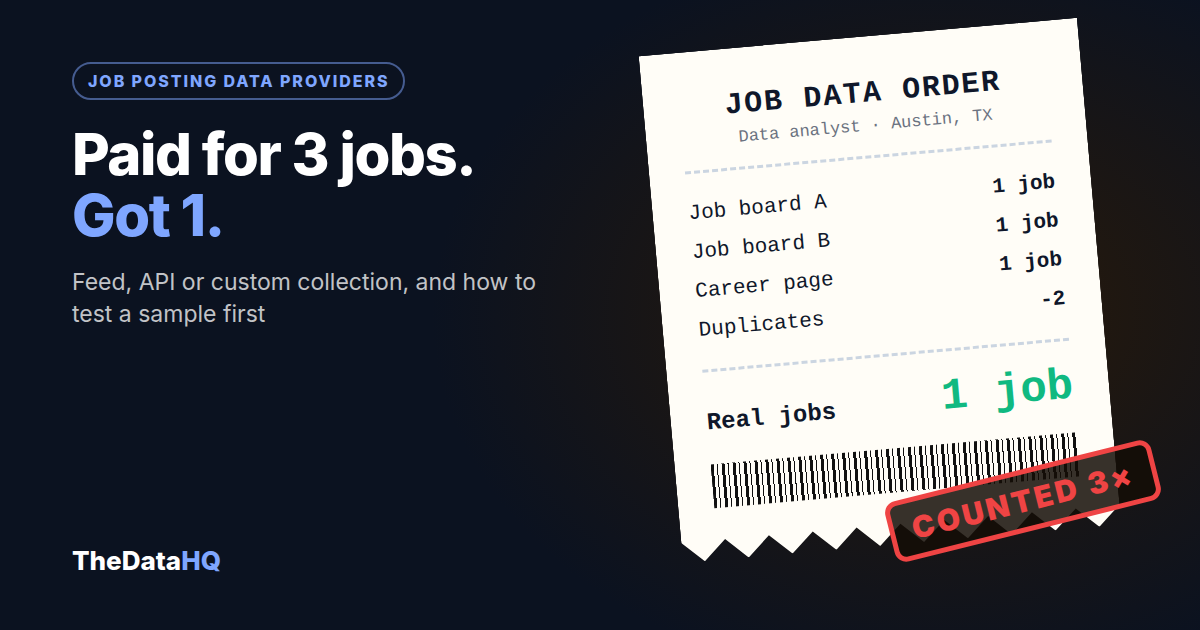
Job Posting Data Providers Compared: Feed, API or Scrape
Job posting data comes as a ready dataset, a pay-per-record API or a custom collection of named sites. Named providers with their…
Read the guide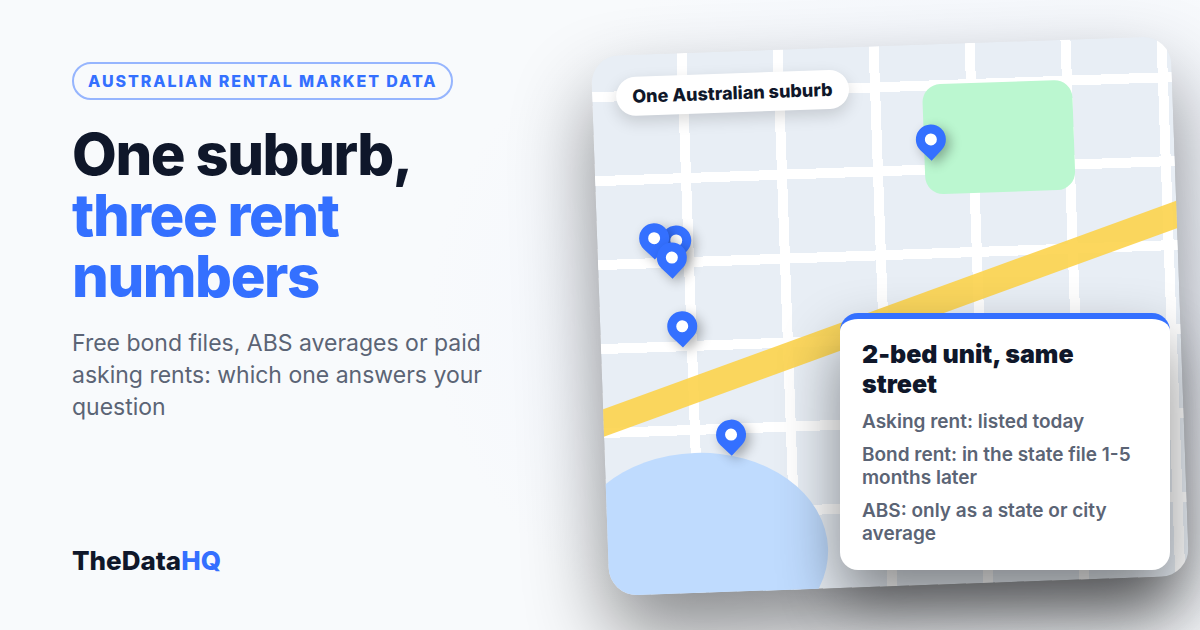
Rental Market Dataset Australia: Free vs Paid Sources
Australian rent data comes from free state bond files (suburb medians, months late), ABS averages, and paid asking-rent data from…
Read the guide