
Government Data Scraping for Tenders, Grants & Planning Data
Our government data scraping service collects public tenders, grant calls, planning applications, official registers and open data from government and public sector websites. We merge sources that were never designed to work together into one consistent feed, for businesses, NGOs and research teams worldwide.
What Government Data Can Be Scraped?
Public bodies publish an enormous amount of useful data, but each one publishes it its own way. These are the sources our clients ask for most.
Public tenders and contracts
Contract notices, deadlines, values, buyers, award notices and winning suppliers from national and local procurement portals.
Learn moreGrants and funding calls
Open calls, eligibility, amounts, deadlines and past awards from funders and agencies.
Planning applications
Applications, addresses, proposals, status and decisions from council planning portals.
Learn moreOfficial registers
Company, charity, licence and energy certificate registers, collected and kept in sync.
Learn moreOpen data portals
Published datasets downloaded, combined and refreshed when a new version appears.
Learn moreConsultations and notices
Public consultations, meeting agendas, minutes and official notices as they are posted.
Learn morePublic Tender Data Sample
A facilities management company tracks new cleaning and maintenance tenders across public buyers. Notices from different portals are normalised into one table with the same category codes and value fields.
| Notice ID | Portal | Buyer | Title | Category | Est. value | Published | Deadline |
|---|---|---|---|---|---|---|---|
| TN-2026-18842 | portal-1 | City council A | Office cleaning, 3 civic buildings | Cleaning | 420,000 | 17 Nov | 15 Dec |
| TN-2026-18907 | portal-1 | Hospital trust B | Planned building maintenance | Maintenance | 1,250,000 | 18 Nov | 05 Jan |
| PB-55120 | portal-2 | Regional agency C | Grounds and landscaping services | Grounds | 180,000 | 19 Nov | 28 Nov |
| PB-55188 | portal-2 | University D | Window cleaning framework | Cleaning | 95,000 | 20 Nov | 12 Dec |
| LT-7731 | portal-3 | Housing body E | Void property repairs | Maintenance | Not stated | 21 Nov | 19 Dec |
Government Data Scraping Example: EPC Register and Planning Portals
For a UK property data platform we collect records from the national energy performance certificate register and from council planning portals, then attach them to property listings. Each council runs its own planning system with its own layout, so every portal has its own scraper, all feeding one schema of applications, addresses and decisions.
Read the case studyGovernment Data Fields We Extract
Tenders and grants
- Notice or call ID and source portal
- Buyer or funder, and contact office
- Title, description and category codes
- Estimated value or grant amount
- Published date, deadline and award result
Planning and property
- Application reference and council
- Site address and coordinates
- Proposal description and application type
- Status, decision and decision date
- Documents list and consultation dates
Registers and datasets
- Register name and entry ID
- Entity name, type and status
- Dates registered, renewed or removed
- Dataset title, version and licence
- Source URL and collection time
Why Public Sector Websites Are Hard to Scrape at Scale
Government data is fragmented by design. Hundreds of local authorities each choose their own planning or procurement software, and each version of that software has its own search forms, page layouts and session handling. One council lists an application status as granted, another as approved with conditions, a third only in a PDF decision notice. Collecting from one portal is easy; collecting from all of them every day, and making the results comparable, is the real work.
We solve this with one scraper per system family, adjusted for each site that runs it, and a shared schema that every source maps into. Status values, categories and dates are normalised, and addresses are geocoded so applications and tenders can be filtered by area. Many public sites also post key details only in attached documents, so we read PDFs and spreadsheets as part of the same pipeline.
Public sector sites often run on modest servers and change with little notice, especially when a body switches software supplier. We collect at a gentle pace, outside busy hours where we can, and our checks spot a changed or moved portal on the next run so coverage does not quietly fall away.
Tender work also depends on timing. A notice with a short response window is worth little if your bid team finds it a week late, so we can check the busiest procurement portals several times a day and send a same-day alert for anything that matches your categories, regions or value range. Award notices are linked back to the original tender, which builds a record of who wins which contracts and at what price.
Who Uses Government Data Scraping?
Most buyers of public sector data are outside government. They want to act on what public bodies publish, faster than reading portals by hand.
Bid and sales teams
See every relevant tender the day it is published and track who wins.
Learn moreNGOs and charities
Monitor grants, policy consultations and public spending in your field.
Learn moreProperty and construction
Track planning applications and decisions for development leads.
Learn moreGovtech and analysts
Build products and reports on top of combined public datasets.
Learn moreHow Our Government Data Scraping Service Works
- 01
List the sources
We map every portal, register and dataset you need, and agree categories, filters and keywords.
- 02
Free sample in 48 hours
Real notices or applications from your sources, normalised into one table.
- 03
Live in about 7 days
Daily collection with keyword alerts by email or Slack, plus a full feed to your database.
- 04
Keep coverage complete
When a body changes portal or layout, we update the scraper and backfill missed notices.
Is It Legal to Scrape Government Websites?
Public bodies publish this data so people can use it, and much of it comes under open licences. We still check each source before we collect.
- Publicly published notices, registers and datasets only
- Open data licence terms and attribution recorded per source
- Personal details in registers kept out unless you have a lawful purpose
- No logins to supplier portals or restricted systems
- Gentle request rates that respect small public servers
How Much Does Government Data Scraping Cost?
No minimum project size. Small fixes and big builds are both welcome.
Can you scrape public tender websites?
Yes. We collect contract notices, deadlines, values and award results from national and local procurement portals and normalise them into one feed, with alerts for keywords or categories you choose.
Can you collect planning application data from councils?
Yes. We have built scrapers for council planning portals that each run their own system, and we deliver applications, addresses, proposals, status and decisions in one schema.
Is it legal to scrape government data?
Most government data is published for public use, often under open licences. We collect only public pages and datasets, record licence terms for each source and keep personal details out unless there is a lawful purpose.
Can you track grant funding opportunities?
Yes. We monitor funders' and agencies' websites for new calls, eligibility rules, amounts and deadlines, and send alerts when a match appears.
What if the data is only in PDFs?
We read PDFs, spreadsheets and attached documents as part of the pipeline and pull out the fields you need, so details hidden in a decision notice still reach your table.
How much does government data scraping cost?
It depends on how many portals and registers are involved and how often they change. Tender and planning feeds are usually quoted as a fixed build plus monthly upkeep; hourly work starts at $15 and a dedicated engineer at $2,400 a month.
Do you cover government websites outside the UK?
Yes. We work worldwide with clients in 10+ countries, and build scrapers for public sector portals in whichever countries and languages you need.
Government data scraping guides
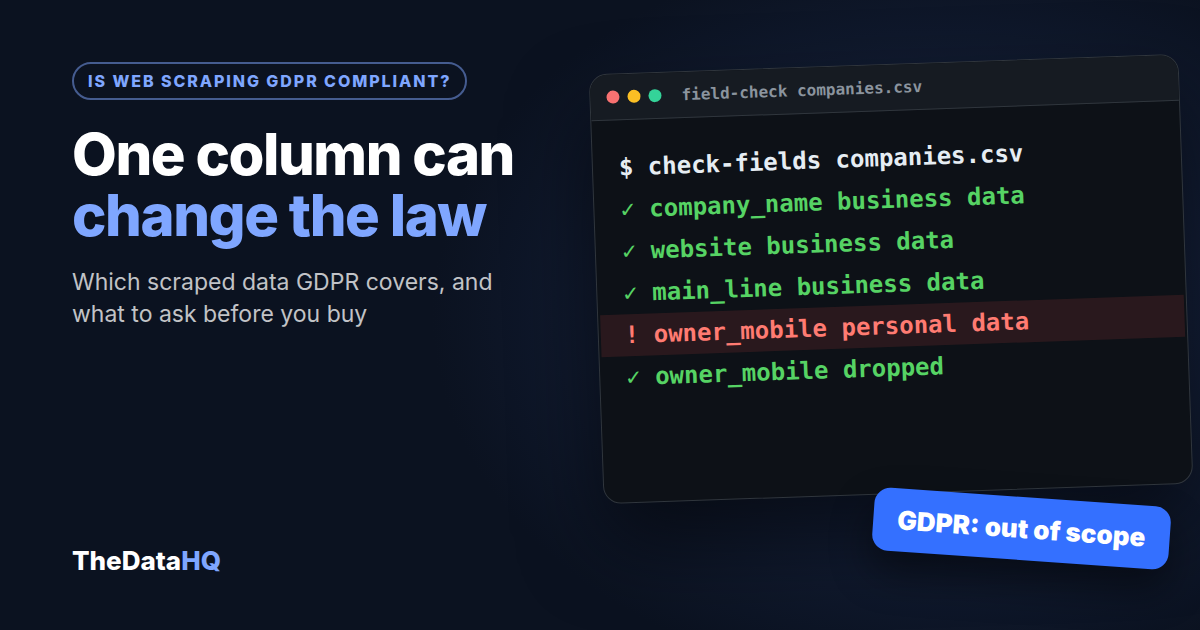
Is Web Scraping GDPR Compliant When You Buy the Data?
GDPR only applies when scraped data identifies a person. Which data is in scope, who is responsible when you buy it, what the EDPB draft…
Read the guide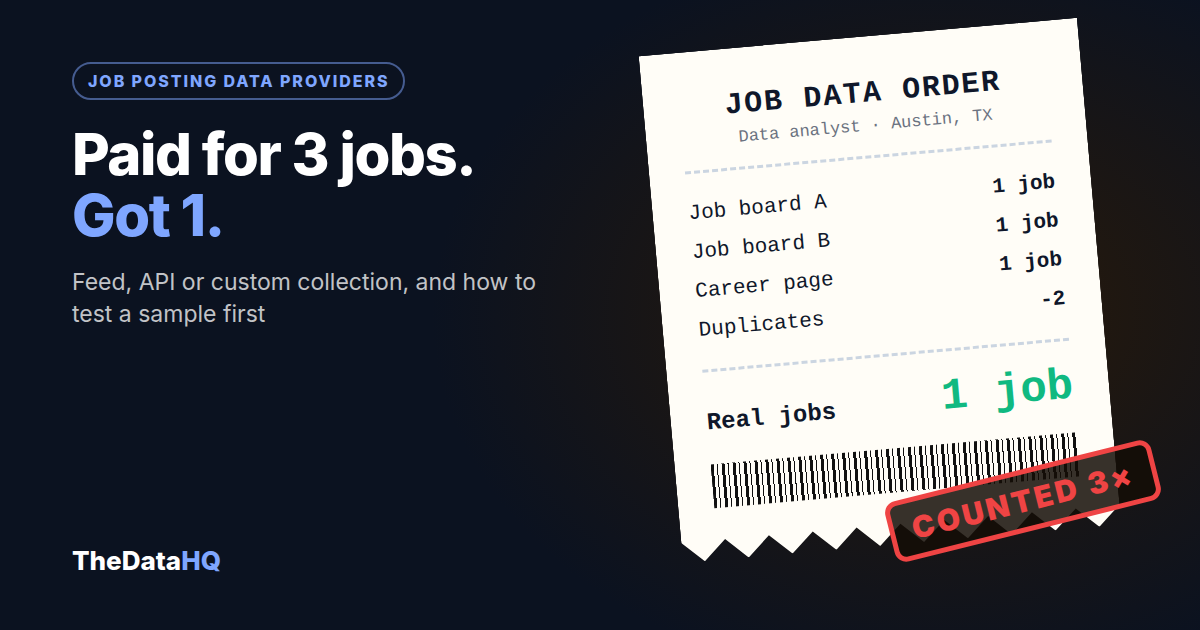
Job Posting Data Providers Compared: Feed, API or Scrape
Job posting data comes as a ready dataset, a pay-per-record API or a custom collection of named sites. Named providers with their…
Read the guide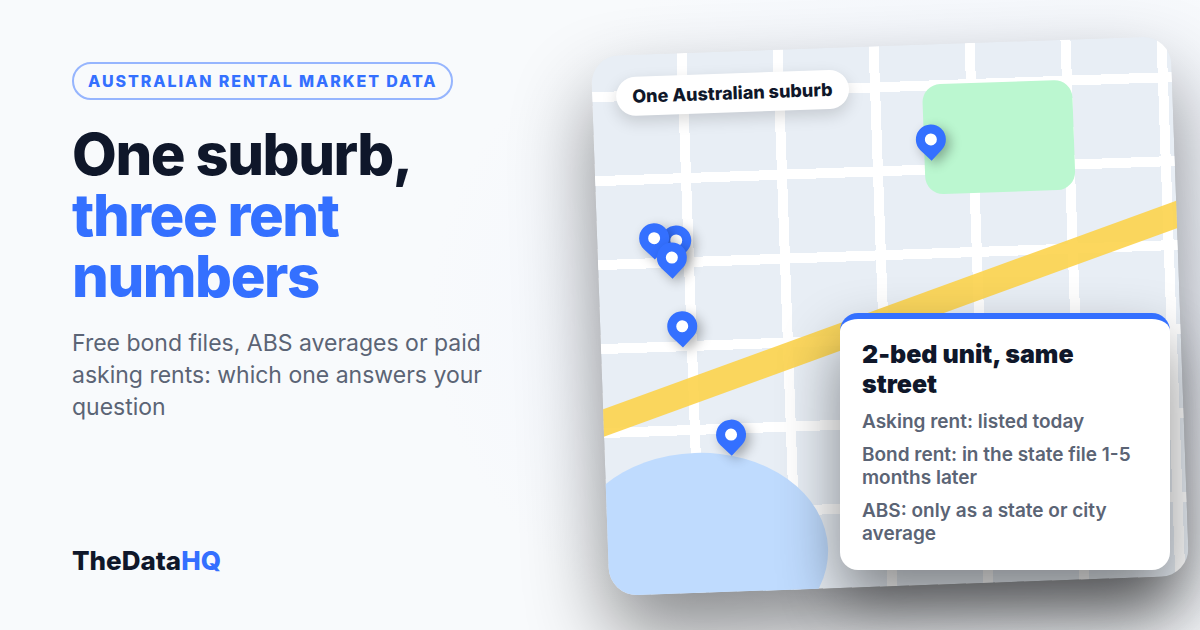
Rental Market Dataset Australia: Free vs Paid Sources
Australian rent data comes from free state bond files (suburb medians, months late), ABS averages, and paid asking-rent data from…
Read the guide