
Legal Data Scraping for Court Records, Dockets & Filings
Our legal data scraping service collects court records, docket entries, lawyer and firm directories, and regulatory filings from public portals and turns them into structured, searchable data. For one US client we automated 90% of manual record searches and made processing 80% faster.
Legal Data Scraping Case Study: Background Checks Automated
A US background screening business had staff searching public court record portals by hand for every order. We built automation that runs the searches, reads the results pages and returns structured records into their workflow. Their team now reviews results instead of typing searches, and orders move through far faster.
Read the case studyCourt Docket Data Sample
A litigation analytics product tracks new commercial cases and docket activity across several courts. Each row is one docket event, linked to its case so the full history can be rebuilt.
| Case number | Court | Case type | Filed | Docket event | Event date | Next hearing | Status |
|---|---|---|---|---|---|---|---|
| 2026-CV-04418 | court-portal-1 | Contract dispute | 02 Oct 2026 | Motion to dismiss filed | 17 Nov 2026 | 08 Jan 2027 | Open |
| 2026-CV-04418 | court-portal-1 | Contract dispute | 02 Oct 2026 | Opposition brief filed | 20 Nov 2026 | 08 Jan 2027 | Open |
| CL-26-1187 | court-portal-2 | Commercial lease | 14 Aug 2026 | Judgment entered | 19 Nov 2026 | n/a | Closed |
| 26-B-20931 | court-portal-3 | Business bankruptcy | 11 Nov 2026 | Creditor list filed | 18 Nov 2026 | 03 Dec 2026 | Open |
| 2026-CV-05102 | court-portal-1 | Trademark | 21 Nov 2026 | Complaint filed | 21 Nov 2026 | Not set | New |
What Legal Data Can Be Scraped?
Legal information is public by design, but it is spread over thousands of portals that were built for one search at a time, not for analysis.
Court records and dockets
Case numbers, case types, filing dates, docket entries, hearing dates, judges and outcomes.
Judgments and opinions
Published decisions with court, date, citation and full text, ready for search or analysis.
Learn moreLawyer and firm directories
Firms, offices, practice areas, admissions and professional listings from public bar and firm directories.
Learn moreRegulatory filings and actions
Enforcement actions, licence registers, sanctions and disciplinary notices from regulators.
Company and public registers
Company status, officers' roles, insolvency notices and liens from public registers.
Learn moreLegislation and rule changes
New bills, amendments and consultations tracked as they are published.
Learn moreLegal Data Fields We Extract
Case and docket
- Case number, court and jurisdiction
- Case type, cause of action and filing date
- Docket entries with dates and descriptions
- Judge, hearing dates and next event
- Status, disposition and closing date
Documents
- Judgment or order text
- Citation and publication date
- Document type and page count
- Amounts awarded where stated
- Link to the source document
Firms and regulators
- Firm name, offices and practice areas
- Professional admission and status
- Regulator, action type and date
- Licence number and register status
- Penalty or outcome as published
Why Court Record Scraping Is Harder Than It Looks
There is no single court system to scrape. Each county, state or national court may run a different portal, with its own search form, case number format and way of naming the same event. Some show results as plain pages, others as scanned PDFs, and many limit how many results one search returns. We build a scraper per portal, then map every court's vocabulary onto one shared schema, so a judgment entered in one court and an order granted in another can be compared.
Legal searches are often run on demand rather than on a schedule. A screening or due diligence team needs an answer for a specific case or company today, not tomorrow's batch. For these clients we build search automation that takes an order from your system, runs the search across the right portals, reads the results and returns structured records. That is how we removed 90% of the manual searching for our US background screening client.
Accuracy has a higher bar here. A missed docket entry or a wrongly matched record has real consequences. We keep the source page or document for every record, flag uncertain matches for human review rather than guessing, and test every run against the agreed rules.
Who Uses Legal Data Scraping?
These are the legal and compliance buyers we work with most often.
Screening and compliance firms
Automate record searches that staff now run by hand.
Learn moreLegal tech and analytics
Build litigation datasets on courts, case types, judges and outcomes.
Learn moreLaw firms
Watch dockets for clients and competitors, and track new filings in a practice area.
Risk and due diligence teams
Check companies for litigation, insolvency and enforcement history.
Learn moreHow Our Legal Data Scraping Service Works
- 01
Map the portals
We list the courts and registers you need, check each portal's terms and agree the fields and lawful purpose.
- 02
Free sample in 48 hours
Real records from a few portals, in your schema, so you can check accuracy before we build the rest.
- 03
Go live in about 7 days
Scheduled collection or on-demand search automation, delivered to your case system, database or API.
- 04
Monitor and repair
Portal changes are caught on the next run and fixed, and uncertain matches go to review.
Is It Legal to Scrape Court Records?
Court records and registers are published so the public can see them, and collecting them is generally lawful. Records that name people still carry duties under privacy and consumer reporting rules. We scope those projects with your compliance team, collect personal fields only where you have a lawful purpose, and agree retention rules in writing. We never log in to restricted court systems, buy access with someone else's credentials, or collect sealed records. Our full approach is set out on the web scraping legal and compliance page.
We also respect each portal's limits. Many court systems are run by small public bodies on modest servers, so we pace requests, collect outside busy hours where possible and keep search volumes to what the project really needs. Every record keeps its source page and collection time, which gives your compliance team a clear audit trail if a result is ever questioned.
How Much Does Legal Data Scraping Cost?
No minimum project size. Small fixes and big builds are both welcome.
Can you scrape court records?
Yes. We collect case records, docket entries, hearing dates and outcomes from public court portals and deliver them in one schema across courts.
Is it legal to scrape court records?
Court records are public, and collecting them is generally lawful. Records that name people carry privacy duties, so we agree the lawful purpose, fields and retention with your compliance team before we start.
Can you automate background check record searches?
Yes. For a US screening business we automated 90% of manual record searches and made processing 80% faster, with results returned straight into their workflow.
Can you monitor new filings for specific companies?
Yes. We check the courts and registers you choose on a schedule and alert you when a new case, docket entry or notice names a company on your watchlist.
Can you extract data from court PDFs?
Yes. We parse orders, judgments and filings from PDF, including scanned documents, into fields such as court, date, parties, judge and outcome.
How fresh is scraped court docket data?
As fresh as the court portal itself. Watchlist checks usually run daily, and busy courts can be checked several times a day, so new entries reach you within hours of being posted.
How much does legal data scraping cost?
Cost depends on the number of portals, the search volume and whether searches run on a schedule or on demand. Hourly engineering starts at $15, a dedicated engineer for high-volume search automation starts at $2,400 a month, and a fixed project price is agreed before we build.
Legal data scraping guides
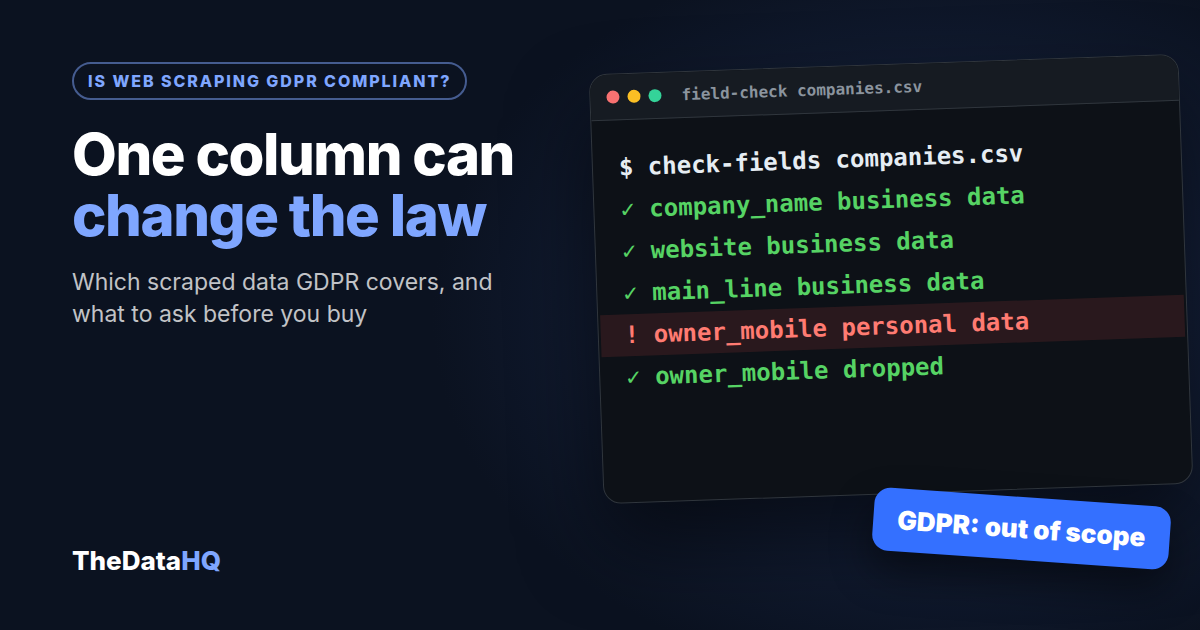
Is Web Scraping GDPR Compliant When You Buy the Data?
GDPR only applies when scraped data identifies a person. Which data is in scope, who is responsible when you buy it, what the EDPB draft…
Read the guide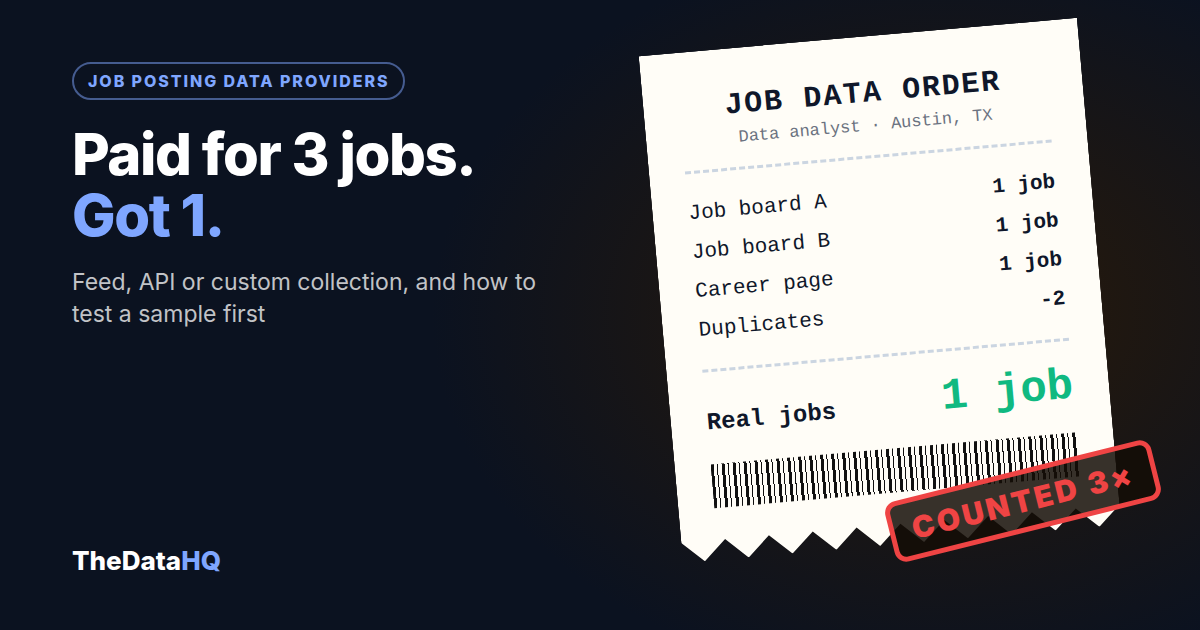
Job Posting Data Providers Compared: Feed, API or Scrape
Job posting data comes as a ready dataset, a pay-per-record API or a custom collection of named sites. Named providers with their…
Read the guide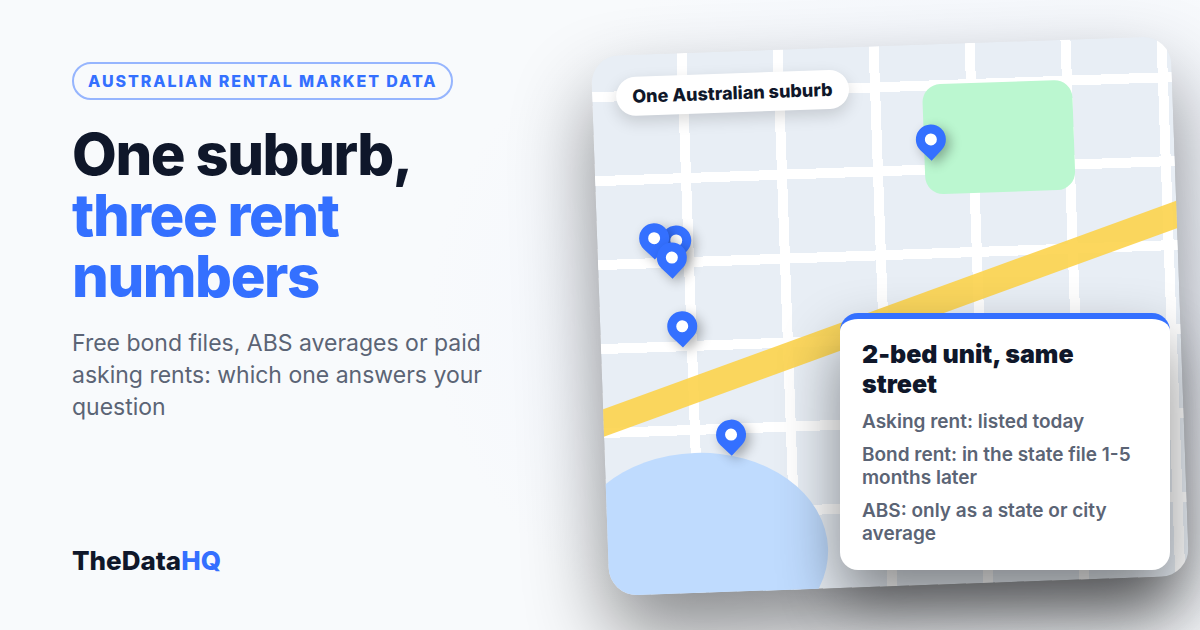
Rental Market Dataset Australia: Free vs Paid Sources
Australian rent data comes from free state bond files (suburb medians, months late), ABS averages, and paid asking-rent data from…
Read the guide