
RPA Web Automation Case Study: 90% of Background Check Searches Automated
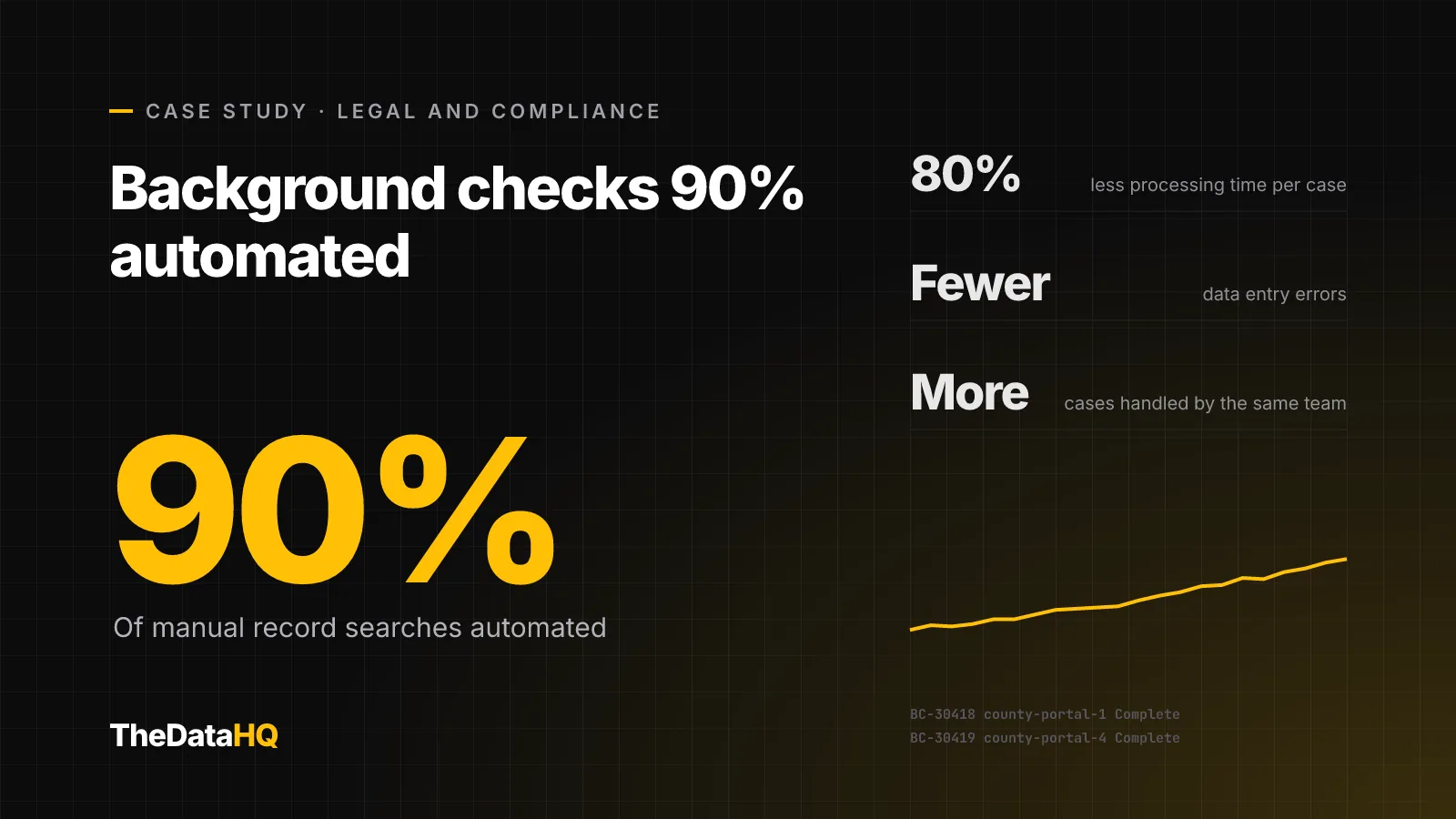
This RPA web automation case study shows how a US background-check company automated 90% of its manual criminal record searches. A scraping and automation tool now does the repetitive lookups, and processing time per case has fallen by 80%.
The Challenge: Criminal Record Searches Done One Screen at a Time
Background-check companies run criminal record searches for employers, landlords and other clients who have the subject's consent. For this US company, most of that work was manual: staff opened court and records portals, typed in names and dates of birth, read the results and copied what they found into the case file.
Each portal worked differently. Some used simple search forms, others had multi-step flows, date pickers and paged result tables. A single case could involve several portals, and every search meant the same clicks and the same copying, many times a day.
The process was slow and costly, and it was easy to make mistakes. A mistyped date or a missed result page affects a real person's check. As order volumes grew, the company could only keep up by hiring more researchers, which pushed costs up without fixing the error rate.
What the Company Needed From Background Check Automation
- Searches run automatically on the public record portals staff used every day
- Results captured in a consistent format and attached to the right case
- Fewer typing and copying errors in each check
- Faster turnaround on each order without adding staff
- Unusual results passed to a researcher instead of decided by the tool
Our Solution: A Scraping and Automation Tool for Record Searches
We mapped the exact steps researchers followed on each portal, then built a tool in Python, Node.js and JavaScript that repeats them. It takes the search details from a case, fills in each portal's forms, works through every page of results and captures the records returned.
Results are parsed into one structure: court, case number, charge, filing date and disposition, whatever the portal's own layout. The tool attaches them to the case and marks whether the search found nothing, found clear matches, or found something that needs a closer look.
Researchers stay in charge of judgement. Anything ambiguous, such as a partial name match or a portal that returns an error, is sent to a person to review. The tool handles the repetitive searching, which is about 90% of the work, and the team spends its time on the cases that need a human eye. When a portal changes its pages, our engineers update the steps for that portal.
| Case ID | Portal | Search status | Records found | Action | Time taken |
|---|---|---|---|---|---|
| BC-30418 | county-portal-1 | Complete | 0 | Auto-cleared for review | 1m 12s |
| BC-30419 | county-portal-4 | Complete | 2 | Attached to case | 1m 48s |
| BC-30420 | state-portal-2 | Partial match | 1 | Sent to researcher | 2m 05s |
| BC-30421 | county-portal-1 | Portal error | n/a | Retry, then researcher | 0m 40s |
| BC-30422 | county-portal-7 | Complete | 0 | Auto-cleared for review | 0m 58s |
The Result: 90% of Searches Automated and 80% Faster Processing
The tool now carries out 90% of the criminal record searches that staff used to do by hand. Processing time per case has dropped by 80%, so orders move from request to report far more quickly.
Errors fell because the tool types the same details the same way every time and never skips a results page. Costs came down, and the same team now handles far more cases, with researchers focused on the matches that actually need judgement.
Any business with staff copying information from websites into its own system can use the same approach: compliance checks, licence lookups, claims processing or supplier verification. We map the manual steps, automate them reliably, and keep people in the loop where a decision matters.
What is RPA web automation?
It is software that repeats the steps a person takes on websites, such as filling in search forms and copying results, so the work runs automatically.
Can background checks be automated?
Much of the searching can. In this project 90% of manual criminal record searches were automated, with unclear results still reviewed by staff.
How much time does background check automation save?
For this US background-check company, processing time per case fell by 80%.
What happens when a court records portal changes its website?
The affected searches are flagged and routed to staff, and our engineers update the steps for that portal so automation resumes.
Does the automation make decisions about a person's record?
No. It runs searches and captures results. Partial matches and anything unclear go to a trained researcher, who makes the call.
What tasks besides background checks can RPA automate?
Any repeated website task, such as licence lookups, claims checks, supplier verification and moving data between systems.
More Web Scraping Case Studies
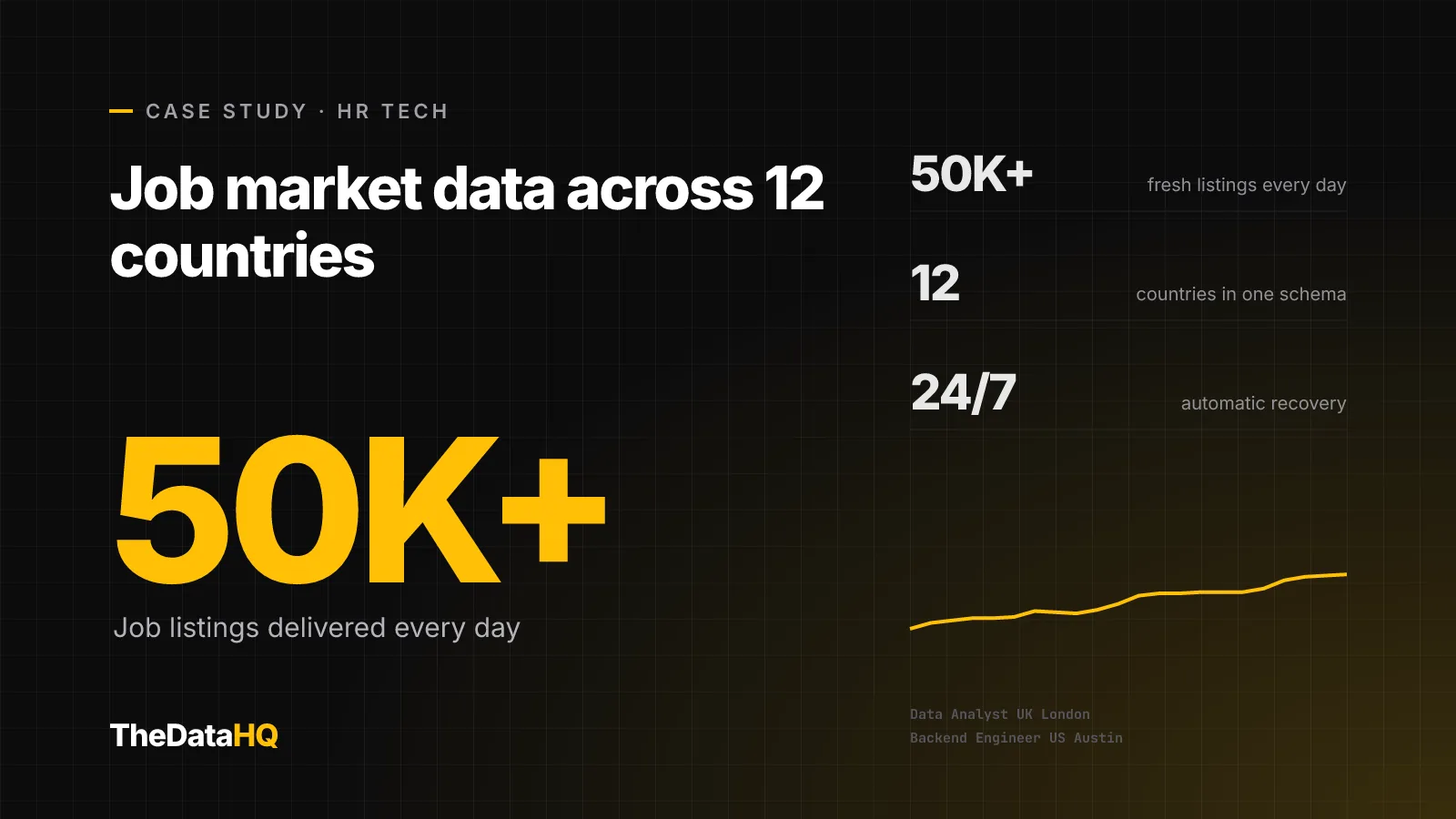 HR tech50K+
Job listings delivered every day
50,000 fresh job listings a day from 15,000+ sources for HiCounselor
Read the case study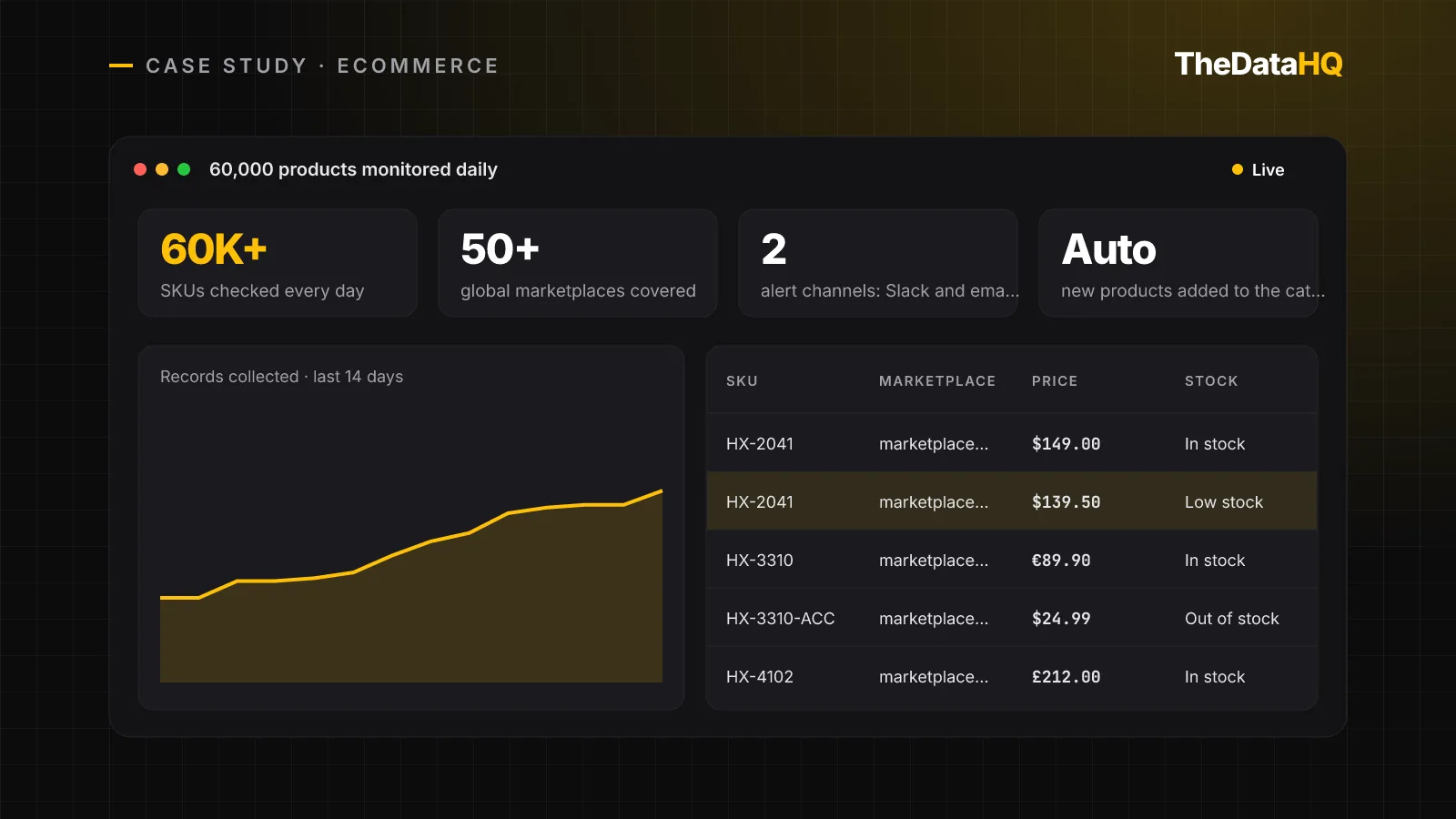 Ecommerce60K+
SKUs monitored every day
60,000+ SKUs tracked daily across 50+ marketplaces, with live alerts
Read the case study Ecommerce~2x
Sales, from always offering the best price
Live prices from 50+ seller sites helped an online seller nearly double sales
Read the case study