
Price Comparison Scraping Case Study: How Live Prices Nearly Doubled Sales
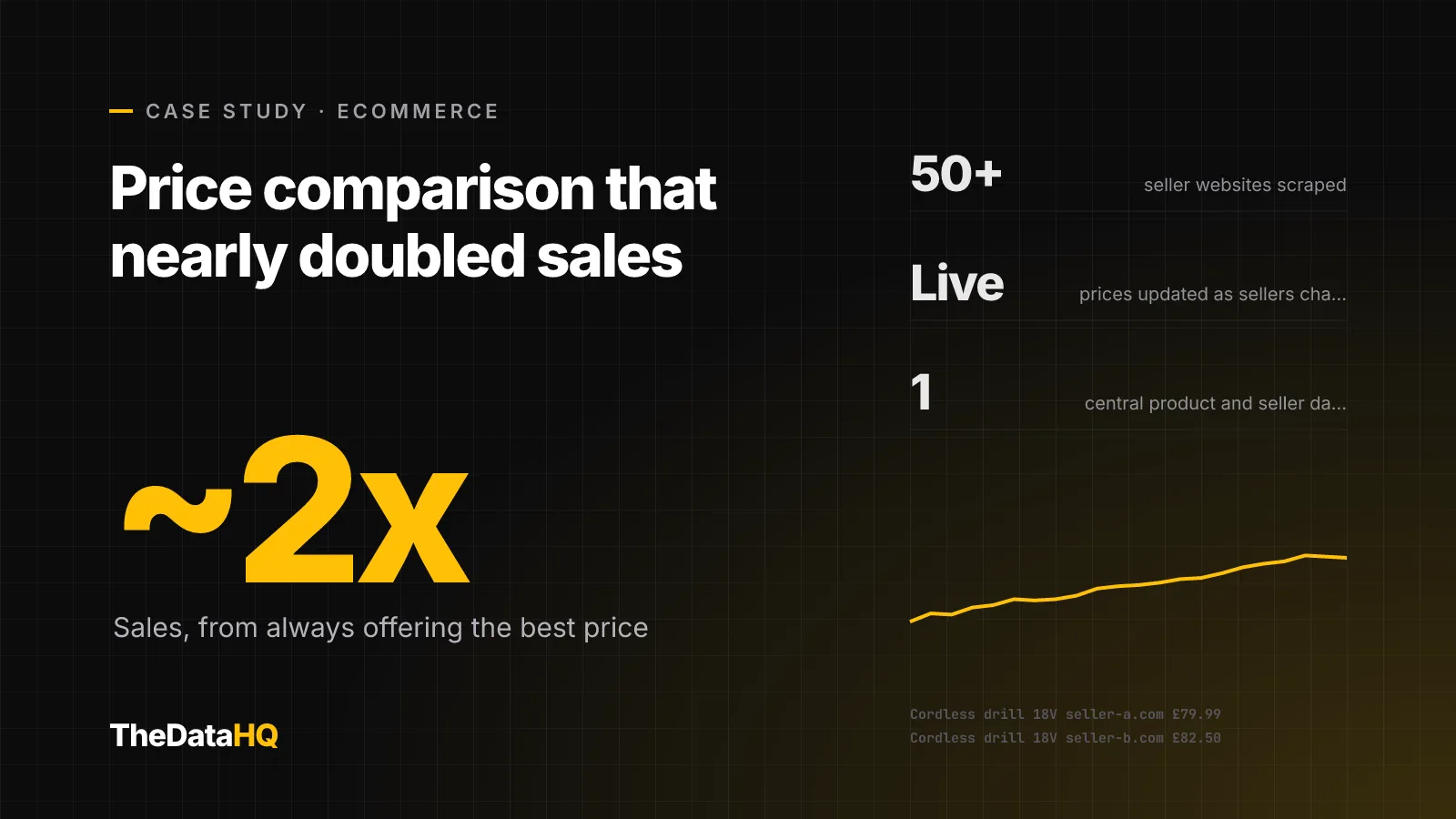
This price comparison scraping case study shows how live prices from more than 50 seller websites, pulled into one product and seller database, let an online business always offer the best price. Sales rose by close to 100%.
The Challenge: Prices Changing Faster Than the Team Could Check
The client's business depends on one promise: shoppers get the best available price. That only works if the platform knows what every competing seller is charging right now, not what they charged yesterday.
Their prices came from more than 50 seller websites. Each site had its own page structure, its own way of showing discounts and delivery costs, and its own habit of changing prices without notice. Copying figures into a spreadsheet covered a fraction of the range and was out of date within hours.
There was also no shared product list. One seller called an item by its model number, another by a marketing name, a third bundled it with an accessory. Without a central record linking each listing to a single product and seller, prices could not be compared fairly, and the platform risked showing a price it could not honour.
What a Price Comparison Platform Needs From Its Data
- Current prices from 50+ seller websites, not daily snapshots
- Every listing linked to one product record and one seller record
- Updates that flow into the platform as soon as a seller changes a price
- Clean, consistent fields so offers can be ranked side by side
- A setup the client's team could rely on without running scrapers themselves
Our Solution: Live Seller Price Scraping Into One Database
We wrote a Python scraper for each seller website, using BeautifulSoup to read product pages and pull the price, product name, identifiers and availability. Each scraper runs on a frequent schedule, so busy products are rechecked often and the platform always shows the latest figure.
All results land in a central MySQL database with two core tables: products and sellers. A matching step links each scraped listing to the right product, using model numbers and identifiers first and careful title rules second. When a price changes, the record updates and the change is kept as history.
A Node.js service sits on top of the database and gives the client's platform dynamic access to current offers. It ranks sellers for each product, flags listings that look wrong, such as a sudden price of zero, and keeps stale offers out of view. Our engineers monitor each source and repair a scraper the same day a seller redesigns its site.
| Product | Seller | Price | Delivery | In stock | Rank |
|---|---|---|---|---|---|
| Cordless drill 18V | seller-a.com | £79.99 | Free | Yes | 1 |
| Cordless drill 18V | seller-b.com | £82.50 | £3.99 | Yes | 2 |
| Cordless drill 18V | seller-c.com | £84.00 | Free | No | 3 |
| Robot vacuum S6 | seller-d.com | £219.00 | Free | Yes | 1 |
| Robot vacuum S6 | seller-a.com | £229.95 | £4.99 | Yes | 2 |
The Result: Best-Price Offers That Nearly Doubled Sales
With live prices from 50+ seller websites in one place, the client could guarantee the best price on the products it covered. Shoppers trusted the comparison, returned more often and bought more. Sales nearly doubled, an increase of about 100%.
The central product and seller database also gave the team something they never had before: a clear picture of who sells what, at what price, and how that changes over time. That history now informs which products and sellers they add next.
Any comparison site, marketplace or retailer that competes on price can use the same model. We build the scrapers for the sellers that matter to you, keep them working, and deliver matched, current prices by API, database or scheduled file.
How do price comparison websites get their data?
Most use scrapers or feeds that collect prices from seller websites. In this project we scraped 50+ seller sites and stored every offer in one product and seller database.
How often can prices be updated on a comparison site?
As often as the business needs. Here prices were refreshed continuously so the platform showed live figures, with busy products checked more often.
How do you match the same product across different sellers?
We link listings to one product record using model numbers and identifiers first, then title rules, and review uncertain matches before they go live.
Can price scraping really increase sales?
It can when price is what customers choose on. This client nearly doubled sales after it could reliably offer the best price.
Is it legal to scrape prices from seller websites?
We collect publicly shown prices only, with no login and no personal data, and review each site's terms before we start. Our compliance page explains the approach.
How long does it take to build a price comparison scraper?
A first group of seller sites usually goes live in about a week, and we add more sellers in stages after that.
More Web Scraping Case Studies
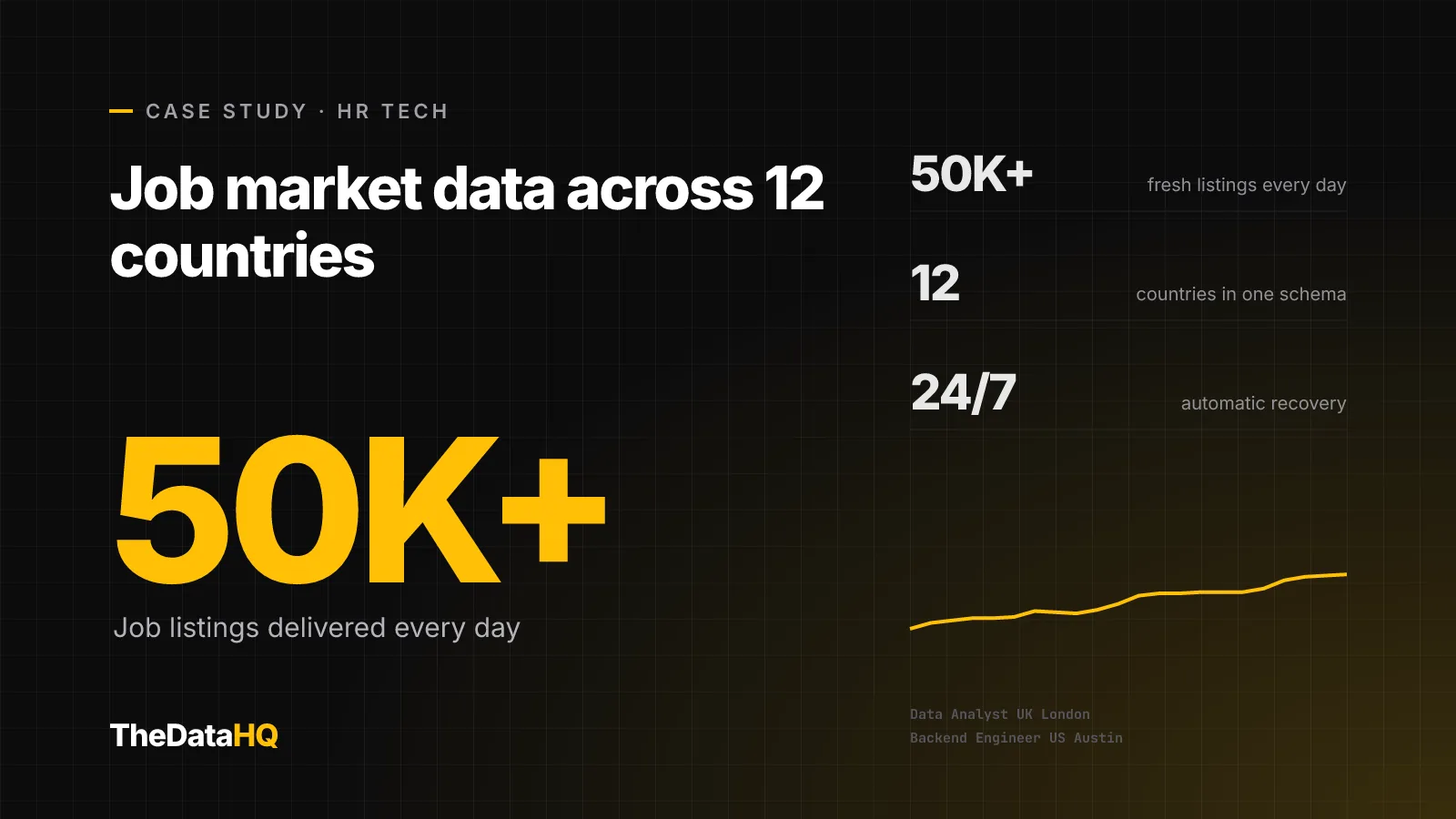 HR tech50K+
Job listings delivered every day
50,000 fresh job listings a day from 15,000+ sources for HiCounselor
Read the case study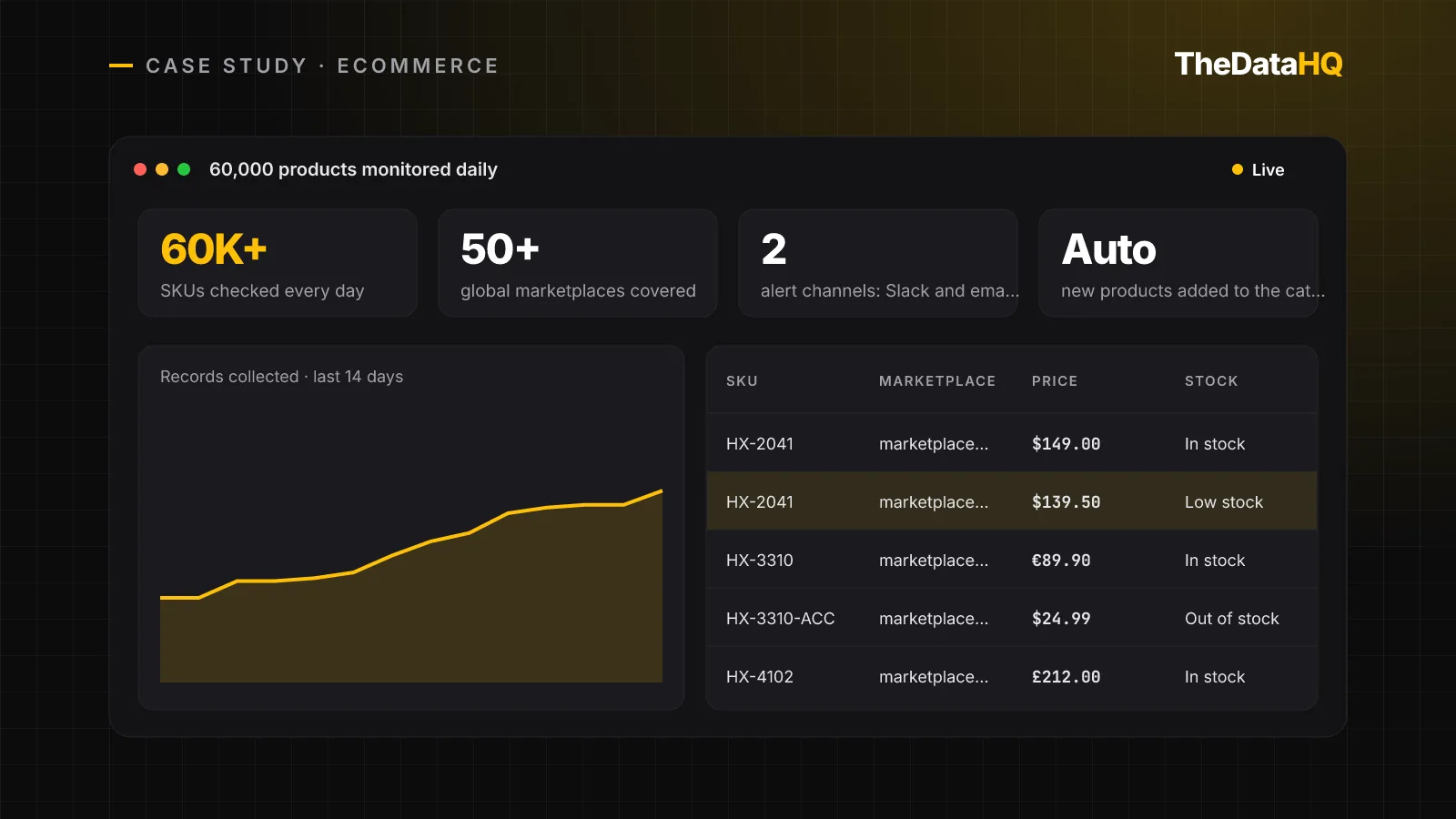 Ecommerce60K+
SKUs monitored every day
60,000+ SKUs tracked daily across 50+ marketplaces, with live alerts
Read the case study Ecommerce retail200+
Competitor sites refreshed daily
From weekly manual checks to 200+ competitor sites refreshed every day
Read the case study