
Real Estate Data Scraping Case Study: 2M+ Property Records and Same-Day Listings
This real estate data scraping case study covers two connected jobs: building a searchable sales-history database of more than 2 million property records, and a daily tracker that captures 300+ new unique listings as soon as they go live.
The Challenge: Property History Was Scattered and New Listings Went Fast
The client needed two things that most property teams want but rarely have. The first was history: what each property sold for in the past, and how prices moved across houses, apartments, land and commercial buildings. That information existed online, but spread over many pages and sites with no single search.
The second was speed. Good listings attract buyers within hours. If a new listing only reached the client's team the next morning, the best opportunities were already gone. They needed to know about each new property as soon as it was published.
Both jobs came with data problems. Old records used inconsistent addresses and property types, and the same new listing often appeared on more than one site. The client needed one record per property and one alert per new listing, not a pile of duplicates.
What the Client Needed From a Property Records Database
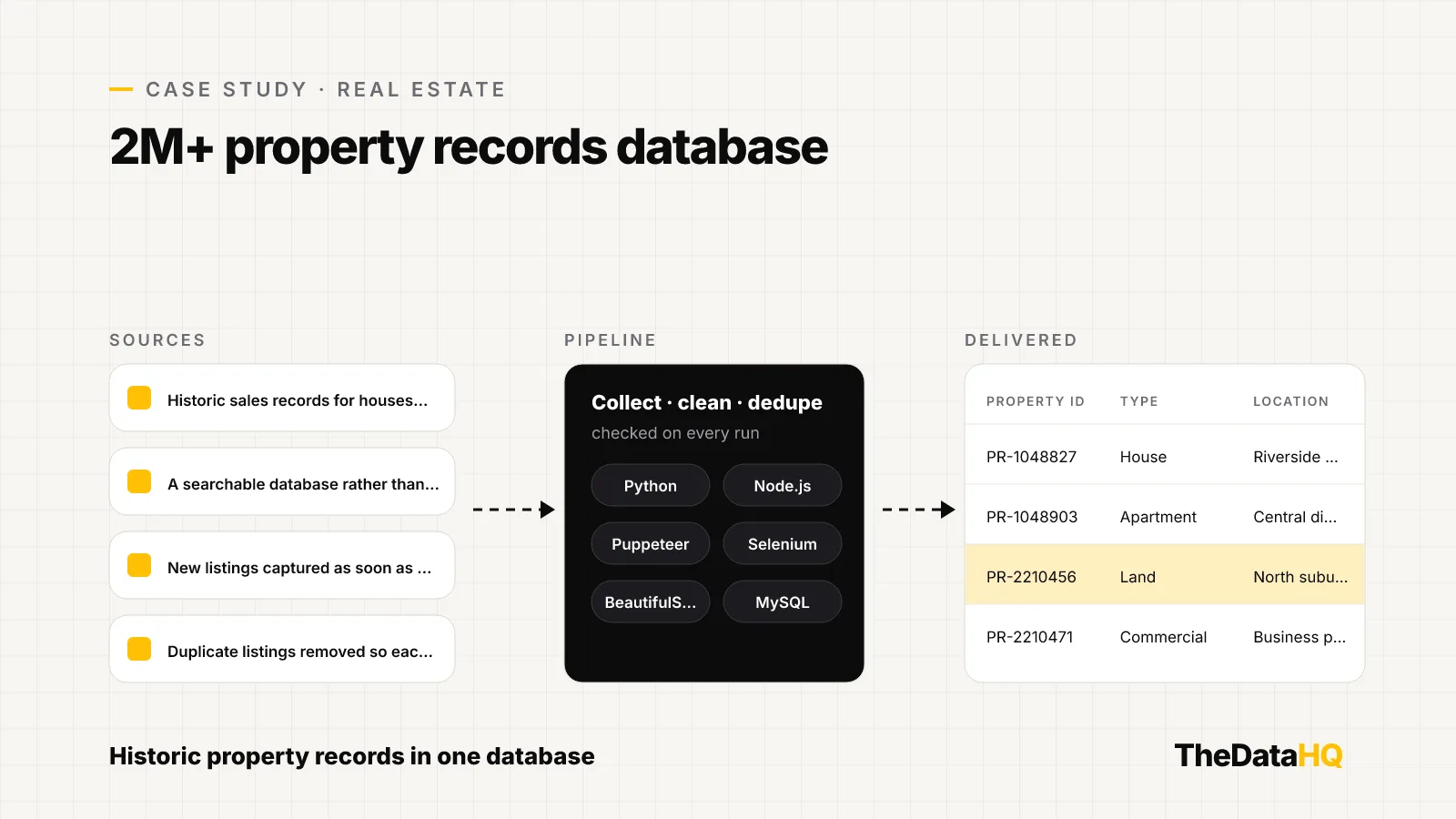
- Historic sales records for houses, apartments, land and commercial property
- A searchable database rather than a set of raw files
- New listings captured as soon as they go live, every day
- Duplicate listings removed so each property appears once
- Consistent fields for address, type, price and dates across sources
Our Solution: A Historic Records Crawl Plus a Daily New-Listing Tracker
For the history, we ran a one-off deep crawl of past property records using Python scrapers, with Puppeteer and Selenium for pages that build their content in the browser and BeautifulSoup for static pages. Each record was cleaned, its address and property type standardised, and loaded into a MySQL database indexed for search by location, type, date and price.
For new listings, a Node.js tracker checks the source sites throughout the day. It compares what it finds with what is already stored and keeps only listings it has not seen before, so the client receives 300+ new unique properties a day rather than repeats.
We have run the same pattern at much larger scale. For a PropTech product, a separate pipeline collects more than 500,000 listings a day from 8 portals and turns them into price trends and investment signals. That experience shaped the deduplication and scheduling used here.
| Property ID | Type | Location | Last sold | Sale date | Status |
|---|---|---|---|---|---|
| PR-1048827 | House | Riverside district | $412,000 | 2019-06 | Historic |
| PR-1048903 | Apartment | Central district | $268,500 | 2021-03 | Historic |
| PR-2210456 | Land | North suburbs | $145,000 | n/a | New today |
| PR-2210471 | Commercial | Business park | $1,250,000 | n/a | New today |
| PR-0877312 | House | East suburbs | $355,000 | 2017-11 | Historic |
The Result: Searchable Sales History and Same-Day Listing Alerts
The client now has a searchable database of more than 2 million historic property records covering houses, apartments, land and commercial property. Analysts can pull the sales history of an area or a property type in seconds instead of hunting through websites.
The daily tracker adds 300+ new unique listings as soon as they go live, so the team sees fresh opportunities on the day they appear. Because duplicates are filtered out, every alert is a property they have not seen before.
Together, history and live listings give a fuller picture: what a property is worth based on past sales, and what is available today. We can build the same setup for investors, agents and PropTech products in any market, and deliver it as a database, API or scheduled export.
Can you scrape historic property sales data?
Yes. In this project we collected more than 2 million historic property records and loaded them into a searchable database.
How quickly can new property listings be captured?
Our tracker captures new listings as soon as they go live, which here means 300+ new unique listings every day.
How do you avoid duplicate property listings?
Each new listing is checked against what is already stored, using standardised addresses and listing details, and only unseen properties are kept.
Can you scrape commercial property and land as well as homes?
Yes. This database covers houses, apartments, land and commercial property in one schema.
How much property data can you collect in a day?
For one PropTech product we collect more than 500,000 listings a day from 8 portals and turn them into price trends.
How is property data delivered?
As a searchable database, a REST API, or scheduled CSV, JSON or Excel files, whichever suits your team.
More Web Scraping Case Studies
 HR tech50K+
Job listings delivered every day
50,000 fresh job listings a day from 15,000+ sources for HiCounselor
Read the case study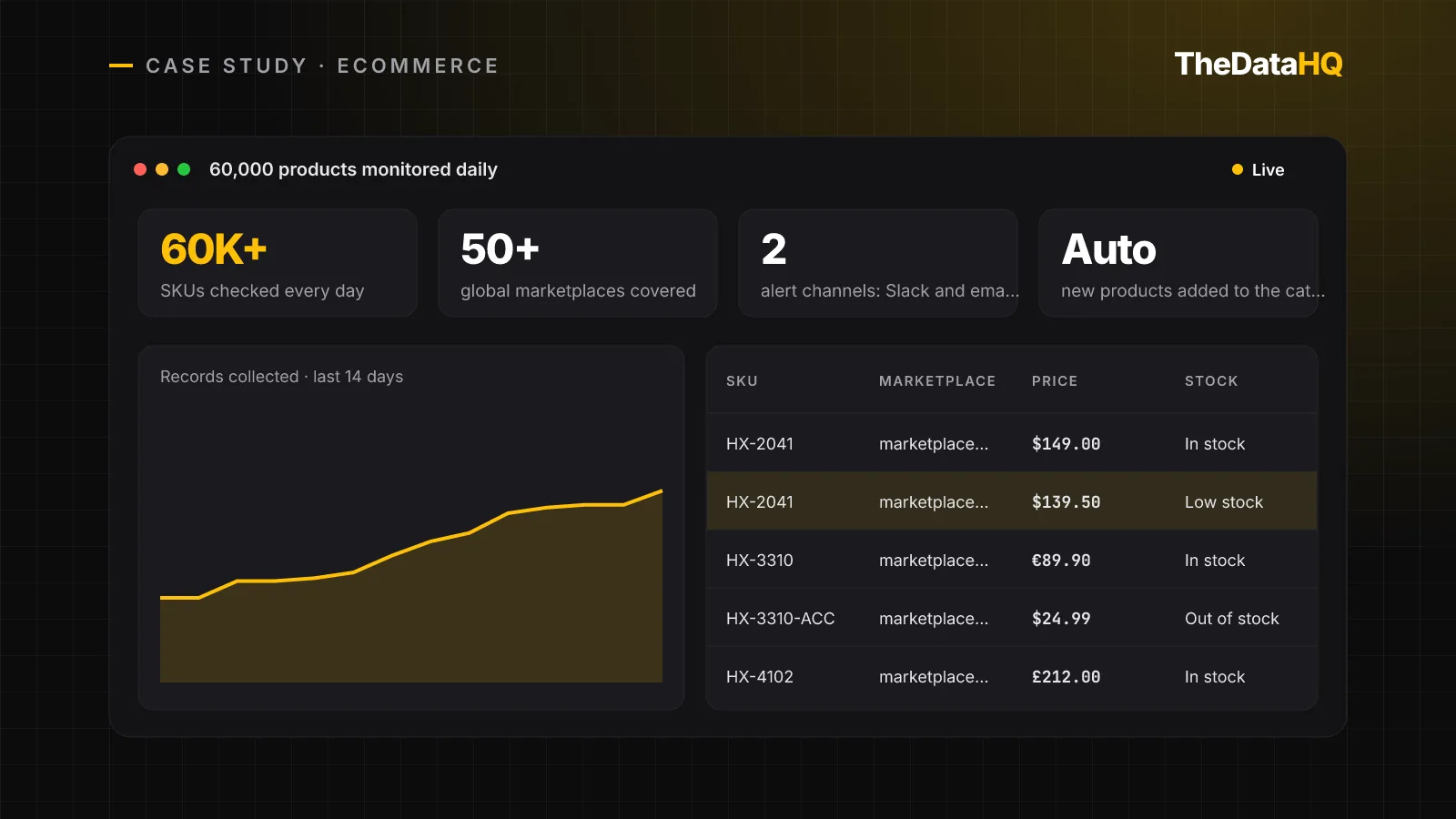 Ecommerce60K+
SKUs monitored every day
60,000+ SKUs tracked daily across 50+ marketplaces, with live alerts
Read the case study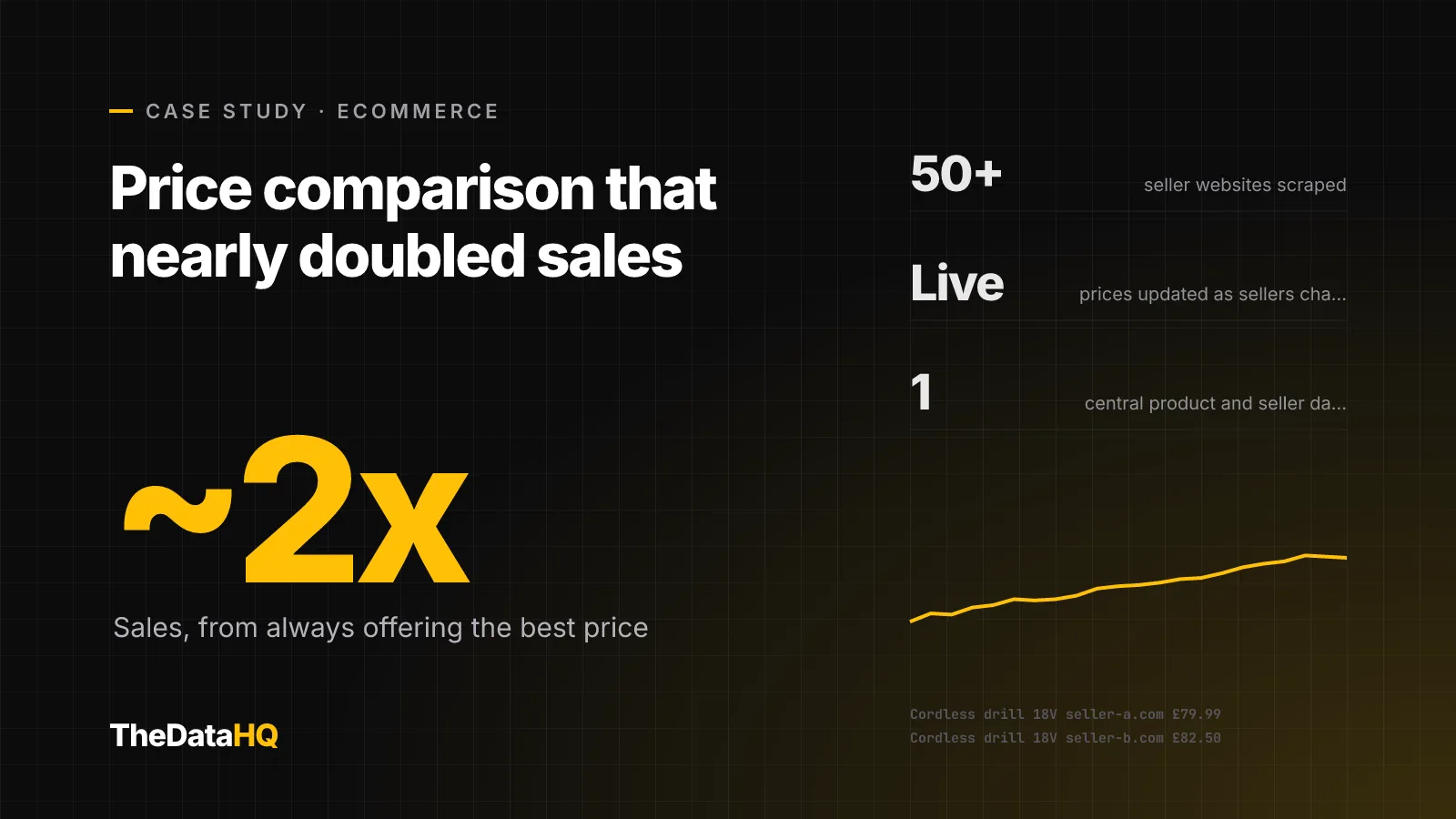 Ecommerce~2x
Sales, from always offering the best price
Live prices from 50+ seller sites helped an online seller nearly double sales
Read the case study